
Stalled rollout? We get it back on plan.
Your RTLS, RFID, or IoT programme is months late, over budget, or missing the KPIs the business case promised. TRACIO is brought in independently — we diagnose what actually went wrong, fix the architecture, the vendor relationship, and the plan, and hand a working programme back to your team. Typical engagement is 8–12 weeks. We do not stay longer than the recovery needs.
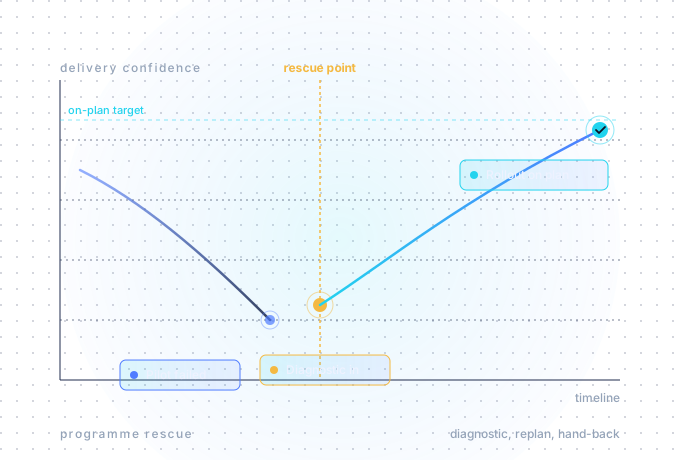
Three failure modes we see again and again.
After two decades of RTLS, RFID, and IoT delivery, the same patterns show up. Naming the failure mode is the first step in unblocking the programme.
Pilot worked, rollout didn’t
The 200-tag proof-of-concept ran clean in one zone. Scaling to 20,000 tags across multiple sites surfaced infrastructure gaps, RF dead zones, integration debt, and operational workflows that nobody piloted. The vendor blames the site. The site blames the vendor. Nothing ships.
Integration debt is choking the team
The location platform was bought before the integration story was specified. MES, WMS, SAP, CMMS, and BI are each one custom interface away from value — and every change request takes six weeks. The internal team is firefighting, not delivering.
Vendor relationship has broken down
Change orders pile up. Roadmap dates slip. The vendor points at the SOW; you point at the business case. Conversations are now lawyer-mediated. The programme needs an independent technical referee before it needs another steering committee.
Six workstreams. Run in parallel. Always.
A recovery is not a re-pilot. Every workstream below starts in week one and produces evidence the steering committee can act on.
Two-week independent assessment
Architecture, RF survey data, integration map, SOW gap analysis, KPI back-trace, and a stakeholder heat-map. Delivered as a signed-off finding pack the executive team can take to the board.
Aligning ops, IT, and vendor
Facilitated working sessions that re-anchor every party on the original business case, the current reality, and the path forward. We name the trade-offs explicitly so the steering committee can decide, not argue.
Where the design is the problem
Anchor density, technology mix, event-bus design, edge vs cloud split, and integration topology. Vendor-neutral — we will tell you when the platform is fine and when it has to change.
Independent technical referee
We sit on your side of the table with the technical evidence to back commercial conversations. Scope, pricing, SLA, and roadmap conversations grounded in what the deployment actually needs, not what the contract loosely promised.
A plan that can actually ship
New milestone plan, revised KPIs, and a gated rollout schedule with explicit go/no-go criteria at each gate. Re-baselined budget, risk register, and a first signed milestone within six weeks.
We exit, you run it
Runbooks, on-call rotations, KPI dashboards, change management, and a 90-day post-handover review built in. We design the recovery so the internal team owns the programme when we leave.
Three ways to bring us in.
Sized to where the programme actually is — not a one-size-fits-all retainer.
Diagnostic only · 2 weeks
Independent audit, finding pack, and a recovery recommendation. You take it from there or bring us back for the fix. Fixed scope, fixed price, two-week turnaround.
Diagnostic + replan · 6 weeks
Audit, stakeholder reset, architecture review, and a re-baselined plan signed off by your steering committee. The first signed milestone usually lands inside the engagement.
Embedded recovery · 8–12 weeks
A TRACIO programme director sits inside the governance, drives all six workstreams, owns steering-committee reporting, and hands back to your team on an agreed exit date. Fixed cap, gated milestones.