
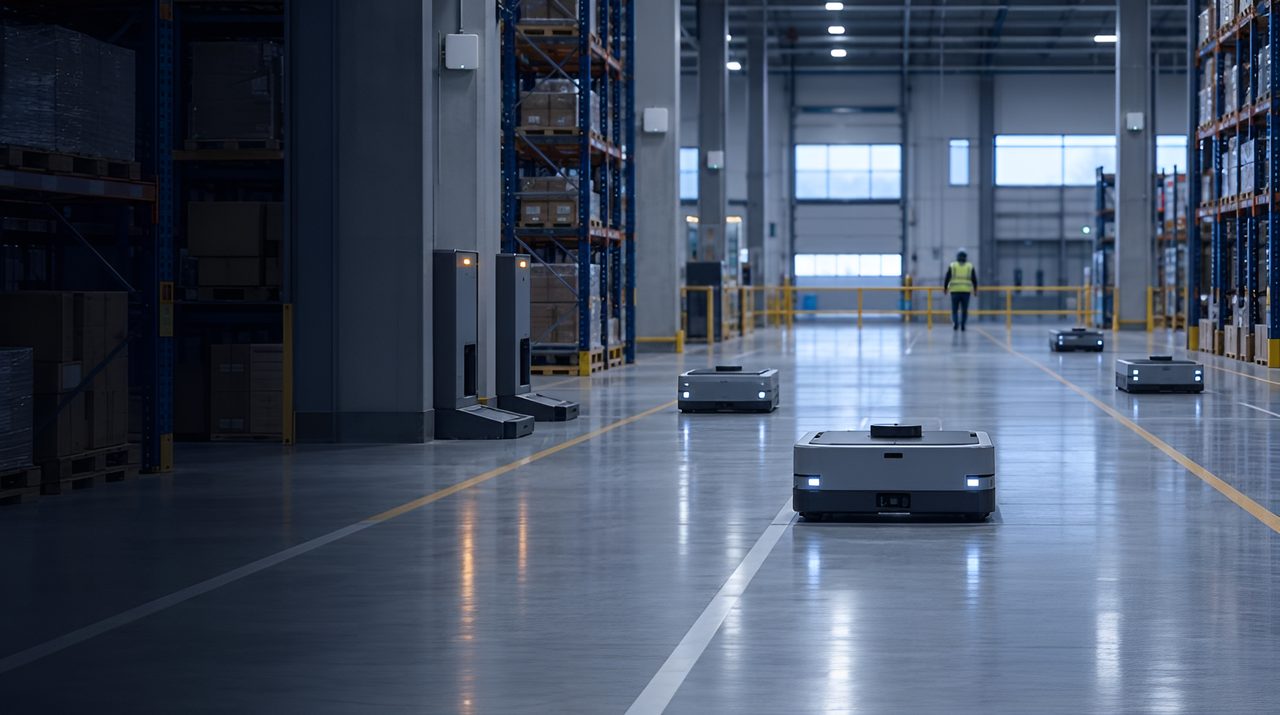
Od zarządzania robotami po optymalizację inteligentnej floty.
A manufacturer running AMR s and AGV s had limited visibility into route congestion, charging downtime, idle fleet utilisation and cross-zone movement inefficiencies.
Z czym się mierzą.
Zatłoczenie tras
Ruch robotyczny stworzył gorące punkty zatłoczenia w różnych strefach.
Przestoj w czynności bezczynności i ładowaniu
Wykorzystanie floty i ładowanie były niekontrolowane.
Brak widoku na poziomie floty
Roboty były zarządzane jako pojedyncze maszyny, a nie flotą.
Projekt z wcześniejszych ról, przed TRACIO (spółka zarejestrowana w maju 2026 r.). Nazwa klienta zastrzeżona na mocy NDA; dane zgodnie z ówczesnymi raportami. Referencje imienne dostępne na mocy NDA. Modelujemy Państwa własne liczby, gdy nas Państwo zaangażują.
Niezależny, nastawiony na rezultaty.
UWB for real-time robotic positioning, BLE for asset-interaction tracking, AGV / AMR telemetry for route analytics, and AI orchestration for congestion, idle-time and predictive movement optimisation.
To, co dostarczyliśmy.
- UWB RTLS w czasie rzeczywistym robotyczne pozycjonowanie
- Śledzenie interakcji z aktywami BLE
- AGV / AMR telemetry route analytics
- Orkiestracja floty AI: zatłoczenie, bezczynność, predykcyjna optymalizacja
Wyniki tego projektu
"Przestaliśmy zarządzać robotami jako pojedynczymi maszynami i zaczęliśmy optymalizować je jako inteligentną flotę."
Dyrektor operacyjny, produkcja przemysłowa (klient anonimizowany)
Stos za nim
Więcej takich studiów przypadków.
Ostatnia aktualizacja: