
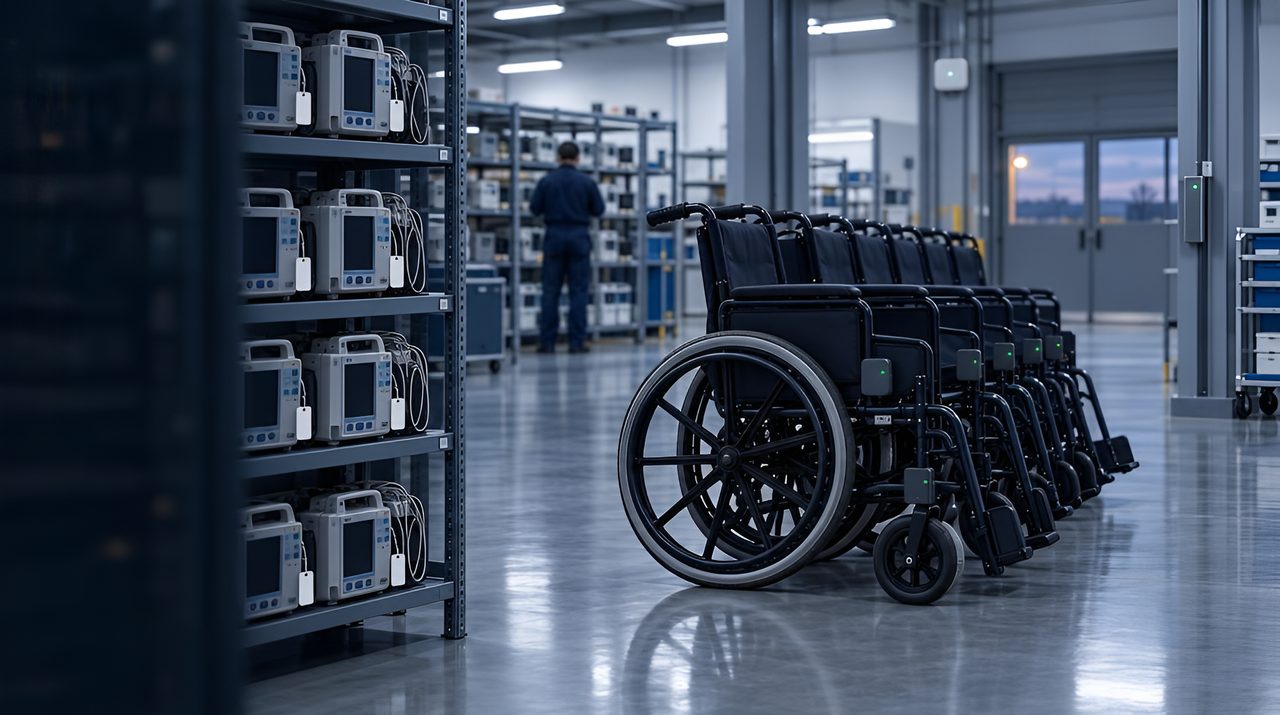
BLE-AoA vs UWB para sanidad RTLS. Lo cual encaja.
BLE-AoA y UWB son las dos tecnologías líderes de RTLS para despliegues hospitalarios: flujo de trabajo clínico, protección infantil, cumplimiento de la higiene de manos, búsqueda de activos y prevención de fugas de pacientes.
La precisión necesaria varía mucho según el caso de uso, y la elección correcta rara vez es "la más precisa". Esta es la comparación a nivel de operador para los equipos de ingeniería clínica y TI que eligen entre ellos.
La jerarquía de precisión en la sanidad
Los casos de uso hospitalarios se acumulan en diferentes niveles de precisión. Nivel de habitación: búsqueda de activos, atribución amplia del flujo de trabajo, ubicación del paciente para facturación.
A nivel de cama: protección infantil, asociación de equipos con el paciente, prevención de caídas, coincidencia de registros de administración de medicación.
Sub-decimétrico: cumplimiento de la higiene de manos con atribución confirmada en el punto de atención, seguimiento de instrumentos quirúrgicos. UWB ofrece los tres. BLE-AoA ofrece espacio y cama cómodamente; Subdecimeter es más difícil pero posible en despliegues densos.
Gestión de baterías de etiquetas: el factor decisivo operativo
Los hospitales cuentan con cientos o miles de personal, pacientes, camas y activos etiquetados. Etiquetas BLE-AoA: 2-5 años en una celda moneda. Etiquetas UWB: de meses a dos años dependiendo de la tasa de actualización.
Para una flota hospitalaria de 3.000 etiquetas activas, la mayor duración de la batería BLE-AoA reduce la carga operativa en un 10× o más. Muchos hospitales grandes rechazan UWB por motivos operativos de gastos generales incluso cuando la precisión es competitiva.
Ajuste en el caso de uso
BLE-AoA gana: la mayoría del seguimiento de activos; atribución del flujo de trabajo clínico; la protección infantil a nivel de cama (los sistemas basados en Quuppa son habituales); higiene de manos amplia a nivel de habitación; Análisis de utilización de equipos.
UWB gana: higiene de manos sub-decimétrica con punto de atención confirmado; seguimiento de instrumentos quirúrgicos; localización de pacientes en cuidados críticos con latencia de milisegundos; Marcado de alta densidad en partos y partos.
La mayoría de los despliegues hospitalarios mezclan ambas cosas: UWB en las pocas zonas que lo necesitan, BLE-AoA en el resto.
Panorama de proveedores en la sanidad
BLE-AoA / sanidad multitecnología RTLS: Quuppa (BLE-AoA subjacente), CenTrak (multitecnología: RF de baja frecuencia + BLE + Wi-Fi;
líder de mercado en hospitales RTLS), Stanley AeroScout (basado en Wi-Fi, específico para la atención sanitaria), Sonitor (ultrasonido para certeza a nivel de cama), Midmark RTLS.
UWB sanidad: BeWhere, Sewio (con tendencia industrial pero usada en hospitales), proveedores de plataformas Decawave.
La mayoría de los despliegues de RTLS en grandes hospitales son CenTrak o Stanley AeroScout para la amplia huella, con UWB o ultrasonidos para las pocas zonas que requieren sub-decimeter.
Transmisión electrónica y integración clínica
Ambos ecosistemas se integran en Epic, Cerner / Oracle Health, Meditech, Allscripts mediante interfaces estándar (HL7 v2, FHIR, APIs específicas de proveedores).
La atribución del flujo de trabajo clínico ("quién vio qué paciente cuándo") requiere correlacionar los eventos de etiquetas con los datos de la cita: la arquitectura de integración importa más que la radio subyacente.
Diseñamos la integración en la etapa 1.
Donde TRACIO recomienda cada uno
Por defecto BLE-AoA para nuevos despliegues hospitalarios RTLS donde la cobertura amplia importa: búsqueda de activos, flujo de trabajo, protección infantil, higiene de manos a nivel de habitación.
La ventaja operativa de una batería de varios años es decisiva a escala hospitalaria.
Añadir UWB en zonas específicas donde la precisión subdecimétrica no es negociable: higiene de manos de alta agudeza con POC confirmado, seguimiento de instrumentos quirúrgicos, localización de cuidados críticos.
Considera la RTLS multitecnología (CenTrak, Stanley AeroScout) cuando quieres un proveedor de plataforma única cubriendo todo el espectro, aceptando que ninguna radio haga todo de forma óptima.
Preguntas frecuentes
¿Cuál es mejor para la protección infantil: BLE-AoA o UWB?
Ambos funcionan. BLE - Las soluciones Quuppa basadas en AoA son de gran uso. UWB avanza en unidades de parto muy densas donde la certeza subdecimétrica a nivel de cama es importante. La mayoría de los despliegues son BLE-AoA.
¿Funcionarán mis APs Wi-Fi existentes para RTLS?
La mayoría de los Wi-Fi hospitalarios (Cisco, Aruba) soportan el posicionamiento BLE a nivel de habitación, no submétrico AoA. El submetro necesita localizadores BLE-AoA (Quuppa) o modelos de acceso mejorados. Dimensionamos la arquitectura adecuada en la fase 1.
¿CenTrak usa BLE-AoA o UWB?
CenTrak utiliza una pila multitecnológica propietaria: RF de baja frecuencia para certeza, BLE y Wi-Fi para una visibilidad más amplia. No es puramente BLE-AoA ni UWB, sino un híbrido optimizado para hospital.
¿Cómo se integra esto con nuestro EMR (Epic / Cerner)?
A través de HL7 v2 / FHIR y APIs específicas de proveedores en los servicios de localización de Epic Rover y Cerner. Diseñamos la integración de RME en la etapa 1.
¿Cuál es la secuencia correcta de despliegue?
Típicamente: fase 1, amplia cobertura RTLS (BLE-AoA o multi-tecnología) para la búsqueda de activos y flujo de trabajo;
fase 2, añadir zonas de alta agudeza (UWB o ecografía) para la atribución de la higiene de manos, protección infantil, seguimiento de instrumentos quirúrgicos. Definimos fases en la etapa 1 del método /.
Última actualización: