
Ultra-Wideband (UWB): cómo funciona y dónde encaja.
El Ultra-Wideband es la tecnología dominante de posicionamiento preciso en interiores de la última década. Ofrece una posición con precisión centímetro en entornos donde cualquier otra radio tiene dificultades.
Esta es la explicación a nivel de operador sobre cómo funciona realmente UWB, cuándo gana y dónde encajan mejor las alternativas.
La definición de 30 segundos
UWB suele ser la opción más precisa. La precisión que obtengas depende de tu emplazamiento, y la confirmamos en el estudio del sitio.
La característica definitoria es el ancho de banda: UWB utiliza señales de más de 500 MHz de ancho, lo que hace que el tiempo sea lo suficientemente preciso para medir la distancia directamente en lugar de estimarla a partir de la intensidad de la señal como hacen BLE o Wi-Fi.
Los estándares relevantes son IEEE 802.15.4z (pulso de alta velocidad) y los perfiles de interoperabilidad del Consorcio FiRa.
Cómo funciona realmente el rango de distancia en UWB
Hay dos técnicas comunes de medición de niveles.
Medición bidireccional (TWR): una etiqueta envía un pulso a un ancla fija; el presentador envía una respuesta; El tiempo de ida y vuelta, sin la sobrecarga del protocolo, da la distancia, con una precisión de temporización inferior a nanosegundos.
Diferencia de Tiempo de Llegada (TDoA): una etiqueta transmite un pulso; Múltiples anclajes sincronizados registran el momento exacto de la llegada; Las diferencias en los tiempos de llegada entre anclajes triangulan la posición de la etiqueta.
TDoA escala mejor para muchas etiquetas (la etiqueta solo transmite, no tiene que esperar respuestas), TWR es más sencillo para despliegues pequeños. La mayoría de los sistemas empresariales utilizan TDoA con sincronización de ancla en los nanosegundos.
Donde UWB es la respuesta correcta
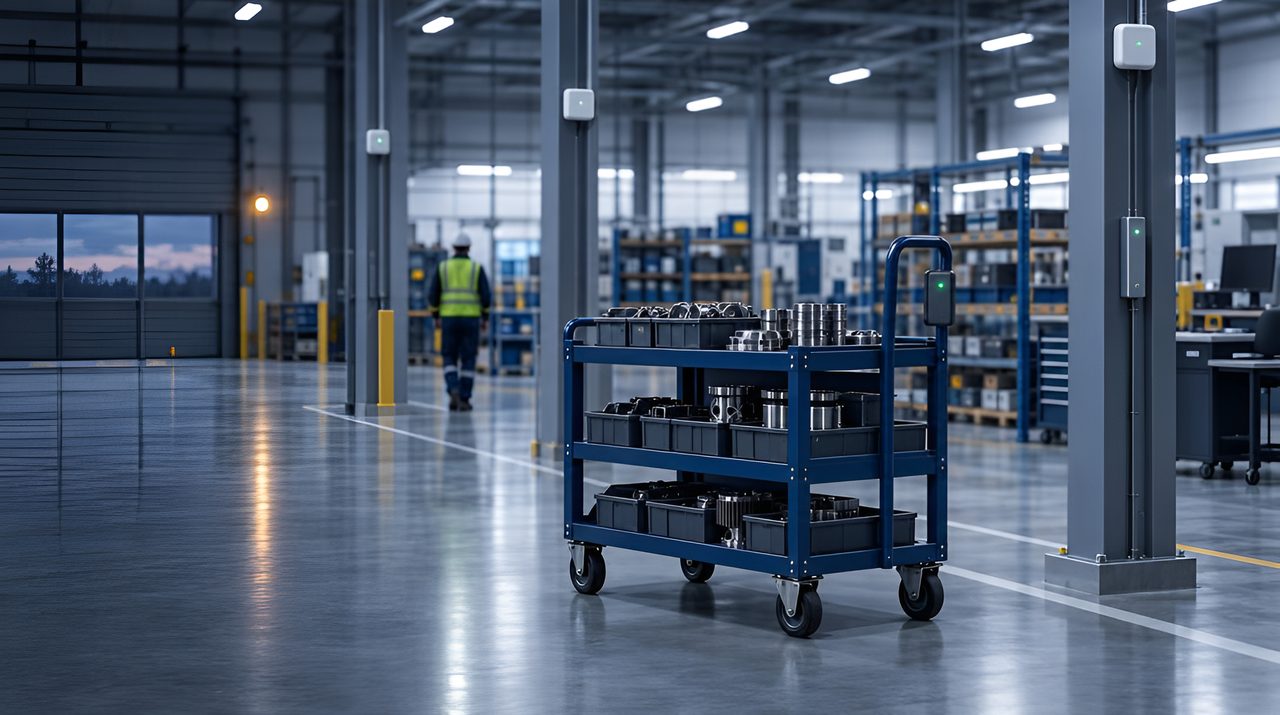
Donde necesites Precisión de clase centímetro en entornos RF desafiantes: plantas automotrices rastreando piezas en estantes metálicos; herramientas de seguimiento MRO aeroespacial y FOD;
entrenamiento táctico en instalaciones de entrenamiento CQC, donde la posición de cada operador importa; seguimiento de rendimiento deportivo en arenas donde GPS no funciona; evitar colisiones entre carretillas elevadoras y peatones donde las falsas alarmas arruinan la adopción.
UWB tolera mejor el multipath que las radios de banda estrecha, funciona con materiales de construcción normales y se actualiza muchas veces por segundo. Si la posición de Wi-Fi a 5 metros no es suficiente, UWB es el siguiente nivel.
UWB frente a las alternativas
UWB suele ser la opción más precisa. La precisión que obtengas depende de tu emplazamiento, y la confirmamos en el estudio del sitio.
BLE-AoA suele ganar en duración de batería (años) frente a UWB (meses o un año dependiendo de la tasa de actualización). UWB vs Passive RFID: completamente diferente. UWB rastrea la posición en tiempo real, RFID confirma la presencia en los puntos de lectura.
La mayoría de las empresas utilizan ambos. UWB vs Wi-Fi RTT: Wi-Fi RTT puede alcanzar una precisión de nivel métrico en dispositivos compatibles, pero está limitado por el soporte de firmware AP; UWB tiene un ecosistema de despliegue más maduro.
UWB vs GNSS: GNSS para exteriores, UWB para interiores, son complementarios, no competitivos.
Limitaciones realistas
Tres puntos de dolor son reales. Coste por ancla: La infraestructura UWB es más cara que la BLE, normalmente varios cientos de euros por ancla, multiplicados en un sitio que puede necesitar una cobertura densa.
Etiqueta Duración de la batería: la transmisión RF activa consume energía; Las etiquetas de alta tasa de actualización (deportivas, tácticas) duran semanas o meses, las de menor tasa (seguimiento de activos) duran uno o dos años.
La gestión de baterías a gran escala es una carga operativa real. Sincronización de ancla: TDoA requiere sincronización de nanosegundos entre anclajes, normalmente mediante backbone cableado o sincronización inalámbrica dedicada.
El diseño del sitio no es trivial y requiere una inspección RF antes del compromiso.
Paisaje de proveedores y ecosistemas
Tres capas importan. Silicio: Qorvo (adquirida por Decawave, la empresa original de silicio UWB) y NXP son los principales proveedores de chips UWB, además de más recientemente el silicio U1/U2 de Apple y el UWB de Samsung.
Infraestructura y plataforma: Ubisense, Sewio, Pozyx, Litum y (BLE-AoA - adyacente para algunos casos de uso) Quuppa.
Estándares: FiRa Consortium para interoperabilidad, además de IEEE 802.15.4z para la especificación subyacente.
Para compras empresariales, la decisión rara vez es sobre silicio: se trata de qué plataforma se adapta a tu entorno, lo cual evaluamos durante la primera fase con una encuesta de RF en el sitio.
Donde TRACIO recomienda UWB
Casos de uso que requieren precisión submétrica con tasas de actualización en tiempo real: WIP y seguimiento de piezas en fabricación (especialmente rico en metal); control de herramientas y prevención de FOD en MRO aeroespacial; entrenamiento táctico y de fuerza contra fuerza;
seguimiento de atletas de precisión; Evitación de colisiones entre carretilla elevadora y peatones con ajuste de zonas ajustadas; seguimiento de activos de alto valor o móviles en sanidad, defensa, petróleo y gas (con hardware ATEX/IECEx).
No recomendamos UWB para la visibilidad a nivel de zona donde BLE sería suficiente, para aplicaciones exteriores donde GNSS encaja mejor, o para casos de uso solo en presencia donde Passive RFID es más barato y sencillo.
Lecturas relacionadas.
Cómo te ayudamos a elegir hardware UWB
Los sistemas UWB difieren en densidad de anclas, duración de batería de las etiquetas, frecuencia de actualización, software y apertura a otras plataformas. Primero redactamos el requisito, hacemos una lista corta de sistemas con él, estudiamos tu planta, hacemos un piloto con equipos alquilados y probamos el sistema entregado antes de que lo des por bueno. No vendemos hardware, así que nuestro asesoramiento sigue siendo independiente. Consulta la consultoría RTLS UWB.
Preguntas frecuentes
¿Qué tan precisa es UWB en la práctica?
La precisión depende de tu emplazamiento, y la confirmamos en el estudio del sitio. La precisión en el mundo real depende totalmente de la colocación de los anclajes, la densidad, la calidad de sincronización y el entorno.
Validamos la precisión en un piloto a carga de producción como un criterio de puerta 2 en /método.
¿UWB funciona a través de paredes y obstáculos?
UWB penetra razonablemente bien la mayoría de los materiales de construcción (pladur, madera, vidrio), pero está atenuado por hormigón y metal.
La mitigación estándar es la densidad de anclajes: más anclajes con cobertura superpuesta compensan los caminos directos obstruidos. Un estudio predictivo de RF en la puerta 1 dimensiona el recuento de ancla.
¿Cuánto tiempo duran las etiquetas UWB en una batería?
Depende de la tasa de actualización. Las etiquetas de alta frecuencia (5-10 Hz para deportes, tácticas) duran semanas o meses en una pila moneda o en litio pequeño.
Las etiquetas de seguimiento de activos a 1 Hz o sub-Hz duran entre 1 y 3 años. Las placas de trabajadores industriales suelen ser recargables. Ajustamos la estrategia de batería en la puerta 1 teniendo en cuenta el caso de uso.
¿Es compatible UWB entre fabricantes?
El protocolo Tag-to-Anchor es en gran medida específico de cada fabricante, a pesar de que los estándares IEEE y FiRa funcionan. En la práctica, te comprometes con el ecosistema de etiquetas y anclajes de un proveedor por despliegue.
Las flotas UWB multi-fabricante están emergiendo pero aún no son generalizadas. Diseñamos cuidadosamente el compromiso con los proveedores desde la puerta 1.
¿Ayuda el chip UWB de mi smartphone aquí?
En su mayoría no, para el seguimiento de activos empresariales. Apple U1/U2 y Samsung UWB están diseñados para interacciones de corto alcance entre dispositivos (AirTags, llave segura para coche, intercambio de archivos).
Los chips son técnicamente compatibles con FiRa, pero el ecosistema de aplicaciones para el posicionamiento empresarial en dispositivos de consumo aún no está ahí.
¿Cómo se integra UWB con nuestros sistemas empresariales?
Las plataformas modernas UWB exponen datos de posición y eventos mediante APIs REST, MQTT y OPC UA. La integración en WMS / MES /EMR es conceptualmente sencilla pero siempre no trivial en la práctica. Véase Integraciones RTLS y IoT para nuestros patrones de integración empresarial.
Última actualización: