
Ultra-Wideband (UWB) : comment ça fonctionne et où il s’insère ?
L’ultra-widebands est la technologie dominante de positionnement intérieur de précision de la dernière décennie. Il offre une position d’un centimètre précis dans des environnements où toutes les autres radios peinent.
C’est l’explication au niveau opérateur sur le fonctionnement réel de UWB, quand il gagne, et où les alternatives s’intègrent mieux.
La définition en 30 secondes
L’UWB est généralement l’option la plus précise. La précision obtenue dépend de votre site, et nous la confirmons lors de l’audit sur site.
La caractéristique déterminante est la bande passante : UWB utilise des signaux de plus de 500 MHz de large, ce qui rend le timing suffisamment précis pour mesurer la distance directement plutôt que de l’estimer à partir de la puissance du signal comme le font BLE ou Wi-Fi.
Les normes pertinentes sont IEEE 802.15.4z (impulsion à haut débit) et les profils d’interopérabilité du consortium FiRa.
Comment fonctionne réellement la télémétrie UWB
Il existe deux techniques courantes de tir au relevé.
Télémétrie bidirectionnelle (TWR): une étiquette envoie une impulsion à une ancre fixe ; L’animateur envoie une réponse ; Le temps aller-retour, moins la charge du protocole, donne la distance, avec une précision de chronométrage inférieure à la nanoseconde.
Différence de temps d’arrivée (TDoA): une étiquette transmet une impulsion ; plusieurs ancres synchronisées enregistrent le moment exact de l’arrivée ; Les différences de temps d’arrivée entre les ancres triangulent la position de l’étagole.
TDoA évolue mieux pour de nombreuses balises (l’étiquette ne transmet que des mots, sans avoir à attendre de réponses), TWR est plus simple pour les petits déploiements. La plupart des systèmes d’entreprise utilisent TDoA avec synchronisation d’ancrage en nanosecondes.
Où UWB est la bonne solution
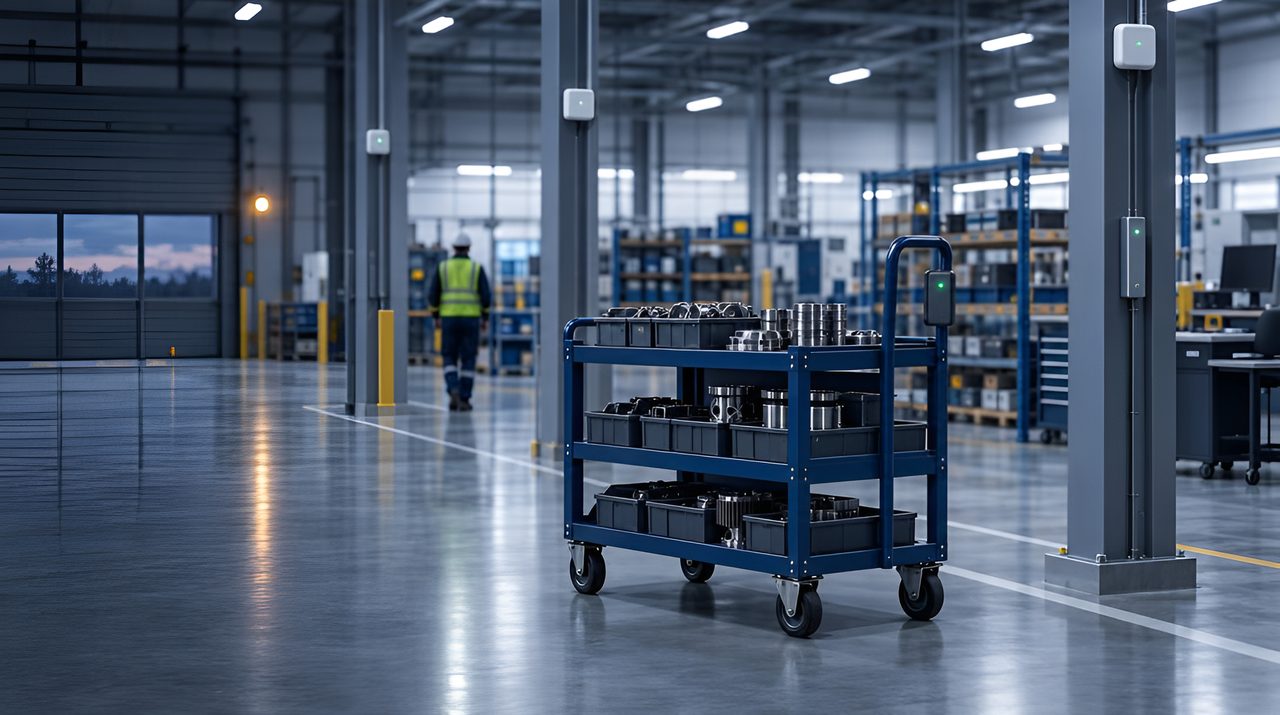
N’importe où tu veux Précision de classe centimètre dans des environnements RF difficiles : des usines automobiles suivant des pièces sur des supports métalliques ; des outils de suivi MRO aérospatial et du FOD ;
la formation tactique dans les installations d’entraînement CQC, où la position de chaque opérateur compte ; le suivi des performances sportives dans les arènes où GPS ne fonctionne pas ; Évitement des collisions entre chariots élévateurs et piétons où de fausses alertes ruinent l’adoption.
UWB tolère mieux le multipath que les radios à bande étroite, fonctionne avec des matériaux de construction normaux et se met à jour plusieurs fois par seconde. Si le positionnement Wi-Fi à 5 mètres n’est pas suffisant, UWB est l’étape suivante.
UWB contre les alternatives
L’UWB est généralement l’option la plus précise. La précision obtenue dépend de votre site, et nous la confirmons lors de l’audit sur site.
BLE-AoA gagne généralement en autonomie (années) par tag (UWB) (mois à un an selon le taux de mise à jour). UWB vs Passive RFID: complètement différent, UWB suit la position en temps réel, RFID confirme la présence aux points de lecture.
La plupart des entreprises utilisent les deux. UWB vs Wi-Fi RTT: Wi-Fi RTT peut atteindre une précision de niveau mètre sur les appareils pris en charge mais est limité par le support du firmware AP ; UWB dispose d’un écosystème de déploiement plus mature.
UWB vs GNSS: GNSS pour l’extérieur, UWB pour l’intérieur, ils sont complémentaires, pas compétitifs.
Limitations réalistes
Trois points de douleur sont réels. Coût par ancre : L’infrastructure UWB est plus coûteuse que celle de BLE, généralement plusieurs centaines d’euros par ancrage, multipliés sur un site nécessitant une couverture dense.
Autonomie de la batterie : la transmission RF active consomme de l’énergie ; Les tags à taux de mise à jour élevé (sportifs, tactiques) durent de plusieurs semaines à mois, ceux à taux plus bas (suivi des actifs) durent un an ou deux.
La gestion des batteries à grande échelle est une véritable surcharge opérationnelle.
Synchronisation des ancres : TDoA nécessite une synchronisation en nanosecondes entre les ancrages, généralement via une dorsale filaire ou une synchronisation sans fil dédiée. La conception du site n’est pas triviale et nécessite une étude RF avant engagement.
Paysage des fournisseurs et des écosystèmes
Trois couches comptent. Silicium : Qorvo (a acquis Decawave, la société originale de silicium UWB) et NXP sont les principaux fournisseurs de puces UWB, ainsi que plus récemment le silicium U1/U2 d’Apple et le UWB de Samsung.
Infrastructure et plateforme : Ubisense, Sewio, Pozyx, Litum et (BLE-AoA - AoA - adjacent pour certains cas d’usage) Quuppa.
Normes : FiRa Consortium pour l’interopérabilité, plus IEEE 802.15.4z pour la spécification sous-jacente.
Pour les achats d’entreprise, la décision concerne rarement le silicium, il s’agit de savoir quelle plateforme convient à votre environnement, que nous évaluons lors de la première étape avec une étude RF sur site.
Là où TRACIO recommande UWB
Cas d’utilisation nécessitant une précision inférieure au mètre avec des taux de mise à jour en temps réel : le suivi en cours et des pièces en fabrication (notamment riche en métal) ;
le contrôle des outils et la prévention des FOD dans le MRO aérospatial ; la formation tactique et la formation force contre force ;
le suivi précis des athlètes ; évitement des collisions entre chariot élévateur et piéton avec réglage de zones serrées ; suivi d’actifs à forte valeur ajoutée ou en mouvement dans la santé, la défense, le pétrole et le gaz (avec du matériel ATEX/IECEx).
Nous ne recommandons pas le UWB pour la visibilité au niveau des zones où le BLE suffirait, pour les applications extérieures où le GNSS convient mieux, ou pour les cas d’utilisation uniquement en présence où le Passive RFID est moins cher et plus simple.
Comment nous vous aidons à choisir le matériel UWB
Les systèmes UWB diffèrent par la densité d’ancres, l’autonomie des tags, les fréquences de mise à jour, le logiciel et leur ouverture à d’autres plateformes. Nous rédigeons d’abord l’exigence, présélectionnons des systèmes sur cette base, étudions votre site, menons un pilote sur matériel loué et testons le système livré avant que vous ne le validiez. Nous ne vendons pas de matériel, notre conseil reste donc indépendant. Voir le conseil RTLS UWB.
Questions fréquemment posées
Quelle est la précision de UWB en pratique ?
La précision dépend de votre site, et nous la confirmons lors de l’audit sur site. La précision dans le monde réel dépend entièrement du placement des ancres, de la densité, de la qualité de synchronisation et de l’environnement.
Nous validons la précision dans un pilote à charge de production comme critère de porte 2 dans la méthode /.
UWB fonctionne-t-il à travers les murs et les obstacles ?
UWB pénètre assez bien la plupart des matériaux de construction (placo, bois, verre) mais est atténué par le béton et le métal.
La mitigation standard est la densité des ancrages, plus d’ancrages avec une couverture chevauchante compensent les chemins directs obstrués. Une enquête RF prédictive sur le site à la porte 1 taille le nombre d’ancres.
Combien de temps les balises UWB durent-elles sur une batterie ?
Cela dépend du taux de mise à jour. Les balises à haute fréquence (5-10 Hz pour le sport, tactique) durent de plusieurs semaines à des mois sur une pile à monnaie ou un petit lithium.
Les balises de suivi d’actifs à 1 Hz ou sub-Hz durent de 1 à 3 ans. Les badges de travailleurs industriels sont généralement rechargeables. Nous évaluons la stratégie de batterie à la porte 1 en tenant compte du cas d’usage.
UWB est-il compatible entre différents fabricants ?
Le protocole tag-to-anchor est en grande partie spécifique au fournisseur, malgré le travail des normes IEEE et FiRa. En pratique, vous vous engagez à adopter un écosystème de tag-and-anchor d’un seul fournisseur par déploiement.
Les flottes multi-fournisseurs UWB émergent mais ne sont pas encore grand public. Nous concevons soigneusement l’engagement des fournisseurs dès la première porte.
La puce UWB de mon smartphone aide-t-elle ici ?
La plupart du temps, non, pour le suivi des actifs d’entreprise. Apple U1/U2 et Samsung UWB sont conçus pour des interactions à courte portée entre appareils (AirTags, clé sécurisée pour voiture, partage de fichiers).
Les puces sont techniquement compatibles avec FiRa, mais l’écosystème applicatif pour le positionnement en entreprise sur les appareils grand public n’est pas encore au niveau.
Comment UWB s’intègre-t-il à nos systèmes d’entreprise ?
Les plateformes UWB modernes exposent des données de position et d’événements via des API REST, MQTT et OPC UA. L’intégration dans WMS / MES /EMR est conceptuellement simple mais toujours non triviale en pratique, voir /intégrations pour nos modèles d’intégration entreprise.
Dernière mise à jour: