
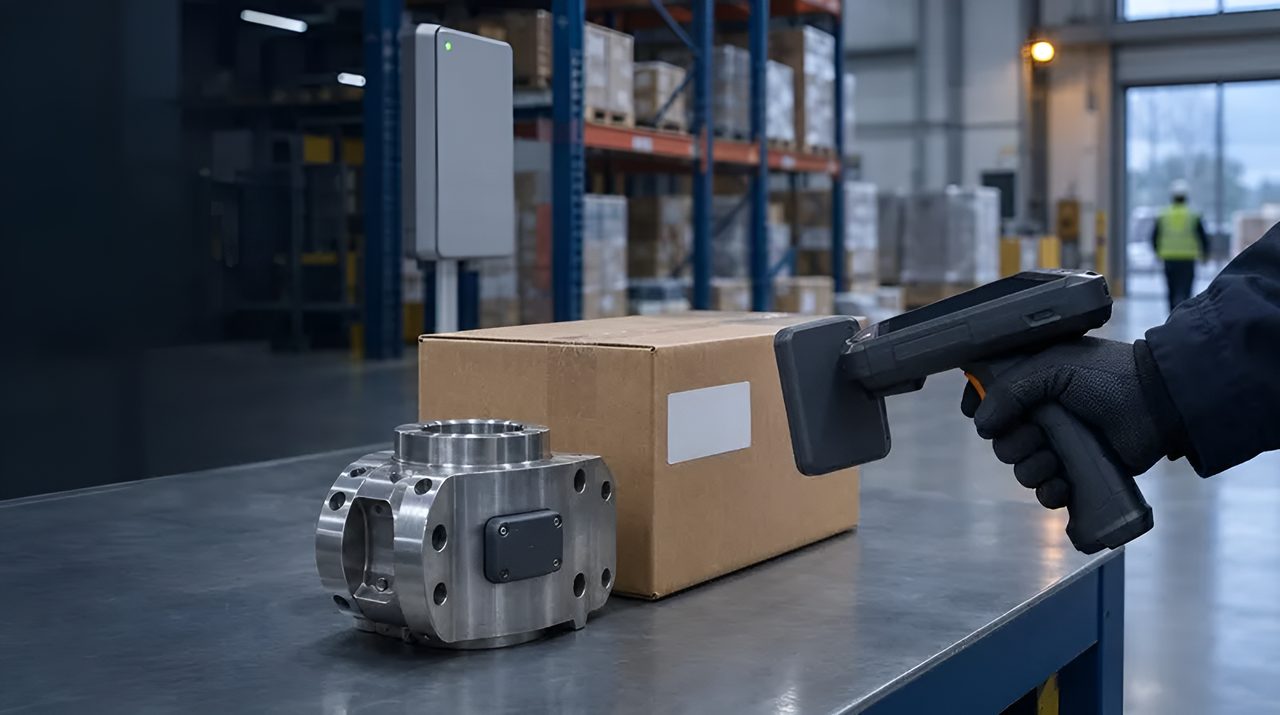
RFID vs código de barras, quando cada um vence.
RFID e código de barras são frequentemente apresentados como concorrentes, mas em implantações maduras eles são complementares, cada um joga com uma força que o outro não possui.
O código de barras é barato, onipresente e legível para humanos; O RFID é legível em massa, sem linha de visão e amigável para máquinas. Essa é a comparação em nível de operador que ajuda a compras a decidir qual usar onde e, mais frequentemente, onde usar ambos.
A diferença tecnológica
Código de barras (1D EAN/UPC, 2D QR/DataMatrix/ GS1 DataMatrix) é uma codificação óptica lida por uma câmera ou scanner a laser, um item por vez, exigindo linha de visão. O custo por item é essencialmente gratuito (impresso em linha na embalagem).
RFID (Passive UHF Gen 2 dominante em empresas) usa retroespalhamento de rádio a partir de tags passivas, legível em massa, sem necessidade de linha de visão, custo do item de 3 centavos a vários euros dependendo do formato.
Velocidade de leitura: RFID vence de forma decisiva em lote
Código de barras: um item por vez, normalmente de 1 a 3 segundos por varredura. RFID: milhares de etiquetas lidas em um único segundo ao ler em massa um palete, porta de doca ou prateleira.
Para recebimento, ordenação, despacho e contagem cíclica de alto volume, a vantagem do RFID em leitura em massa é o caso completo de negócio.
Para verificação unidade por unidade no ponto de venda ou em um fluxo de trabalho clínico, o modelo de varredura direcionada do código de barras é preferível.
Linha de visão e orientação
O código de barras exige que o símbolo seja visível para a câmera ou laser, na orientação correta e sem obstruções. Códigos de barras inclinados, escondidos, danificados ou borrados falham.
As etiquetas RFID não se importam com orientação, podem ler através da embalagem e ao redor de obstruções (com ressalvas em metal e líquido), e têm retentativa embutida pelo protocolo anti-colisão.
Em qualquer ambiente onde os itens são empilhados, embalados dentro de caixas ou se movendo rapidamente, a propriedade de não linha de visão do RFID é decisiva.
Padrões de custo e erro
Custo do código de barras por item: quase zero (impresso durante a embalagem normal). RFID custo por item: 3 centavos a vários euros.
Combinado: código de barras para confirmação de unidades, RFID para agregado a granel.
Ajuste regulatório
Pharma DSCSA: cada unidade de prescrição nos EUA carrega um código de barras 2D GS1 DataMatrix (serializado GTIN + lote + validade); RFID é suplementar para agregação de alto rendimento.
Aeroespacial AS9100: a rastreabilidade de peças usa ambos, com RFID para controle de ferramentas/FOD.
Automotivo IATF 16949: Código de barras 2D para rastreabilidade de unidades, RFID para logística de entrada. Vistica no varejo: RFID dominante globalmente em nível de item; Código de barras para finalizar o checkout.
Saúde: código de barras para verificação de medicamentos (BCMA), RFID para estoque consignado e controle de ferramentas.
Onde cada um vence de forma decisiva
Código de barras: verificação de unidades de baixo volume, rastreabilidade regulada em nível de unidade (DSCSA, FDA UDI), ponto de venda, varredura e pagamento ao consumidor, dispensação de prescrições, crossmatch com bancos de sangue.
RFID: recebimento e despacho de alto volume, contagem cíclica, armários inteligentes, rastreamento de ativos retornáveis, precisão do estoque no varejo em escala, controle de ferramentas, prevenção de FOD (FOD Off).
Ambos juntos: programas modernos de serialização carregam ambos codificados no mesmo item (código de barras para confirmação de unidades, RFID para agregado). Desenhamos a mistura certa durante a fase 1 do método /.
Perguntas frequentes
Devemos substituir o código de barras pelo RFID completamente?
Quase nunca. O código de barras é essencialmente gratuito e funciona para verificação de unidades; O RFID adiciona leitura em massa em escala.
A estratégia correta é adicionar o RFID junto ao código de barras, onde leitura em massa ou sem linha de visão gera valor operacional, não remover o código de barras.
Qual é o volume de equilíbrio onde o RFID ultrapassa o código de barras?
Depende mais do resultado do negócio do que do volume. Para a precisão do estoque no varejo de vestuário, o ponto de equilíbrio ocorre em milhares de SKUs por loja.
Para a reconciliação entre portas de doca, o ponto de equilíbrio é orientado pelo throughput (>500 casos/hora). Modelamos isso na etapa 1.
Uma única etiqueta pode carregar ambos?
Sim, Incrustação RFID + DataMatrix 2D impressa no mesmo rótulo agora é padrão no vestuário de varejo e cada vez mais na indústria farmacêutica. A estação de codificação programa o RFID e imprime o código de barras simultaneamente.
Qual é melhor para auditorias de rastreabilidade?
Ambos, em camadas. A serialização codificada por código de barras (SGTIN, UDI) é o registro regulatório; Eventos de leitura agregada RFID fornecem evidências de alto rendimento nas etapas do processo.
A maioria das plataformas modernas de serialização (Tracelink, rfxcel, SAP ATTP) ingere ambos.
E quanto ao NFC e HF RFID em vez de UHF?
Categorias diferentes. NFC (13,56 MHz HF) é uma interação de curto alcance entre dispositivo e etiqueta (smartphones, controle de acesso, pagamento). UHF RAIN é a categoria de leitura em massa para empresas.
Usamos o NFC para casos de uso específicos (autenticação de ativos, disparo de instruções de trabalho), mas o UHF domina a cadeia de suprimentos e o estoque.
Última atualização: