
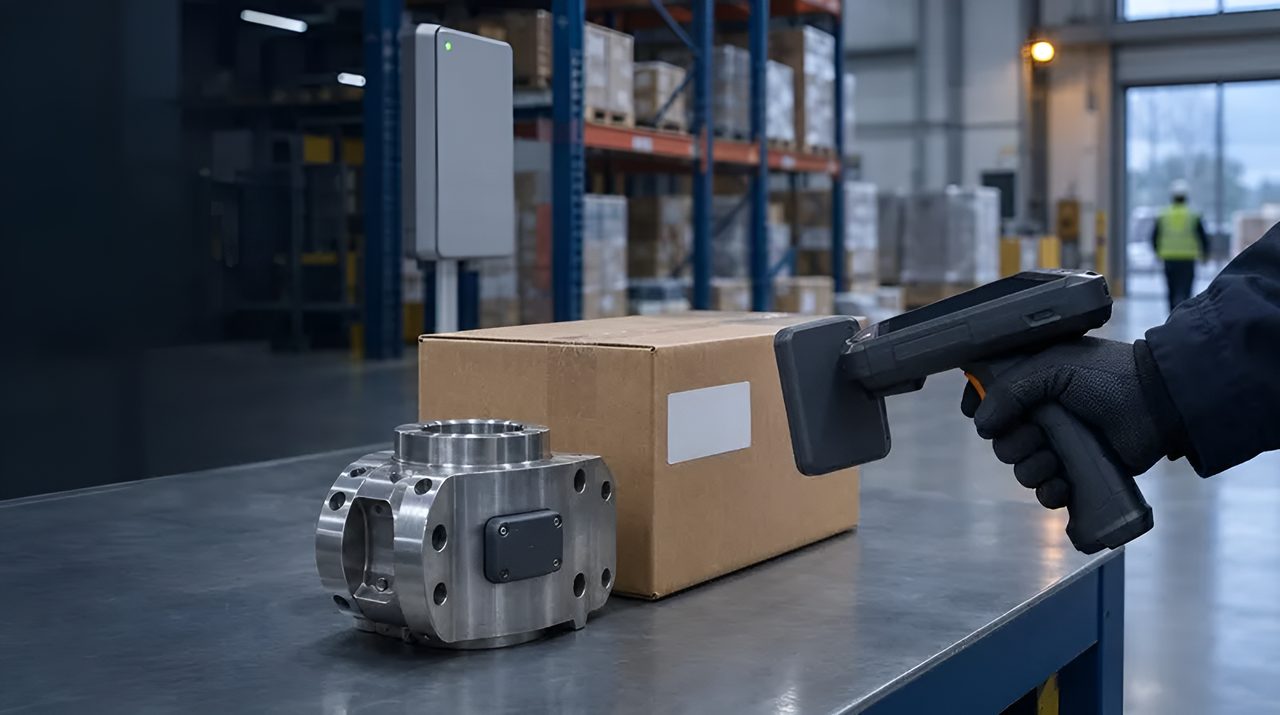
RFID vs. Barcode: wann welche Technologie gewinnt.
RFID und Barcode werden oft als Konkurrenten dargestellt, aber in ausgereiften Anwendungen ergänzen sie sich, jeder spielt eine Stärke aus, die der andere nicht hat.
Barcode ist billig, allgegenwärtig und für Menschen lesbar; RFID ist bulk-lesbar, ohne Sichtlinie und maschinenfreundlich. Dies ist der Betreiber-Level-Vergleich, der beim Einkauf hilft zu entscheiden, was wo verwendet wird, und häufiger wo beides eingesetzt wird.
Der technologische Unterschied
Barcode (1D EAN/UPC, 2D QR/DataMatrix/GS1 DataMatrix) ist eine optische Codierung, die von einer Kamera oder einem Laserscanner einzeln gelesen wird und eine Sichtlinie erfordert. Die Kosten pro Artikel sind im Grunde kostenlos (direkt auf der Verpackung gedruckt).
RFID (Passive UHF Gen 2 dominiert im Unternehmen) verwendet Radio-Backscatter von passiven Tags, ist massenlesbar, keine Sichtlinie erforderlich, der Artikel kostet je nach Formfaktor 3 Cent bis mehrere Euro.
Lesegeschwindigkeit: RFID gewinnt deutlich im Volumen
Barcode: jeweils ein Punkt auf einmal, typischerweise 1-3 Sekunden pro Scan. RFID: Tausende von Etiketten werden in einer einzigen Sekunde gelesen, wenn man eine Palette, eine Docktür oder ein Regal auslest.
Für Empfang mit hohem Volumen, Sortierung, Versand und Zyklenzählen ist der Vorteil von RFID beim Massenlesen der gesamte Business Case. Für die Einheitsverifikation am Verkaufsort oder im klinischen Arbeitsablauf wird das gezielte Scan-Modell von Barcode bevorzugt.
Sichtlinie und Ausrichtung
Barcode erfordert, dass das Symbol für die Kamera oder den Laser sichtbar ist, in der richtigen Ausrichtung und ungehindert. Geneigte, versteckte, beschädigte oder verschmierte Barcodes versagen.
RFID-Tags kümmern sich nicht um die Ausrichtung, können durch die Verpackung und um Hindernisse herum lesen (mit Vorbehalten bei Metall und Flüssigkeit) und haben einen eingebauten Nachversuch über das Anti-Kollisions-Protokoll.
In jeder Umgebung, in der Gegenstände gestapelt, in Kisten verpackt oder sich schnell bewegen, ist die Fähigkeit von RFID ohne Sichtlinie entscheidend.
Kosten- und Fehlermuster
Barcode-Kosten pro Artikel: nahezu null (gedruckt während der normalen Verpackung). RFID Kosten pro Artikel: 3 Cent bis mehrere Euro.
Kombiniert: Barcode für die Einheitsbestätigung, RFID für das Gesamtaggregat.
Regulatorische Passung
Pharma DSCSA: jedes Rezeptgerät in den USA trägt einen 2D GS1 DataMatrix-Barcode (serienisiert GTIN + Charge + Ablaufdatum); RFID ist eine Ergänzung für Hochdurchsatzaggregation.
Luft- und Raumfahrt AS9100: Die Rückverfolgbarkeit der Bauteile verwendet beides, wobei RFID für Werkzeug-/FOD-Steuerung dient.
Automobil IATF 16949: 2D-Barcode für die Rückverfolgbarkeit der Einheiten, RFID für eingehende Logistik. Einzelhandelsbekleidung: RFID weltweit auf Item-Ebene dominant; Barcode zum Checkout.
Gesundheitswesen: Barcode für Medikamentenverifizierung (BCMA), RFID für Kommissionslager- und Werkzeugkontrolle.
Wo jeder entscheidend gewinnt
Barcode: Kleinvolumen-Einheitsverifizierung, regulierte Rückverfolgbarkeit auf Einheitenebene (DSCSA, FDA UDI), Kassenverkaufsstelle, Verbraucher-Scan-and-Pay, Rezeptabgabe, Blutbank-Kreuzabgleich.
RFID: Hochvolumen-Empfang und -Versand, Zykluszählung, intelligente Schränke, Verfolgung von Rückgaben, Einzelhandelsbestandsgenauigkeit in großem Maßstab, Werkzeugkontrolle, FOD-Prävention.
Beide zusammen: Moderne Serialisierungsprogramme enthalten beide auf demselben Element codiert (Barcode für die Einheitsbestätigung, RFID für das Aggregat). Wir entwerfen die richtige Mischung in Phase 1 von die TRACIO-Programmmethode.
Entscheidungskriterien
Barcode is optical identity verification: cheap labels, line-of-sight, human- or scanner-paced. RAIN RFID is bulk RF identity: no line-of-sight, portal or handheld reads of many tags per second, higher label and infrastructure cost. Mature operations usually run both: RFID for inventory velocity, barcode for exception handling and regulated unit verification.
Entscheidungskriterien: Personalkosten für das Zählen, Verpackungen, die die optische Erfassung blockieren, Tag-Stückkosten bei Ihrem Volumen, Machbarkeit der Portale im Funk, vorhandene Drucker und Encoder und regulatorische Kontrollen, die weiterhin eine von Menschen bestätigte optische Lesung verlangen.
When RFID wins
- Inventur und Wareneingang brauchen einen um Größenordnungen höheren Durchsatz als das Scannen aller Barcodes.
- Artikel sind gestapelt, verpackt oder hängen dort, wo optische Erfassung scheitert.
- Einzelartikel im Handel, Verwahrung bei der Serialisierung in der Pharmaindustrie oder Mehrwegtransportmittel rechtfertigen die Tag-Kosten bei hohen Stückzahlen.
- Automatische Portale an den Toren können Übergabeereignisse ins WMS schreiben, ohne jede Einheit anzufassen.
When barcode wins
- Geringe Umschlagshäufigkeit, knappe Budgets oder Prozesse, die die Genauigkeits-SLAs mit diszipliniertem Scannen schon erreichen.
- Regulierte Prüfung einzelner Einheiten, bei der eine von Menschen bestätigte optische Lesung der Kontrollpunkt ist.
- Funkfeindliche Umgebungen (sehr viel Metall oder Flüssigkeiten), in denen die Kosten für die Tag-Auslegung den Nutzen übersteigen.
- Kurze Programme, in denen sich die RFID-CapEx vor der nächsten Prozessänderung nicht amortisieren kann.
TCO-Fallen
Falle: RFID-Tag-Stückkosten mit Barcode-Etikettenkosten vergleichen, ohne die eingesparte Zählarbeit. Falle: Drucker und Encoder, RF-Design der Portale und Ausnahmebearbeitung unterschätzen. Falle: der Wunsch nach 100 % RFID, wenn eine hybride Lösung (RFID für Masse, Barcode zur Prüfung) den ROI schneller erreicht. Falle: schlechte Tag-Platzierung zerstört die Leserate und die Lesermarke wird beschuldigt. Falle: das Change Management für Mitarbeitende vergessen, die weiterhin einen Barcode als Rückfallebene brauchen.
Das Vorgehen, das sich meist durchsetzt
Beginnen Sie mit den Kontrollpunkten im Prozess, die heute am meisten Arbeitszeit kosten (Wareneingang, Inventur, Versandkontrolle), und rüsten Sie diese mit RFID-Portalen oder Handgeräten aus. Behalten Sie Barcodes für Ausnahmen, Retouren und jeden regulatorischen Schritt, der noch eine optische Bestätigung verlangt. Codieren Sie Inlays, die Ihre Verpackungstests bestanden haben. Kaufen Sie keine Tags nach Katalogfoto.
Reader brand (Impinj, Zebra, Honeywell, Alien) matters less than antenna design, power settings and tag placement. Printers and encoders must be in the BOM from day one or you will create unreadable labels at scale. Train associates on when to trust the portal and when to fall back to scan.
TRACIO stays independent across AIDC suppliers. We help you write the RF acceptance tests and the hybrid SOP so the technology choice survives first peak season.
Zusammenfassung der Entscheidung
Choose RFID when labour and bulk-read velocity dominate; choose barcode when optical unit verification and minimal CapEx dominate; choose both when peak seasons punish pure barcode counting but regulators or exceptions still need a scan. Put tag tests, portal design and printer encoding in phase one. TRACIO will not sell you a reader brand. We will help you fail the wrong architecture early.
Evidence to demand in quotes
Verlangen Sie Tests der Leserate an Portalen mit Ihrer echten Verpackung, Zeiten für die Ausnahmebearbeitung mit Handgeräten, Drucker- und Encoder-Modelle, Teilenummern der Inlays, die bestanden haben, und ein Modell für Verbrauchsmaterial über fünf Jahre. Wenn ein Bieter diese Nachweise nicht zeigen kann, ist der Stückpreis Fiktion. TRACIO prüft RF-Designs unabhängig vom kommerziellen Druck von Impinj, Zebra, Honeywell oder Alien.
Häufig gestellte Fragen
Sollten wir den Barcode komplett durch RFID ersetzen?
Fast nie. Barcode ist im Wesentlichen kostenlos und dient zur Einheitsverifikation; RFID fügt Bulk-Read im Maßstab hinzu. Die richtige Strategie ist, RFID neben den Barcode zu setzen, wo Bulk-Read oder No-Line-of-Sight den Betriebswert freisetzt, nicht den Barcode zu entfernen.
Wie hoch ist das Breakeven-Volumen, bei dem RFID den Barcode überholt?
Das hängt mehr vom Geschäftsergebnis ab als vom Volumen. Für die Bestandsgenauigkeit im Bekleidungshandel erreicht der Breakeven bei Tausenden von SKUs pro Geschäft.
Für die Docktür-Abstimmung ist der Break-Even-Effekt durchsatzgetrieben (>500 Fälle/Stunde). Wir modellieren das in Stufe 1.
Kann ein einzelnes Label beides tragen?
Ja, RFID-Inlay + gedruckte 2D-DataMatrix auf demselben Etikett ist mittlerweile Standard in Einzelhandelsbekleidung und zunehmend in der Pharmaindustrie. Die Codierstation programmiert den RFID und druckt den Barcode gleichzeitig.
Welches ist besser für Rückverfolgbarkeitsaudits?
Beides, vielschichtig. Barcode-kodierte Serialisierung (SGTIN, UDI) ist der regulatorische Datensatz; RFID-Aggregate-Read-Events liefern Hochdurchsatzbeweise in Prozessschritten. Die meisten modernen Serialisierungsplattformen (Tracelink, rfxcel, SAP ATTP) verwenden beides.
Wie sieht es mit NFC und HF RFID statt UHF aus?
Verschiedene Kategorien. NFC (13,56 MHz HF) ist eine Kurzstrecken-Gerät-zu-Tag-Interaktion (Smartphones, Zugangskontrolle, Bezahlung). UHF-RAIN ist die Kategorie für Bulk-Reads für Unternehmen.
Wir nutzen NFC für spezifische Anwendungsfälle (Asset-Authentifizierung, Auslösung von Arbeitsanweisungen), aber UHF dominiert Lieferkette und Lager.
Zuletzt aktualisiert: