
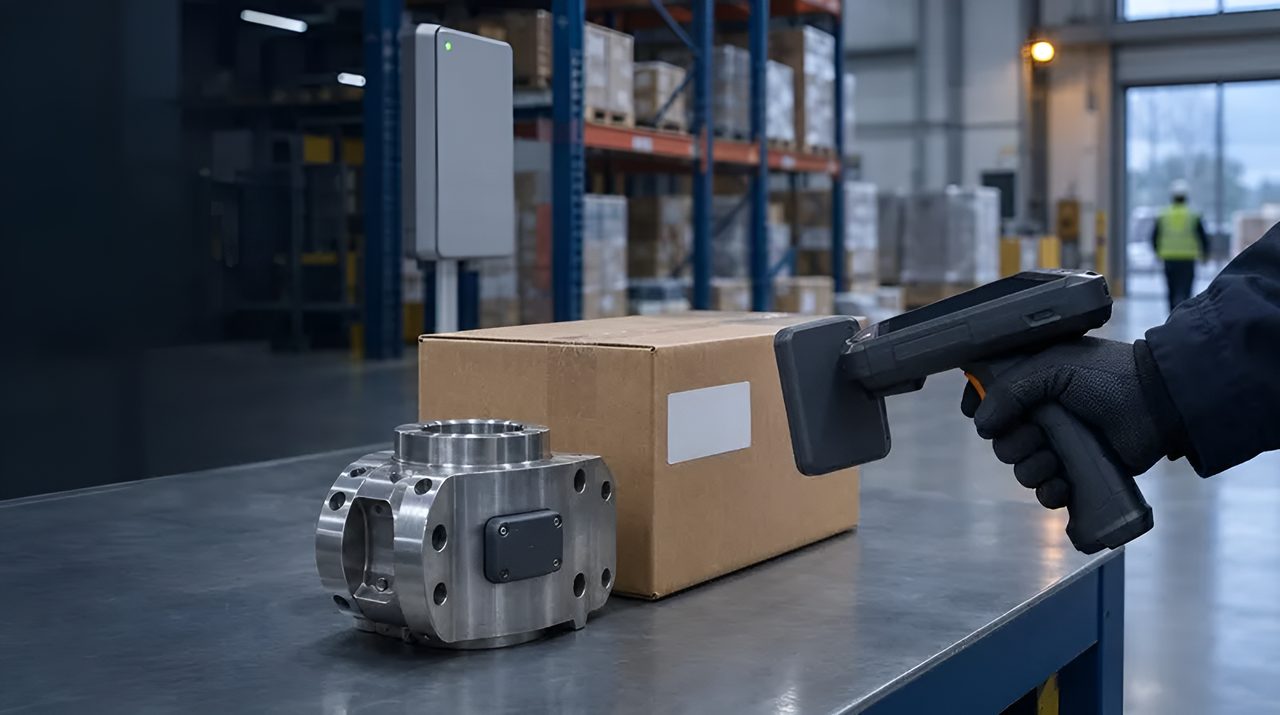
RFID kontra kod kreskowy, kiedy każdy wygrywa.
RFID i kod kreskowy często przedstawiane są jako konkurenci, ale w dojrzałych zastosowaniach są komplementarne, każdy gra na mocnej stronie, której drugi nie posiada.
Kod kreskowy jest tani, wszechobecny i czytelny dla człowieka; RFID jest czytelny w dużej mierze, bez widoczności i przyjazny dla maszyn. To właśnie porównanie na poziomie operatora pomaga zakupom zdecydować, którego i gdzie używać, a częściej gdzie używać obu.
Różnica technologiczna
Kod kreskowy (1D EAN/UPC, 2D QR/DataMatrix/ GS1 DataMatrix) to kodowanie optyczne odczytywane przez kamerę lub skaner laserowy, po jednym elemencie naraz, wymagające linii widzenia. Koszt za przedmiot jest praktycznie darmowy (drukowany na opakowaniu w linii).
RFID (Passive UHF Gen 2 dominujący w przedsiębiorstwach) wykorzystuje radiowy rozpraszacz zwrotny z pasywnych tagów, odczytywalny w całości, bez konieczności widoczności, koszt przedmiotu od 3 centów do kilku euro, w zależności od formatu.
Szybkość odczytu: RFID zdecydowanie wygrywa w masowych przypadkach
Kod kreskowy: jeden element na raz, zazwyczaj 1-3 sekundy na skan. RFID: tysiące tagów odczytywanych w ciągu jednej sekundy podczas masowego odczytu palety, drzwi doku lub półki.
W przypadku odbioru dużych wolumenów, sortowania, wysyłki i liczenia cyklicznego przewagą RFID w odczytach masowych jest cały przypadek biznesowy.
Do weryfikacji jednostki po jednostce przy sprzedaży lub w procesie pracy klinicznym preferowany jest model targeted-scan w kodach kreskowych.
Linia widzenia i orientacja
Kod kreskowy wymaga, aby symbol był widoczny dla kamery lub lasera, w odpowiedniej orientacji i bez przeszkód. Przechylone, ukryte, uszkodzone lub rozmazane kody kreskowe zawodzą.
Tagi RFID nie zwracają uwagi na orientację, mogą czytać opakowanie i wokół przeszkód (z zastrzeżeniami dotyczącymi metalu i cieczy) oraz mają wbudowany tryb powtórki przez protokół antykolizyjne.
W każdym środowisku, gdzie przedmioty są układane, pakowane w pudełkach lub poruszają się szybko, decydująca jest właściwość RFID: brak linii wzroku.
Wzorce kosztów i błędów
Koszt kodu kreskowego za przedmiot: prawie zero (drukowane podczas normalnego opakowania). Koszt RFID za przedmiot: 3 centy do kilku euro.
Łącznie: kod kreskowy dla potwierdzenia jednostki, RFID dla agregatu masowego.
Dopasowanie regulacyjne
Pharma DSCSA: każda jednostka recepty w USA posiada 2D kod kreskowy GS1 DataMatrix (seryjizowany GTIN + partia + ważność); RFID jest uzupełnieniem agregacji o wysokiej przepustowości.
Aerospace AS9100: śledzenie części wykorzystuje oba te rozwiązania, z RFID do kontroli narzędzi/FOD.
Motoryzacja IATF 16949: kod kreskowy 2D dla śledzenia jednostki, RFID dla logistyki przychodzącej. Odzież detaliczna: RFID dominująca na poziomie przedmiotów globalnie; Kod kreskowy przy kasie.
Opieka zdrowotna: kod kreskowy do weryfikacji leków (BCMA), RFID do kontroli towaru konsygnacyjnego i narzędzi.
Gdzie każdy z nich wygrywa zdecydowanie
Kod kreskowy: weryfikacja jednostek o niskiej objętości, regulowana śledzowalność na poziomie jednostek (DSCSA, FDA UDI), punkt sprzedaży, skanowanie i płatność przez konsumentów, wydawanie recept, krzyżowanie w bankach krwi.
RFID: odbiór i wysyłka dużych wolumenów, liczenie cykliczne, inteligentne szafy, śledzenie zwrotnych aktywów, dokładność zapasów detalicznych na dużą skalę, kontrola narzędzi, zapobieganie FOD.
Oba razem: nowoczesne programy serializacji zawierają oba kody zakodowane na tym samym elemencie (kod kreskowy do potwierdzenia jednostki, RFID do agregatu). Projektujemy odpowiedni miks podczas pierwszego etapu metoda programu TRACIO.
Najczęściej zadawane pytania
Czy powinniśmy całkowicie zastąpić kod kreskowy RFID?
Prawie nigdy. Kod kreskowy jest praktycznie darmowy i sprawdza się w weryfikacji jednostki; RFID dodaje odczyt masowy na dużą skalę.
Właściwą strategią jest dodanie RFID obok kodu kreskowego, gdzie odczyt masowy lub brak linii widzenia daje wartość operacyjną, a nie usuwanie kodu kreskowego.
Jaki jest poziom równowagi, gdy RFID wyprzedza kod kreskowy?
To zależy bardziej od efektu biznesowego niż od wolumenu. Jeśli chodzi o dokładność zapasów w handlu odzieżą, rentowność następuje przy tysiącach SKU w sklepie.
W przypadku uzgadniania drzwi nabrzeżowych rentowność jest napędzana przepustowością (>500 przypadków/godzinę). Modelujemy to w etapie 1.
Czy jedna wytwórnia może obejmować oba te produkty?
Tak, inkrustacja RFID + drukowana 2D DataMatrix na tej samej etykiecie jest obecnie standardem w odzieży detalicznej, a coraz częściej w farmaceucie. Stacja kodująca programuje RFID i jednocześnie drukuje kod kreskowy.
Co jest lepsze do audytów śledzenia?
Oba, warstwowe. Serializacja kodowana kodem kreskowym (SGTIN, UDI) to rejestr regulacyjny; Zdarzenia zbiorczego odczytu RFID dostarczają dowodów o wysokiej przepustowości na etapach procesu.
Większość nowoczesnych platform serializacyjnych (Tracelink, rfxcel, SAP ATTP) pobiera oba te urządzenia.
A co z NFC i HF RFID zamiast UHF?
Różne kategorie. NFC (13,56 MHz HF) to krótkodystansowa interakcja urządzenia z tagiem (smartfony, kontrola dostępu, płatności). UHF RAIN to kategoria odbiorców masowych dla przedsiębiorstw.
Używamy NFC do konkretnych zastosowań (uwierzytelnianie zasobów, wyzwalanie instrukcji pracy), ale UHF dominuje w łańcuchu dostaw i zapasach.
Ostatnia aktualizacja: