
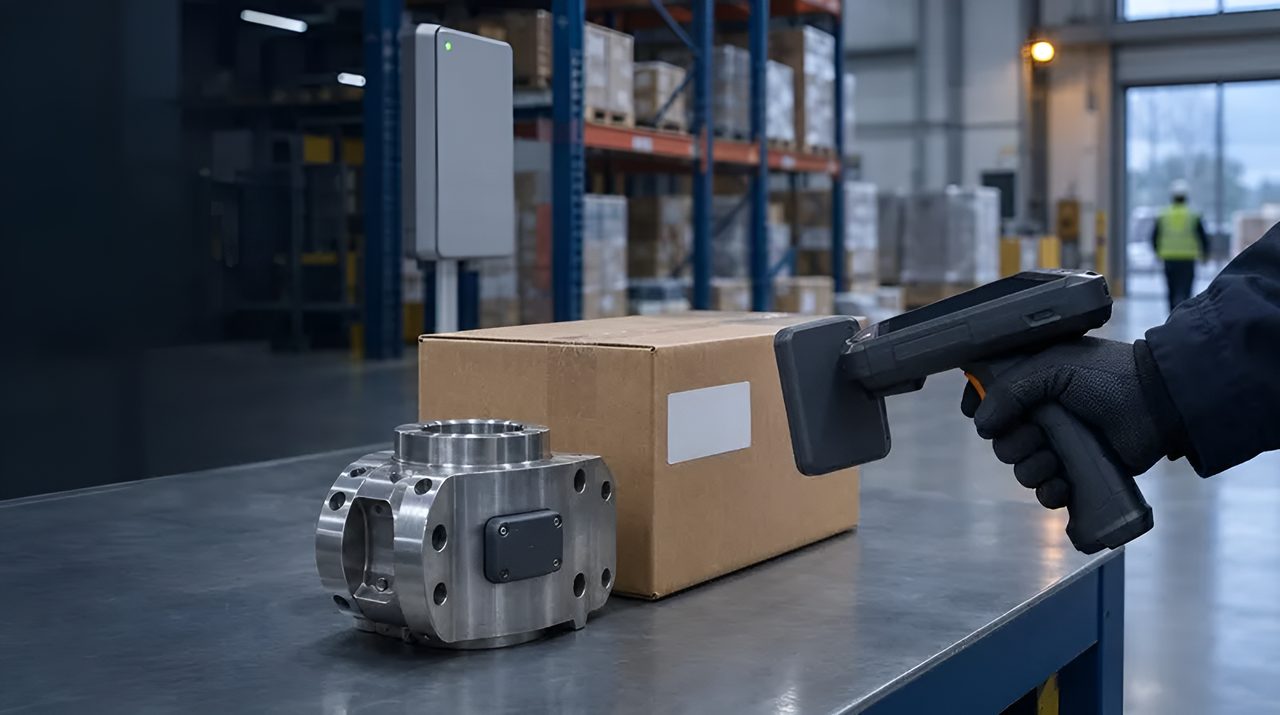
RFID vs código de barras: cuándo gana cada uno.
RFID y el código de barras suelen presentarse como competidores, pero en despliegues maduros son complementarios: cada uno juega con una fortaleza que el otro no tiene.
El código de barras es barato, omnipresente y legible para humanos; RFID es legible en masa, sin línea de visión y amigable para máquinas. Esta es la comparación a nivel de operador que ayuda a compras a decidir qué usar y dónde y, más a menudo, dónde usar ambos.
La diferencia tecnológica
Código de barras (1D EAN/UPC, 2D QR/DataMatrix/ GS1 DataMatrix) es una codificación óptica leída por una cámara o un escáner láser, un elemento a la vez, que requiere línea de visión. El coste por artículo es esencialmente gratuito (impreso en línea en el envase).
RFID (Passive UHF Gen 2 dominante en empresas) utiliza retrodispersión de radio desde etiquetas pasivas, legible a granel, sin necesidad de línea de visión, costando el artículo de 3 centavos a varios euros dependiendo del factor de forma.
Velocidad de lectura: RFID gana de forma contundente en volumen
Código de barras: un artículo a la vez, normalmente entre 1 y 3 segundos por escaneo. RFID: miles de etiquetas leídas en un solo segundo al leer en masa un palé, una puerta de muelle o una estantería.
Para recepción, ordenación, despacho y recuento cíclico de alto volumen, la ventaja de lectura masiva de RFID es el caso completo de negocio.
Para la verificación unidad por unidad en el punto de venta o en un flujo de trabajo clínico, se prefiere el modelo de escaneo dirigido del código de barras.
Línea de visión y orientación
El código de barras requiere que el símbolo sea visible para la cámara o el láser, en la orientación correcta y sin obstáculos. Los códigos de barras inclinados, ocultos, dañados o borrosos fallan.
Las etiquetas RFID no se preocupan por la orientación, pueden leer a través del embalaje y alrededor de obstrucciones (con matices en torno a metal y líquido), y tienen reintento integrado mediante el protocolo anticolisión.
En cualquier entorno donde los objetos se apilen, se guardan dentro de cajas o se mueven rápidamente, la propiedad de no línea de visión de RFID es decisiva.
Patrones de coste y error
Coste del código de barras por artículo: casi cero (imprimido durante el embalaje normal). Coste por artículo de RFID: de 3 céntimos a varios euros.
Combinado: código de barras para la confirmación de unidad, RFID para agregado a granel.
Ajuste regulatorio
Pharma DSCSA: cada unidad de prescripción en EE. UU. lleva un código de barras 2D GS1 DataMatrix (serializado GTIN + lote + caducidad); RFID es un complemento para la agregación de alto rendimiento.
Aeroespacial AS9100: la trazabilidad de piezas utiliza ambos, con RFID para el control de herramientas/FOD.
Automoción IATF 16949: código de barras 2D para trazabilidad de unidades, RFID para logística de entrada. Prendas de venta al por menor: RFID dominante a nivel de ítem a nivel global; Código de barras para el pago.
Sanidad: código de barras para verificación de medicamentos (BCMA), RFID para almacenamiento de mercancías y control de herramientas.
Donde cada uno gana de forma decisiva
Código de barras: verificación de unidades de bajo volumen, trazabilidad regulada a nivel de unidad (DSCSA, FDA UDI), punto de venta, escaneo y pago por consumidores, dispensación de recetas, cruce de bancos de sangre.
RFID: recepción y despacho de alto volumen, recuento cíclico, armarios inteligentes, seguimiento de activos retornables, precisión del inventario minorista a escala, control de herramientas, prevención de FOD (FOD Top).
Ambos juntos: los programas de serialización modernos llevan ambos codificados en el mismo elemento (código de barras para la confirmación de unidades, RFID para agregado). Diseñamos la mezcla adecuada durante la fase 1 del método /.
Preguntas frecuentes
¿Deberíamos reemplazar el código de barras por RFID por completo?
Casi nunca. El código de barras es esencialmente gratuito y funciona para la verificación de unidades; RFID añade lectura en masa a gran escala.
La estrategia correcta es añadir RFID junto al código de barras, donde la lectura masiva o sin línea de visión aporta valor operativo, no eliminar el código de barras.
¿Cuál es el volumen de equilibrio donde RFID supera al código de barras?
Depende más del resultado del negocio que del volumen. En cuanto a la precisión del inventario en la venta de ropa, el punto de equilibrio se obtiene en miles de SKUs por tienda.
Para la conciliación entre puertas de muelle, el punto de equilibrio es impulsado por el rendimiento (>500 casos/hora). Modelamos esto en la etapa 1.
¿Puede una sola etiqueta llevar ambos?
Sí, la incrustación RFID + DataMatrix 2D impresa en la misma etiqueta es ahora estándar en la confección minorista y cada vez más en la farmacéutica. La estación de codificación programa el RFID e imprime el código de barras simultáneamente.
¿Cuál es mejor para auditorías de trazabilidad?
Ambos, con capas. La serialización codificada por código de barras (SGTIN, UDI) es el registro regulatorio; Los eventos de lectura agregada de RFID proporcionan evidencia de alto rendimiento en los pasos del proceso.
La mayoría de las plataformas modernas de serialización (Tracelink, rfxcel, SAP ATTP) absorben ambos.
¿Y qué pasa con NFC y HF RFID en lugar de UHF?
Categorías diferentes. NFC (13,56 MHz HF) es una interacción de corto alcance entre dispositivo y etiqueta (smartphones, control de acceso, pago). UHF RAIN es la categoría de lectura masiva para empresas.
Usamos NFC para casos de uso específicos (autenticación de activos, activación de instrucciones de trabajo), pero UHF domina la cadena de suministro y el inventario.
Última actualización: