
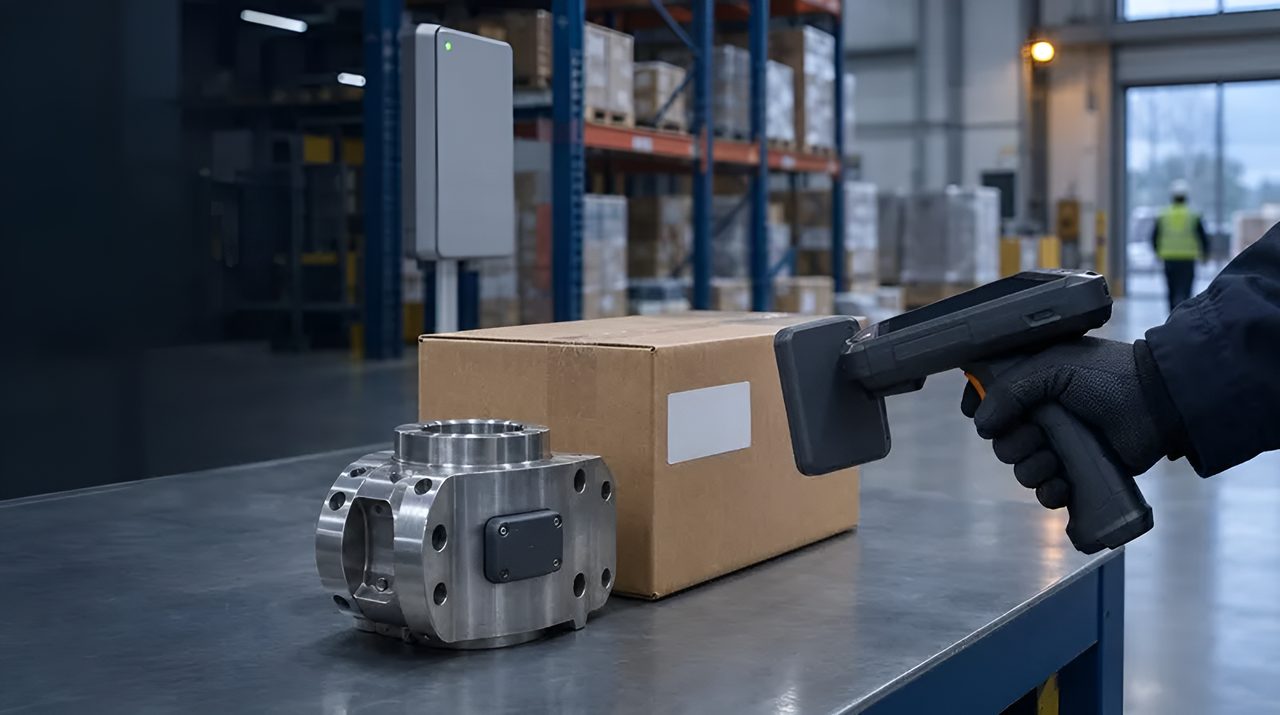
RFID vs code-barres : quand chaque fois gagne.
RFID et le code-barres sont souvent présentés comme des concurrents, mais dans les déploiements matures, ils sont complémentaires. Chacun joue sur une force que l’autre n’a pas.
Le code-barres est bon marché, omniprésent et lisible par l’humain ; RFID est lisible en masse, sans ligne de vue et adapté à la machine. Il s’agit de la comparaison au niveau opérateur qui aide les achats à décider lesquels utiliser où et, plus souvent, où utiliser les deux.
La différence technologique
Code-barres (1D EAN/UPC, 2D QR/DataMatrix/ GS1 DataMatrix) est un encodage optique lu par une caméra ou un scanner laser, un élément à la fois, nécessitant la ligne de vue. Le coût par article est essentiellement gratuit (imprimé en ligne sur l’emballage).
RFID (Passive UHF Gen 2 dominant en entreprise) utilise la rétrodiffusion radio à partir de balises passives, lisible en masse, sans requis de ligne de vue, coût de l’article de 3 cents à plusieurs euros selon le format.
Vitesse de lecture : RFID l’emporte de manière décisive en masse
Code-barres : un article à la fois, généralement 1 à 3 secondes par scan. RFID: des milliers d’étiquettes lues en une seule seconde lors d’une lecture en bloc d’une palette, d’une porte de quai ou d’une étagère.
Pour la réception, le tri, l’expédition et le comptage cyclique à grand volume, l’avantage de RFID en lecture en masse constitue l’ensemble de l’affaire économique.
Pour la vérification unité par unité au point de vente ou dans un flux de travail clinique, le modèle de balayage ciblé du code-barres est préféré.
Ligne de vue et orientation
Le code-barres nécessite que le symbole soit visible par la caméra ou le laser, dans la bonne orientation, et sans obstruction. Les codes-barres inclinés, cachés, endommagés ou bavés tombent en panne.
Les balises RFID ne se soucient pas de l’orientation, peuvent lire à travers l’emballage et autour des obstacles (avec des réserves autour du métal et du liquide), et ont une réévaluation intégrée via le protocole anti-collision.
Dans tout environnement où les objets sont empilés, rangés dans des boîtes ou se déplacent rapidement, la propriété de non-ligne de vue de RFID est décisive.
Motifs de coût et d’erreur
Coût du code-barres par article : presque nul (imprimé lors de l’emballage normal). RFID coût par article : 3 cents à plusieurs euros.
Combiné : code-barres pour la confirmation de l’unité, RFID pour l’agrégat en vrac.
Adéquation réglementaire
Pharma DSCSA: chaque unité d’ordonnance aux États-Unis porte un code-barres 2D GS1 DataMatrix (sérialisé GTIN + lot + expiration) ; RFID est complémentaire pour l’agrégation à haut débit.
Aérospatiale AS9100: la traçabilité des pièces utilise les deux, avec RFID pour le contrôle outil/FOD.
Automobile IATF 16949: code-barres 2D pour la traçabilité des unités, RFID pour la logistique entrante. Vêtements de détail: RFID dominant au niveau de l’item à l’échelle mondiale ; Code-barres pour la caisse.
Soins de santé: code-barres pour la vérification des médicaments (BCMA), RFID pour le stock en consignation et le contrôle des outils.
Où chacun l’emporte de manière décisive
Code-barres: vérification des unités à faible volume, traçabilité réglementée au niveau de l’unité (DSCSA, FDA UDI), point de vente, scanner et paiement consommateur, délivrance d’ordonnances, correspondance par banque de sang.
RFID: réception et expédition à grand volume, comptage cyclique, armoires intelligentes, suivi des actifs retournables, précision des stocks de détail à grande échelle, contrôle des outils, prévention des FOD (FOD Top).
Les deux ensemble: les programmes de sérialisation modernes transportent les deux encodés sur le même élément (code-barres pour la confirmation des unités, RFID pour l’agrégat). Nous concevons le bon mélange lors de l’étape 1 de la méthode du programme TRACIO.
Questions fréquemment posées
Devons-nous remplacer complètement le code-barres par RFID?
Presque jamais. Le code-barres est essentiellement gratuit et sert à la vérification des unités ; RFID ajoute une lecture en bloc à grande échelle.
La bonne stratégie consiste à ajouter RFID à côté du code-barres où la lecture en bloc ou sans ligne de vue apporte une valeur opérationnelle, et non de supprimer le code-barres.
Quel est le volume d’équilibre où le RFID dépasse le code-barres ?
Cela dépend plus du résultat commercial que du volume. Pour la précision des stocks dans la vente de vêtements, le seuil de rentabilité se fait à des milliers de références par magasin.
Pour la réconciliation des portes d’amarre, le seuil de rentabilité est basé sur le débit (>500 cas/heure). Nous modélisons cela à l’étape 1.
Une seule étiquette peut-elle contenir les deux ?
Oui, l’incrustation RFID + DataMatrix 2D imprimée sur la même étiquette est désormais la norme dans l’habillement de détail et de plus en plus dans la pharmacie. La station d’encodage programme le RFID et imprime simultanément le code-barres.
Lequel est le meilleur pour les audits de traçabilité ?
Les deux, à plusieurs niveaux. La sérialisation codée par code-barres (SGTIN, UDI) est l’enregistrement réglementaire ; Les événements de lecture agrégée RFID fournissent des preuves à haut débit aux étapes du processus.
La plupart des plateformes de sérialisation modernes (Tracelink, rfxcel, SAP ATTP) intègrent les deux.
Qu’en est-il de NFC et HF RFID au lieu de UHF ?
Différentes catégories. NFC (13,56 MHz HF) est une interaction à courte portée entre appareil et tag (smartphones, contrôle d’accès, paiement). UHF RAIN est la catégorie des lectures en vrac pour les entreprises.
Nous utilisons NFC pour des cas d’usage spécifiques (authentification des actifs, déclenchement des instructions de travail) mais l’UHF domine la chaîne d’approvisionnement et les stocks.
Dernière mise à jour: