
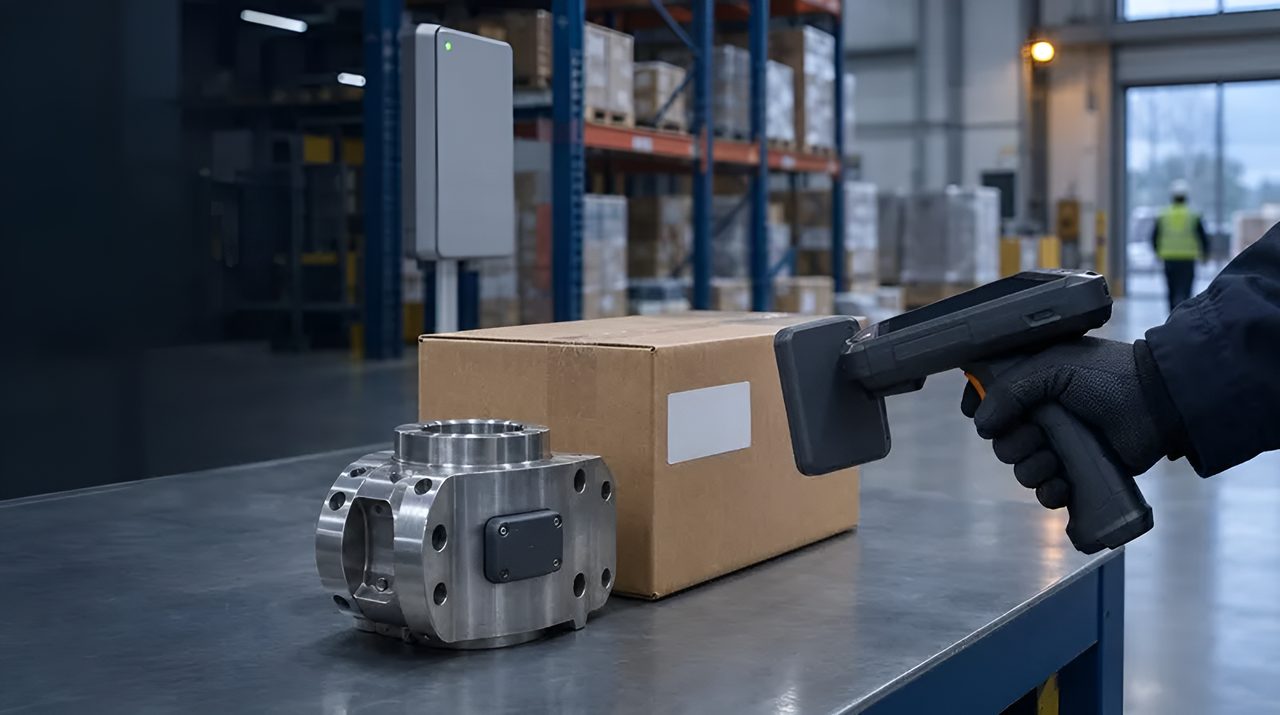
RFID vs codice a barre: quando vince ciascuno.
RFID e codice a barre sono spesso presentati come concorrenti, ma nelle implementazioni mature sono complementari. Ognuno gioca su un punto di forza che l'altro non possiede.
Il codice a barre è economico, onnipresente e leggibile dall'uomo; RFID è leggibile in massa, senza linea di vista e è adatto alla macchina.
Questo è il confronto a livello di operatore che aiuta gli approvvigionamenti a decidere quale utilizzare e dove e, più spesso, dove utilizzare entrambi.
La differenza tecnologica
Codice a barre (1D EAN/UPC, 2D QR/DataMatrix/ GS1 DataMatrix) è una codifica ottica letta da una telecamera o scanner laser, un elemento alla volta, che richiede la linea di vista. Il costo per articolo è essenzialmente gratuito (stampato in linea sulla confezione).
RFID (Passive UHF Gen 2 dominante nelle imprese) utilizza la diffusione radio da tag passivi, leggibile in blocco, senza richiesto linea di vista, il costo dell'articolo da 3 centesimi a diversi euro a seconda del fattore di forma.
Velocità di lettura: RFID vince nettamente in massa
Codice a barre: un oggetto alla volta, tipicamente 1-3 secondi per scansione. RFID: migliaia di etichette lette in un solo secondo quando si legge in blocco un pallet, una porta di molo o una mensole.
Per ricezione, ordinamento, dispatch e conteggio ciclico ad alto volume, il vantaggio di RFID nella lettura in massa rappresenta l'intero business case.
Per la verifica unità per unità al punto vendita o in un flusso di lavoro clinico, si preferisce il modello a scansione mirata del codice a barre.
Linea di vista e orientamento
Il codice a barre richiede che il simbolo sia visibile alla telecamera o al laser, nella giusta orientazione e senza ostacoli. I codici a barre inclinati, nascosti, danneggiati o sbavati si guastano.
I tag RFID non si preoccupano dell'orientamento, possono leggere attraverso l'imballaggio e intorno agli ostruzioni (con avvertenze su metallo e liquido) e hanno un retry integrato tramite il protocollo anti-collisione.
In qualsiasi ambiente in cui gli oggetti sono impilati, imballati in scatole o si muovono rapidamente, la proprietà di non linea di vista di RFID è decisiva.
Modelli di costo ed errore
Costo del codice a barre per articolo: quasi zero (stampato durante l'imballaggio normale). RFID costo per articolo: da 3 centesimi a diversi euro.
Combinato: codice a barre per la conferma dell'unità, RFID per aggregato all'ingrosso.
Adattamento normativo
Pharma DSCSA: ogni unità di prescrizione negli Stati Uniti porta un codice a barre 2D GS1 DataMatrix (serializzato GTIN + lotto + scadenza); RFID è un supplemento per l'aggregazione ad alta produttività.
Aerospaziale AS9100: la tracciabilità dei pezzi utilizza entrambe, con RFID per il controllo utensile/FOD.
Automobilistico IATF 16949: Codice a barre 2D per la tracciabilità delle unità, RFID per la logistica in ingresso. Abbigliamento al dettaglio: RFID dominante a livello di item a livello globale; Codice a barre per il pagamento.
Sanità: codice a barre per la verifica dei farmaci (BCMA), RFID per il controllo delle scorte di conto vendita e degli utensili.
Dove ognuno vince decisamente
Codice a barre: verifica delle unità a basso volume, tracciabilità regolamentata a livello di unità (DSCSA, FDA UDI), punto vendita, scansione e pagamento del consumatore, dispensazione di prescrizioni, crossmatch con banca del sangue.
RFID: ricezione e spedizione ad alto volume, conteggio ciclico, mobili intelligenti, tracciamento degli asset restituibili, accuratezza dell'inventario al dettaglio su scala, controllo degli utensili, prevenzione del FOD (FOD Processing).
Entrambi insieme: i moderni programmi di serializzazione portano entrambi codificati sullo stesso elemento (codice a barre per la conferma delle unità, RFID per l'aggregato). Progettiamo il mix giusto durante la fase 1 del metodo /.
Domande frequenti
Dovremmo sostituire completamente il codice a barre con RFID?
Quasi mai. Il codice a barre è essenzialmente gratuito e funziona per la verifica delle unità; RFID aggiunge lettura in blocco su larga scala.
La strategia corretta è aggiungere RFID accanto al codice a barre, dove la lettura in blocco o senza linea di vista porta valore operativo, non rimuovere il codice a barre.
Qual è il volume di pareggio in cui RFID supera il codice a barre?
Dipende più dal risultato aziendale che dal volume. Per l'accuratezza dell'inventario nel commercio di abbigliamento, il pareggio avviene a migliaia di SKU per negozio.
Per la riconciliazione tra porte di dock, il breakeven è guidato dal throughput (>500 casi/ora). Modelliamo questo nello stadio 1.
Una singola etichetta può portare entrambi?
Sì, l'intarsio RFID + DataMatrix 2D stampato sulla stessa etichetta è ora standard nell'abbigliamento retail e sempre più nel settore farmaceutico. La stazione di codifica programma la RFID e stampa contemporaneamente il codice a barre.
Quale è meglio per le revisioni di tracciabilità?
Entrambi, stratificati. La serializzazione codificata con codice a barre (SGTIN, UDI) è il registro regolatorio; Gli eventi di lettura aggregata RFID forniscono prove ad alto rendimento nelle fasi del processo.
La maggior parte delle piattaforme di serializzazione moderne (Tracelink, rfxcel, SAP ATTP) incorpora entrambe.
E per quanto riguarda NFC e HF RFID invece di UHF?
Categorie diverse. NFC (13,56 MHz HF) è un'interazione a corto raggio tra dispositivo e tag (smartphone, controllo accessi, pagamento). UHF RAIN è la categoria delle letture di massa per imprese.
Usiamo NFC per casi d'uso specifici (autenticazione degli asset, attivazione delle istruzioni di lavoro) ma l'UHF domina la catena di approvvigionamento e l'inventario.
Ultimo aggiornamento: