
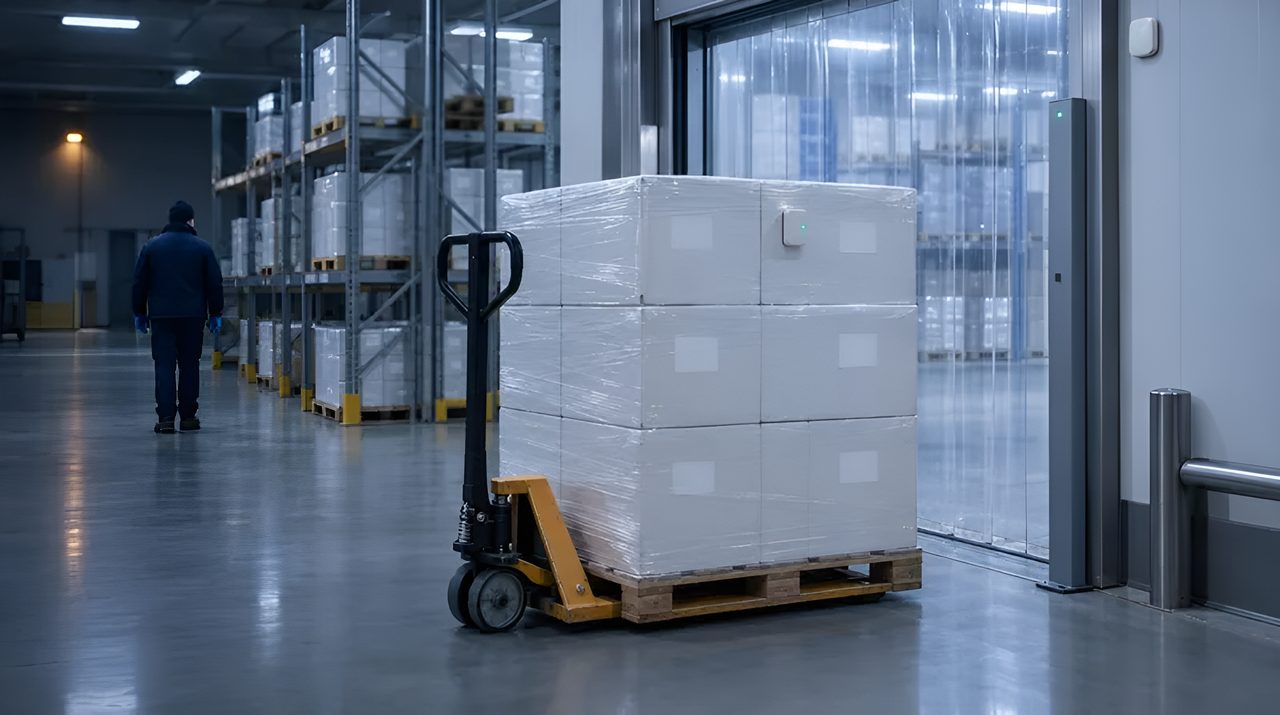
Pharmaceuticals and life sciences: cold chain, DSCSA and GDP custody you can show.Custody records that won't satisfy a GDP inspector?
For pharma manufacturers, CDMOs, CROs and distributors. We design pharma cold chain RFID and locating programmes for temperature, location and DSCSA / GDP serialisation custody (clinical-trial materials, biologics and high-value drugs) built for 21 CFR Part 11 and EU FMD expectations, independent.
Hardware-agnostic across RFID, BLE and cellular sensor loggers.
Free 30-minute call with an adviser · written proposal with the price after · fixed-scope engagements from £3k.
How it works in Pharma & life sciences.
The right radio for each job, mapped to your use case.
1 · Serialise
Items are serialised to DSCSA and 21 CFR Part 11.
2 · Monitor
Cold-chain sensors track temperature and custody continuously.
3 · Respond
Excursions trigger alerts and an audit-ready chain of custody.
Passive RFID → serialise · sensors → cold-chain · BLE → custody
Common problems we find.
Cold-chain excursions go unseen
A freezer drifts overnight and no one knows until the morning round. By then a batch of biologics may already be out of spec: a six-figure write-off and a deviation report.
Chain-of-custody is paper
Clinical-trial kits move between depot, courier, site and patient on signature sheets. Reconstructing who held what, and when, for an audit is slow and error-prone.
Serialisation is bolted on
DSCSA and EU FMD serialisation often sits in a silo from the rest of the supply chain, so aggregation and verification break at the pack and pallet level.
Use cases with a clear payback.
Cold-chain monitoring
Continuous temperature, humidity and shock logging with real-time alerting before product goes out of spec.
Clinical-trial chain-of-custody
Sealed, audit-grade custody from depot to site to patient, with 21 CFR Part 11 electronic records.
Serialisation & aggregation
Item, pack and pallet serialisation aligned to DSCSA and EU FMD, with EPCIS event sharing.
High-value asset tracking
Locate and secure controlled and high-value drugs across the distribution network.
Excursion management
Automated quarantine and deviation workflows the moment a threshold is breached.
Last-mile & courier visibility
Cellular and GPS tracking of shipments in transit, with ETA and condition.
Hardware & software ecosystem
RFID temperature loggers · BLE condition sensors · cellular cold-chain trackers · 21 CFR Part 11-validated platforms, selected for your regulatory and environmental requirements, never by price book.
Where we plug in
SAP · Oracle · LIMS · MES · serialisation / Level-4 systems · EPCIS repositories · QMS and deviation-management platforms.
What good looks like.
What we design and document to
21 CFR Part 11 · EU GDP (2013/C 343/01) · DSCSA · EU FMD (Delegated Regulation 2016/161) · GS1 EPCIS · GAMP 5 · ISO 17025-aligned calibration.
Where it pays back.
Clinical-trial kit tracking
Sealed chain-of-custody for trial materials from depot to site, audit-trailed for the sponsor and the regulator.
Biologics cold-chain
Continuous temperature and shock logging with automatic quarantine on excursion, protecting high-value batches.
Serialised distribution
Item-to-pallet aggregation and verification across DSCSA and EU FMD, with EPCIS sharing to partners.
Five use cases we see most in pharma.
1 · Temperature-controlled stock
Pain: Time out of the cold room is estimated, and excursions are found late.
What good looks like: Temperature records with alarms, and time out recorded per pallet. Deviations go to your QMS, and QA decides.
Usually fits: monitoring placed to your mapping study, door reads and loggers in transit, confirmed in the survey. Cold chain monitoring
2 · Quarantine to release
Pain: Quarantined stock is moved or picked before QA release.
What good looks like: WMS status shows with location, and a quarantined pallet at a read point is flagged. Release stays with QA.
Usually fits: passive RFID or 2D code at read points, linked to your WMS, confirmed in the survey. Inventory accuracy
3 · Recalls: every pallet found
Pain: A recalled or blocked batch is searched for by hand.
What good looks like: Every tagged pallet of the batch is listed by location, and dispatch reads show who received it.
Usually fits: passive RFID or 2D code on pallets and cases, read at goods in and dispatch, confirmed in the survey.
4 · Shippers and loggers
Pain: Loads leave with the wrong shipper or logger, and returnables don't come back.
What good looks like: Shipper and logger checked against the order at dispatch, and each one read out and back.
Usually fits: 2D code or passive RFID at dispatch and returns, confirmed in the survey. Returnable assets
5 · Equipment status in production
Pain: Status labels and logbooks are written by hand and may not match the batch record.
What good looks like: Each major item shows its status and last batch, with cleaning and use linked to the batch record.
Usually fits: 2D codes or passive RFID read at cleaning and line clearance, linked to your MES under your change control and validation, confirmed in the survey. Asset tracking
Also covered
- Serialisation and custody: clinical trial supplies and serialised packs.
- Batch genealogy: which material lots went into each batch.
- Clean and aseptic areas: entries checked against training and gowning records.
- Store counts: fixed readers and handheld scanners, including controlled drug stores.
- Utilities and plant: serviced on condition and use, alongside your schedule.
- Batch flow: where batches wait between process steps.
Relevant case studies
More use cases, in detail.
DSCSA (US) serialisation and aggregation compliance
Problem: Every prescription unit in the US must carry a serialised identifier with full chain-of-custody. Non-compliant shipments are blocked at the wholesaler.
Tech mix: GS1 SGTIN on every unit (barcode + Passive RFID), aggregation to cases and pallets, EPCIS repository integration.
Outcome: DSCSA-compliance evidence per unit, suspect-product investigations close in hours not days, returns processing automated.
EU FMD verification at point of dispense
Problem: EU Falsified Medicines Directive requires verification of every prescription pack at the pharmacy. Non-verified packs are blocked.
Tech mix: GS1 DataMatrix barcode + tamper-evidence, NMVS-interface at the pharmacy, integration with pharmacy systems.
Outcome: FMD compliance with sub-second verification, falsified-pack detection at dispense, regulator-audit-ready logs.
Cold-chain compliance for vaccines and biologics
Problem: Vaccines and biologics have strict cold-chain requirements (2-8°C, sometimes <-70°C). Excursions cause batch loss.
Tech mix: BLE or LoRaWAN temperature loggers, gateway coverage in fridges/freezers, integration with vaccine management software.
What to measure: excursion-driven batch loss · regulator-audit evidence per dose · mAb and cell-therapy supply integrity (baseline each before the pilot).
Clinical trial sample chain-of-custody
Problem: Clinical trial samples must be tracked from collection through analysis with full chain-of-custody for FDA/EMA submission.
Tech mix: Passive RFID on every sample, fixed readers at collection, transport, lab, integration with LIMS.
What to measure: sample loss · CoC evidence per sample · submission-package preparation time (baseline each before the pilot).
Reverse-logistics and returns for controlled substances
Problem: Schedule II-V controlled substances returned for destruction must be tracked at unit level under DEA regulations.
Tech mix: Passive RFID on every return, secure transport with GNSS chain-of-custody, integration with DEA reporting tools.
What to measure: DEA-21 compliance · returns processing time · audit evidence per unit (baseline each before the pilot).
Pharmacy automation and dispensing-cabinet integration
Problem: Hospital pharmacies use automated dispensing cabinets (Pyxis, Omnicell); Location context (nurse identity, patient location) can help reduce medication errors.
Tech mix: BLE-AoA on nurse badges, dispensing-cabinet integration, EMR linkage for patient-bed location.
What to measure: medication-error rate · dispense-to-administer time · BCMA compliance (baseline each before the pilot).
Bulk-API and excipient tracking in manufacturing
Problem: Active pharmaceutical ingredient (API) batches feed multiple finished-drug runs. Batch-genealogy traceability is critical for recalls.
Tech mix: Passive RFID on every API container, batch-MES integration, full lot-genealogy capture.
Outcome: Recall response time reduced from days to hours, GMP-compliance evidence improved, raw-material write-offs down.
Operator-aseptic-zone access control
Problem: Aseptic-manufacturing zones (Class A/B grade) restrict personnel access by training and gowning status. It mistakes risk batch contamination.
Tech mix: BLE-AoA on operator badges, gowning-station integration, aseptic-zone access interlock.
What to measure: contamination events from access errors · Annex 1 / GMP audit readiness · training compliance (baseline each before the pilot).
Equipment-cleaning verification (clean-in-place)
Problem: Pharma manufacturing equipment cleaning must be validated and traceable, disputed cleaning is a major audit finding.
Tech mix: Passive RFID on equipment, cleaning-station fixed readers, integration with cleaning-validation database.
Outcome: Cleaning compliance verified per equipment-batch, GMP audit findings reduced, EBR/BMR records complete.
Hospital consignment stock tracking
Problem: High-value hospital consignment (oncology, biologics) is rotation-sensitive and expiry-driven; manual management causes write-offs and OR-readiness gaps.
Tech mix: Passive RFID on every unit, hospital-pharmacy smart cabinets, integration with hospital materials management.
What to measure: write-offs · consignment OR readiness · recall traceability per unit (baseline each before the pilot).
What you gain
Excursions caught while they can be fixed
Temperature and location arrive together, so an excursion raises an alert while the shipment can still be saved. Measured as alert-to-intervention time and product quarantined or destroyed.
A chain of custody auditors accept
Every hand-off of a trial sample, controlled return or batch is time-stamped with who and where. Measured as custody gaps found at audit and the time it takes to answer a record request.
Serialisation that reconciles
Aggregation and verification events line up with DSCSA and EU FMD records rather than being patched afterwards. Measured as aggregation errors and verification exceptions per batch.
Evidence for aseptic and cleaning controls
Zone entries and cleaning steps are logged against the operator and equipment. Measured as deviations raised and time spent assembling batch-record evidence.
Consignment stock you can count remotely
Consigned products in hospitals are read, not walked, so replenishment and invoicing match reality. Measured as reconciliation time and expired or missing stock.
Who else sells into pharma locating and what programmes get wrong.
Cold-chain logger platforms, warehouse RFID SIs, serialisation solution providers and environmental monitoring suppliers each own a slice of the GDP/GMP story. Quality needs one evidence narrative. Suppliers sell three portals and a dashboard.
What programmes get wrong: validating devices while custody and serialisation handoffs stay fragmented; and letting device volume drive the risk assessment. Independent monitoring-plus-locating architecture keeps inspection defensibility ahead of SKU count.
Locating & cold-chain in pharma manufacturing.
Large pharma manufacturers run cleanroom material flow, sample chain-of-custody and warehouse tracking under GMP. Names are market examples of regulated buyers, not TRACIO clients.
AMRs and AGVs in pharma and life sciences
In pharma, every move has to respect GMP, segregation and the batch record. We help you choose the right AMR or AGV for each flow, then check what it takes to run them in controlled and classified areas.
- Transfers to and from cleanrooms through airlocks.
- Raw materials, components and samples moved between warehouse, dispensing and production.
- Finished-goods and quarantine moves with clear segregation.
- Vehicles that meet your cleaning and validation rules for controlled areas.
- Robot fleet management: one fleet manager for robots from different manufacturers, shared doors, lifts and chargers, and priority for time-critical moves. We check what it takes and help you make it work.
- Integration with MES, WMS and quality systems, so moves are recorded against the batch.
See AMR and AGV consulting, including AMR/AGV fleet management, or book a free scoping call to talk it through. Free briefs: AMR and AGV fleets, and AMR/AGV fleet management.
How an engagement works in pharma & life sciences.
Stages, with a gate after each
- Scoping call: 30 minutes with our advisers; a written proposal with the price if there is a fit.
- Discovery & business case: use cases, KPIs and technology direction (typically 1 to 5 days on site).
- Supplier selection: requirements, shortlist, RFP and TCO (typically 3 to 6 weeks).
- Pilot: judged against pass/fail criteria written before any equipment goes in (with timings agreed per site).
- Rollout & handover: scoped per project, phased by site or wave.
What we need from you
- A named sponsor who can sign off each gate
- An operations lead and an IT/OT contact for a few hours a week
- Site drawings, floor plans and process maps
- Access to your ERP/MES, QMS and serialisation systems, and time with the validation (GxP) owner
- GMP-area access and gowning rules
Frequently asked questions
How does pharma cold chain RFID support DSCSA / GDP serialisation custody?
Pharma cold chain RFID and temperature-location tags create a continuous custody trail so DSCSA / GDP serialisation custody is evidenced in transit and in store. The programme integrates to your serialisation and QMS stack. We advise and integrate rather than resell a proprietary track-and-trace platform.
What does RTLS/RFID give pharma operations?
Serialised accountability of every dose, cold-chain condition logging, and equipment and asset tracking, so both compliance and efficiency improve on one platform.
Does it support DSCSA, GS1 and 21 CFR Part 11?
Yes, serialisation, chain of custody and condition records align with DSCSA, GS1 and 21 CFR Part 11-aligned data-integrity requirements.
How is cold-chain monitored end to end?
Wireless sensors log temperature, and humidity and excursions, across storage, transport and handling, with real-time alerts before product is compromised.
Can it track lab and production assets?
Yes, the same platform locates mobile equipment and instruments, cutting search time and supporting calibration and maintenance.
How does it integrate with our systems?
Serial, custody and condition data feed your ERP, QMS and LIMS via API, keeping records centralised and auditable.
What does a pharma engagement cost?
It depends on scope and the number of sites. Every engagement is scoped per project and priced in writing before work starts: £3k to £30k per project, or £1,200 a day in the UK. Regional ranges for Europe, North America and other regions are on how we work. Extra sites, on-site RF survey and integration into more than one system of record add to the scope. Hardware and licences are extra: you buy them direct from the supplier, and we don't resell them.
How long does a pharma engagement take?
Discovery usually takes 1 to 5 days on site, supplier selection typically 3 to 6 weeks and a pilot with timings agreed per site, with a gate after each. Rollout is scoped per project. Validation (GxP) work adds time to the pilot and rollout, and is planned in from the start.
What if the pilot fails?
It stops at the gate. The pilot is judged against written pass/fail criteria agreed before any equipment goes in, so a fail is a clear result, not an argument. You pay no rollout costs and keep the artefacts from each stage: requirements, scored shortlist, TCO, RFP pack, pilot criteria and the measured results. Pilot equipment can be rented, so there is no capex to write off.
Who owns the data, and can we avoid supplier lock-in?
You own it. Your data and IP stay yours, with full export. We don't sell hardware, so our advice stays independent. During supplier selection we put data export, open APIs and exit terms into the RFP and contract, so you can change supplier later without starting again.