

Retail: RFID inventory accuracy, cycle counts that finish and stock you can promise online.Stock you can't promise online because counts are wrong?
TRACIO designs item-level retail RFID inventory accuracy programmes from DC to flagship: cycle counting RFID, omnichannel stock and loss-prevention reads at receiving, stockroom, floor, fitting room and exit. Independent Passive RFID; the accuracy gain gives you BOPIS you can honour.
Free 30-minute call with an adviser · written proposal with the price after · fixed-scope engagements from £3k.
How it works in Retail.
The right radio for each job, mapped to your use case.
1 · Tag
Item-level Passive RFID travels from the DC to the shop floor.
2 · Count
Handheld and overhead reads keep stock accuracy live, not monthly.
3 · Convert
Accurate stock powers BOPIS, replenishment and fewer out-of-stocks.
Passive RFID → items · BLE → shopper & staff flow
Common problems in Retail.
Stock records you cannot trust
In many stores the stock record and the shelf disagree at any given moment. Every omnichannel fulfilment decision is then made on numbers that aren't real.
BOPIS fails because of the gap
'Buy online, pick up in store' looks great on the brochure. The reality: the store doesn't have it, the customer cancels, churn goes up.
Loss prevention is reactive
EAS catches the obvious. Sweep theft, employee shrink, and supply-chain shrink are still mostly invisible.
Use cases with a clear payback.
Item-level Passive RFID
Every garment, every SKU, every read point. From DC outbound to the in-store fitting-room sensor.
Stockroom workflow
Cycle counting with handheld and overhead RFID. Stock-outs in minutes, not at next monthly count.
BOPIS readiness
Real-time on-floor inventory feeds the omnichannel availability promise. Customers see what's actually there.
Smart fitting room
RFID-equipped fitting rooms suggest complementary items, alert staff to assist, log try-on data for merchandising.
Electronic Article Surveillance
Passive RFID-aware EAS portals that distinguish purchased vs unpurchased: fewer false alarms, more catches.
Supply-chain shrink
Tracing where inventory disappears between DC and shelf. The 'unexplained' becomes accountable.
Hardware & software ecosystem
Impinj · Zebra · Avery Dennison · Smartrac · Nedap · Sensormatic · Checkpoint
Where we plug in
Manhattan Active Omni · Salesforce Commerce · Oracle Retail · SAP Retail · Aptos · Cegid
What we design and document to
GS1 EPC Gen2v2 · ISO/IEC 18000-63 · GS1 GTIN · EDI 856 · Passive RFID Alliance
Where it pays back in Retail.
Source-to-shelf serialisation
Items tagged at source give end-to-end visibility from DC to fitting room, so the stock record matches what is on the shelf.
Self-checkout & loss prevention
Exit reads and POS reconciliation cut shrink and reduce friction at self-checkout, turning an untraceable loss number into a fixable one.
Endless aisle & omnichannel
Accurate, location-aware stock lets associates sell what is in the back or another store, enabling BOPIS and lifting conversion.
Five use cases we see most in retail.
1 · Stock counts you can trust
Pain: Hand counts are slow, so they are rare, and records drift between counts.
What good looks like: A whole area counted with a handheld RFID scanner, often, with the record corrected each time.
Usually fits: UHF RFID item tags and handheld RFID scanners, confirmed in the survey. Cycle counting
2 · Online orders from stock that is there
Pain: Click and collect and ship from store orders are promised from stock the store doesn't have.
What good looks like: Only counted stock is offered online, and stored orders are found and checked at hand-over.
Usually fits: RFID counts feeding your order management system, with tagged order bags and shelf locations, confirmed in the survey. Inventory accuracy
3 · Back room to shop floor
Pain: Items sit in the back room while the shop floor shows a gap.
What good looks like: Counts of both, checked against sales, turn gaps into replenishment tasks.
Usually fits: handheld RFID scanners, with fixed readers at the back room door where traffic is high, confirmed in the survey.
4 · Deliveries checked by item
Pain: Cartons are accepted unchecked, and store and DC records disagree.
What good looks like: Items read leaving the DC and arriving at the store, checked against the ASN before receipt.
Usually fits: UHF RFID at DC dispatch and a portal or handheld at store goods in, confirmed in the survey.
5 · Stock loss you can place
Pain: Shortages show at the next count, so supply errors, process errors and theft blur together.
What good looks like: Reads at goods in, back room, fitting rooms and exit show where items go missing. It supports your loss prevention procedures and doesn't replace them.
Usually fits: the same item tags, with exit readers where your loss prevention team wants them, confirmed in the survey.
Also covered
- DC picking: slotting and pick paths from real movement.
- Yard and deliveries: trailers at the DC found before the dock slot.
- Chilled and frozen: temperature in store and in transit.
- DC forklifts: where trucks are, and how much they are used.
- Store space: back room and shop floor use, by zone.
- Roll cages and totes: fixed RFID readers at the dock, handheld RFID scanners in store.
Relevant case studies
More use cases, in detail.
Item-level inventory accuracy
Problem: Manual counts in apparel and footwear leave stock records out of date between counts, driving stock-outs, false out-of-stocks and lost customers.
Tech mix: Passive RFID inlay on every item, handheld cycle-counters, fixed readers at receiving and dispatch.
Outcome: Stock records that match the shelf, fewer false out-of-stocks and more reliable BOPIS.
Ship-from-store fulfilment
Problem: Omnichannel retail uses stores as mini-DCs, but ship-from-store only works when stock accuracy is real-time.
Tech mix: Passive RFID item-level + smart-receiving, integration with order management and fulfillment platform.
What to measure: ship-from-store cancellation rate · fulfilment SLA attainment · store labour utilisation (baseline each before the pilot).
Loss prevention and shrink reduction
Problem: Retail shrink comes from theft, internal loss and admin errors, and most of it cannot be traced to a place or time.
Tech mix: Passive RFID at receiving, on the floor, at point-of-sale, and at exit. Discrepancies become visible.
What to measure: shrink · internal-theft cases with evidence · admin-error losses (baseline each before the pilot).
BOPIS (buy online, pick up in store) operations
Problem: BOPIS requires stock accuracy at every store, fast order assembly, and customer-pickup verification.
Tech mix: Passive RFID inventory + handhelds for order picking, customer-pickup verification via app and store-RFID confirmation.
What to measure: BOPIS fulfilment SLA · cancellation rate · customer satisfaction (baseline each before the pilot).
Visual merchandising compliance
Problem: Field merchandising compliance is hard to verify. Store-team activities, product placement, and POS displays often diverge from plan.
Tech mix: BLE beacons on POS displays, store-employee app with location-aware checklists, photo-evidence of compliance.
Outcome: Merchandising compliance verified per store, brand-experience consistency improved, field-execution time reduced.
Smart fitting-room recommendations
Problem: Fitting rooms are conversion hotspots. Knowing what a customer brought in enables recommendations and replenishment.
Tech mix: Passive RFID at fitting-room entry, fitting-room screen with recommendations, store-associate app for replenishment.
What to measure: conversion rate · average basket size · customer experience (baseline each before the pilot).
Returns processing automation
Problem: Returns are a labour cost; verifying that the right item is returned and putting it back into available inventory is slow manually.
Tech mix: Passive RFID at returns counter, integration with order-management, automated putaway sorting.
What to measure: returns processing time · return fraud · inventory availability after return (baseline each before the pilot).
Smart shelves and out-of-stock alerts
Problem: Empty shelves lose sales, and finding missing SKUs means staff walking the floor.
Tech mix: Passive RFID smart-shelf readers (or weight + visual), real-time stockout alerts, integration with replenishment systems.
What to measure: out-of-stock duration · sales lost to stockouts · replenishment efficiency (baseline each before the pilot).
Distribution-centre throughput
Problem: Retail DCs move millions of units per week; bottlenecks at receiving, picking, sortation and dispatch are the main throughput limits.
Tech mix: Passive RFID portals at receiving and dispatch, AMR for picking, fixed-reader sortation, WMS orchestration.
What to measure: DC throughput · labour cost per unit · peak-season capacity (baseline each before the pilot).
Personalised customer experience in-store
Problem: Customers expect digital-level personalisation in physical stores; without analytics on in-store behaviour, opportunities are missed.
Tech mix: BLE beacons + opt-in app for personalisation, AoA for fine-grained store analytics, integration with CRM and loyalty.
What to measure: loyalty-customer dwell time · conversion rate · customer lifetime value (baseline each before the pilot).
Related reading.
What you gain
Stock figures you can sell against
Item-level counts replace periodic estimates, so the system shows what is really on the shelf and in the back room. Measured as inventory accuracy from cycle counts against a pre-pilot baseline.
Omnichannel orders that can be fulfilled
Ship-from-store and click-and-collect promise only stock that is there. Measured as order cancellations, substitutions and pick time per order.
Fewer empty shelves
Gaps between back room and shop floor show up as replenishment tasks, not customer complaints. Measured as out-of-stock rate on tagged lines.
Shrink you can locate
Exit and zone reads show where and when loss happens. Measured as shrink by category and store, and unexplained adjustments.
Quicker counts and returns
A full count takes a walk with a handheld. Returns are identified and restocked from a read. Measured as count hours per store and returns-to-shelf time.
DC-to-store accuracy
Shipments are verified at the DC door and at store receiving. Measured as shipment discrepancies and receiving time per delivery.
Who else sells into retail RFID and what programmes get wrong.
Retail item-level RFID is led by RAIN ecosystems (Impinj-class silicon via many SIs), fitting-room and stock-accuracy application suppliers, and loss-prevention stacks. The hard parts are taggability, store process adoption and omnichannel inventory truth, not which reader wins a lab test.
What programmes get wrong: chasing 99% lab reads while back-stock process stays broken; underestimating encoding and exception handling; and letting a reseller’s “programme” equal a hardware drop. Independent architecture keeps application choice separable from silicon.
Item-level and store locating in retail.
Large retailers, including Walmart, Inditex (Zara) and Tesco-scale grocery and fashion groups, deploy item-level RFID, fitting-room and backroom locating. Market context for how retail programmes are bought; not TRACIO customer claims.
AMRs and AGVs in retail distribution centres
Retail distribution centres swing between quiet weeks and seasonal peaks, and robots have to cope with both. We help you choose the right AMR or AGV for each flow, then check what it takes to run them through the peak.
- Store replenishment: pallet and roll-cage moves from storage to despatch.
- Tote moves to and from picking and packing for online orders.
- Returns handling and moves back to stock.
- Adding robots for peak without blocking the existing operation.
- Robot fleet management: one fleet manager for robots from different manufacturers, shared doors and chargers, and traffic and priority at peak. We check what it takes and help you make it work.
- Integration with your WMS, so orders, moves and stock stay in step.
See AMR and AGV consulting, including AMR/AGV fleet management, or book a free scoping call to talk it through. Free briefs: AMR and AGV fleets, and AMR/AGV fleet management.
How an engagement works in retail.
Stages, with a gate after each
- Scoping call: 30 minutes with our advisers; a written proposal with the price if there is a fit.
- Discovery & business case: use cases, KPIs and technology direction (typically 1 to 5 days on site).
- Supplier selection: requirements, shortlist, RFP and TCO (typically 3 to 6 weeks).
- Pilot: judged against pass/fail criteria written before any equipment goes in (with timings agreed per site).
- Rollout & handover: scoped per project, phased by site or wave.
What we need from you
- A named sponsor who can sign off each gate
- An operations lead and an IT/OT contact for a few hours a week
- Site drawings, floor plans and process maps
- Access to your stock, merchandising and POS/ERP systems
- Store and DC access outside trading peaks
Retail RFID: accurate stock counts and faster click and collect
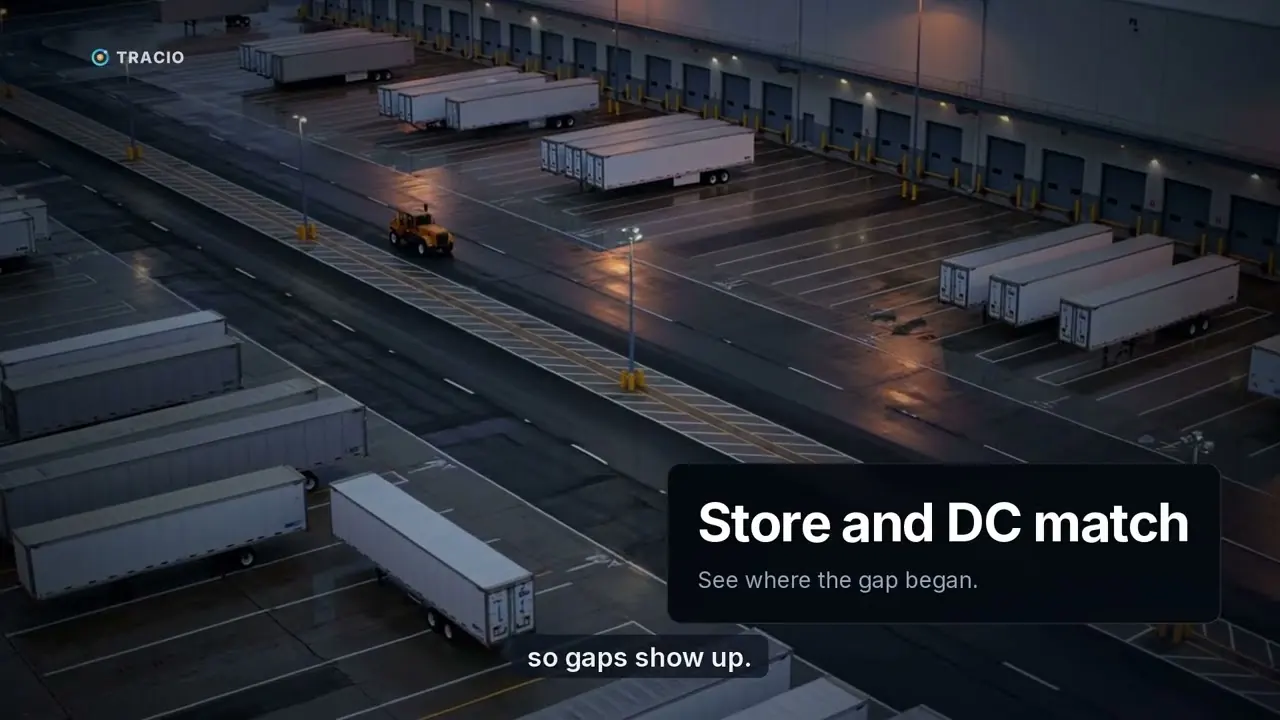
Play the video (1:14). It loads from YouTube when you click.
Frequently asked questions
How does cycle counting RFID improve retail inventory accuracy and omnichannel stock?
Cycle counting RFID replaces slow sample counts with frequent, aisle-level reads so retail RFID inventory accuracy climbs toward audit-ready levels. That trusted on-hand position underpins omnichannel stock promises (BOPIS, ship-from-store) without inventing a new merchandising system of record.
How does RFID lift retail inventory accuracy?
Item-level RFID replaces periodic manual counts with frequent reads, so stock records stay close to what is really on the shelf. That is the foundation for omnichannel and loss prevention.
Does it enable BOPIS and omnichannel?
Yes, accurate, real-time stock is what makes buy-online-pickup-in-store, ship-from-store and endless-aisle reliable rather than a source of cancellations.
How does it help loss prevention?
RFID gives provable, item-level visibility of what left the shelf and the store, turning shrink from an estimate into evidence you can act on.
How disruptive is rollout?
Tagging, often at source, and reader install are phased; a department or store can prove accuracy and uplift before chain-wide rollout.
How does it integrate with our systems?
Stock and event data feed your retail or inventory and e-commerce platforms via API so online and store reflect the same truth.
What does a retail engagement cost?
It depends on scope and the number of sites. Every engagement is scoped per project and priced in writing before work starts: £3k to £30k per project, or £1,200 a day in the UK. Regional ranges for Europe, North America and other regions are on how we work. Extra sites, on-site RF survey and integration into more than one system of record add to the scope. Hardware and licences are extra: you buy them direct from the supplier, and we don't resell them.
How long does a retail engagement take?
Discovery usually takes 1 to 5 days on site, supplier selection typically 3 to 6 weeks and a pilot with timings agreed per site, with a gate after each. Rollout is scoped per project. Trading peaks usually set the rollout window.
What if the pilot fails?
It stops at the gate. The pilot is judged against written pass/fail criteria agreed before any equipment goes in, so a fail is a clear result, not an argument. You pay no rollout costs and keep the artefacts from each stage: requirements, scored shortlist, TCO, RFP pack, pilot criteria and the measured results. Pilot equipment can be rented, so there is no capex to write off.
Who owns the data, and can we avoid supplier lock-in?
You own it. Your data and IP stay yours, with full export. We don't sell hardware, so our advice stays independent. During supplier selection we put data export, open APIs and exit terms into the RFP and contract, so you can change supplier later without starting again.