
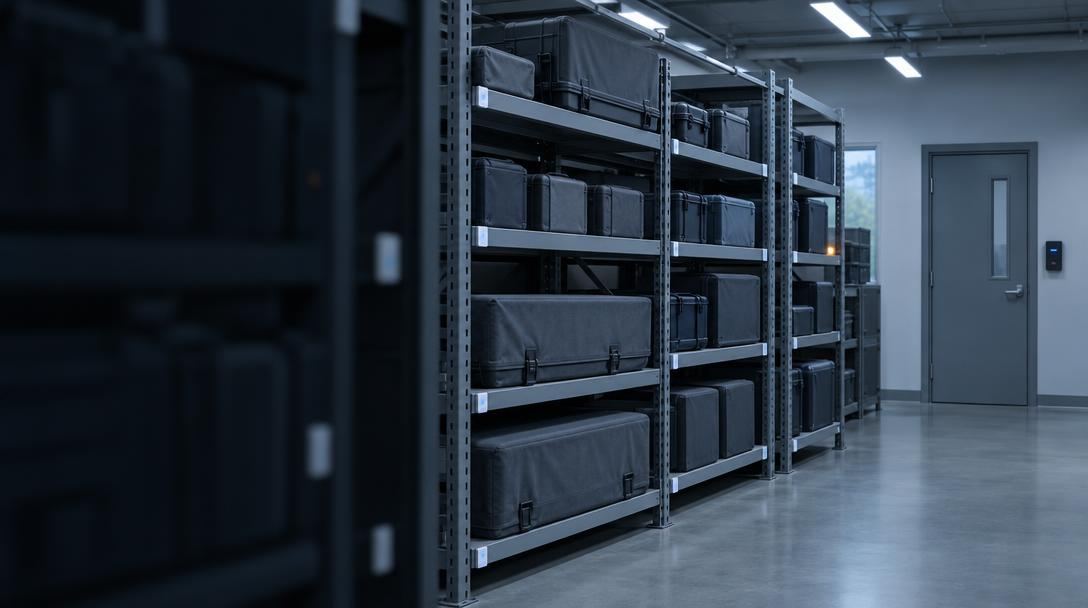
Defence asset accountability. Defence: asset accountability and personnel mustering.Assets and personnel you can't account for off-network?
For armed forces, defence primes and the wider public sector. We design defence asset accountability (usually RFID) and personnel mustering (RTLS) programmes (controlled-item chain-of-custody, training instrumentation and air-gapped or on-prem deployments where required) independent and services-led.
We design and deliver personnel-accountability, mustering, asset and controlled-item chain-of-custody, and contractor-control programmes for secure sites, engineered to run on air-gapped or on-premise infrastructure with sovereign data.
Hardware-agnostic across UWB, BLE, active RFID, and Passive RFID. We are independent and security-led, not tied to any platform.
Free 30-minute call with an adviser · written proposal with the price after · fixed-scope engagements from £3k.
Talk to a defence adviser
Ranges, armouries, deployable kit and serialised assets. Book a call, download the CQB training brief (PDF), or ask us to ring you.
Prefer a call? Ask a defence adviser to ring you
How it works in Defence.
Municipal and smart-city public estate (bins, lighting, street furniture and similar assets) also sits here under the wider public-sector remit, alongside defence and secure-site programmes.
The right radio for each job, mapped to your use case.
1 · Account
Serialised, secure-cell tracking of every asset.
2 · Locate
UWB precision on secure sites.
3 · Audit
Full chain of custody, audit-ready on demand.
UWB → secure-cell · RFID → identity · BLE → zones
Common problems on secure sites.
Mustering is manual and slow
When an alarm sounds, accountability still depends on a roll-call against a clipboard. Minutes pass before anyone can confirm everyone is out and safe. Incident response needs a verified headcount in seconds, with an audit trail.
Chain-of-custody has gaps
High-value and controlled items move between stores, workshops, and the field on paper sign-out sheets. Reconciliation is periodic, manual, and error-prone, exactly the kind of gap an audit or inspection exposes.
Contractor & visitor control is blunt
Knowing who is on site, which zones they are authorised for, and whether they have left is handled by a gate log and trust. On a secure estate, "trust" is not an access-control policy.
Use cases with a clear payback.
Personnel accountability & mustering
Every person on site accounted for at the muster point in seconds, time-stamped and audit-trailed for the incident report.
Asset & equipment tracking
Vehicles, plant, comms kit, and high-value equipment located across the estate, with utilisation and dwell analytics.
Controlled-item chain-of-custody
Sealed, audit-grade accountability for controlled and sensitive items from store to field and back: who, what, when, where.
Tool control & FOD prevention
Tool-for-tool accountability in workshops and on the flight line, with foreign-object-debris controls for aviation and MRO units.
Contractor, visitor & zone access
Live on-site register, geofenced authorised zones, lone-worker safety, and automatic exit reconciliation.
Air-gapped & on-prem deployment
The full stack engineered to run with no internet dependency, on sovereign infrastructure, with role-based access and full logging.
Five use cases on defence sites
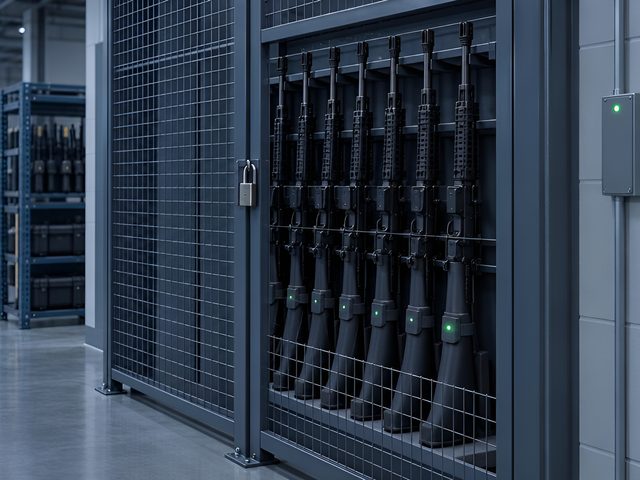
Arms and controlled items signed out and returned
Each issue and return recorded against a person and a serial number, with items not back listed before the end of the day. Supports your armoury counts. Serialisation and custody
Serialised custody of controlled items
Items identified by the IUID mark they already carry, with every custody change recorded and mismatches flagged for a check. Serialisation and custody
Workshop tool control
Tool sets issued against a job and checked at return in aircraft and vehicle workshops. Supports your lost-tool procedure. Tool control
Depot vehicles and equipment found
Larger items show their last known zone, and counts reconcile the register with what is on site. Asset tracking
Training recorded and replayed
Movement in the training area recorded, shown live to instructors and replayed in the after action review. Military training
Hardware & software ecosystem
Ubisense · Zebra · Impinj · Kontakt.io · Quuppa · active-RFID mustering systems · ruggedised and intrinsically-safe tag families, selected for your security posture and environment, never by price book.
Where we plug in
SAP S/4HANA · IFS · Maximo · ServiceNow · asset-management and logistics systems · access-control and PSIM platforms · incident-management and HR rostering, on-premise where the network demands it.
What good looks like at site level.
What we design and document to
IEC 62443 (OT/IT security) · ISO/IEC 27001 (information security) · data sovereignty and on-premise / air-gapped operation ·
least-privilege, role-based access and full audit logging · encrypted at rest and in transit · alignment to your accreditation and national security frameworks.
We work under mutual NDA and within your site's security rules from day one. Our advisers brings experience on UK defence programmes.
Where it pays back in Defence & public sector.
Rapid mustering & accountability
Verified personnel headcount at the muster point, fully time-stamped and audit-trailed for the incident report.
Controlled-item chain-of-custody
A sealed, audit-grade trail for controlled and high-value items from secure store to field and back.
Contractor & zone control
A live on-site register with geofenced authorised zones and automatic exit reconciliation across the estate.
Defence experience behind TRACIO.
Before TRACIO, our advisers worked on UK defence projects and on projects in the United States. We do not name those programmes or clients. The case studies below come from engagements our advisers led in earlier roles, with client names withheld under NDA.
We keep TRACIO’s work unclassified, and we work within your export-control process.
- Personnel accountability and custody on an air-gapped network
- Total accountability for deployable assets, audited in minutes, not days
- Full chain-of-custody for calibrated tools and restricted assets
- Serialized-parts chain-of-custody, from production to dispatch
- Aerospace MRO tool-for-tool control
- Every tool accounted for, every shift, and FOD risk designed out
- Tooling and hangar flow visibility that protects turnaround
Also covered in defence
More use cases, in detail.
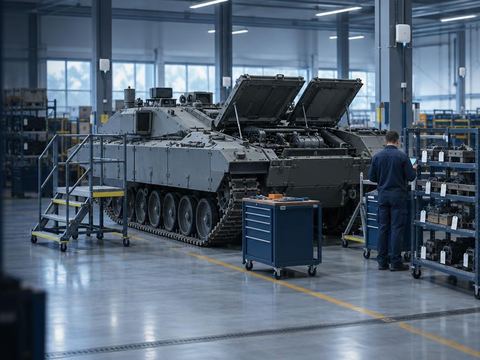

Controlled-item and document tracking
Problem: Controlled items and documents must be tracked at unit level with a full audit trail. Manual logs are error-prone and hard to audit.
Tech mix: Passive RFID on each controlled item, BLE-AoA on personnel badges, integration with your document-management system.
Outcome: Custody records for controlled items that your security team can review, and a system that works within your export-control process.
Force-on-force tactical training
Problem: Live-fire and force-on-force training requires real-time position, hit detection and replay for after-action review.
Tech mix: UWB on operators, weapons and vehicles, hit-detection integration, real-time tactical-operations centre.
Outcome: Training realism improved, AAR (after-action review) accelerated, training-cost-per-objective reduced.
Military vehicle and equipment depot management
Problem: Defence depots track thousands of vehicles, weapons and equipment items through receipt, maintenance and dispatch.
Tech mix: Passive RFID on every item, BLE-AoA on personnel, integration with depot-management software.
What to measure: depot throughput · item loss · audit compliance (baseline each before the pilot).
Mustering and personnel accountability
Problem: Defence personnel mustering must be verified quickly; barracks, airfields and operational sites all need fast accountability.
Tech mix: BLE or UWB on personnel, gate and muster-point readers, integration with personnel-management.
Outcome: Muster verified in seconds, personnel accountability real-time, emergency-response evidence.
Tool control on aircraft and vehicle maintenance
Problem: Defence maintenance tools are calibrated and FOD-critical. Tools left in equipment cause catastrophic damage and loss-of-life risk.
Tech mix: Passive RFID on every tool, smart-shadow boards, integration with maintenance-management.
What to measure: FOD events from tools · calibration compliance · mission readiness (baseline each before the pilot).
Ammunition and ordnance tracking
Problem: Ammunition and ordnance must be tracked through depot, transport, issue and use under strict regulatory requirements.
Tech mix: Passive RFID on every container, GNSS on transport, integration with ammunition-management.
Outcome: Ammunition-accountability verified, transport-security improved, regulator-audit compliance.
Aircraft turnaround and ground-support
Problem: Defence aircraft turnaround (refuel, rearm, repair) is mission-critical and time-sensitive.
Tech mix: UWB on aircraft and GSE, BLE-AoA on personnel, real-time turnaround dashboard with safety interlocks.
What to measure: turnaround time · safety-interlock compliance · mission readiness (baseline each before the pilot).
Vessel and submarine fleet maintenance
Problem: Naval vessel maintenance involves thousands of contractors, complex work packages, and access-controlled compartments.
Tech mix: BLE-AoA on contractors, Passive RFID on critical tools and parts, access-control on compartments, integration with maintenance-management.
What to measure: maintenance-period duration · access compliance · audit record completeness (baseline each before the pilot).
Range safety and target-system management
Problem: Live-fire ranges require personnel-and-target-system safety with real-time visibility of all positions.
Tech mix: UWB on personnel and target systems, GNSS on vehicles, integration with range-control.
Outcome: Range safety compliance verified, training-throughput up, safety-incident risk reduced.
Supply-chain security and counterfeit-part prevention
Problem: Defence supply chains face SUP (suspect unapproved part) risk; full provenance must be verified for safety-critical parts.
Tech mix: GS1-encoded Passive RFID tags from authorised distributors, EPCIS integration for full provenance, integration with defence procurement.
Outcome: Counterfeit-part detection at receiving, full provenance per safety-critical part, regulator-audit ready.
What you gain
A headcount you can verify
Mustering moves from clipboard roll-call to a live, time-stamped headcount at the muster point. Measured as time from alarm to verified headcount in drills, against your current roll-call baseline.
A custody trail for controlled items
Every issue, transfer and return is logged with who, what, when and where, not reconstructed from sign-out sheets. Measured by reconciliation exceptions and the time it takes to answer an audit or inspection query.
Faster audits and stock-takes
Portal and handheld reads replace manual counts across stores, vehicles and forward locations. Measured as person-hours per stock-take and audit accuracy. See deployable asset visibility.
Less time looking for tools and kit
Calibrated tools, comms kit and high-value equipment are located rather than hunted for. Measured as search time per job and items unaccounted for at shift end.
Our advisers led a similar engagement before TRACIO: see the case study.
FOD risk you can evidence
Tool-for-tool checks close each maintenance task and shift, so a missing tool is flagged before the aircraft or vehicle moves. Measured as FOD events and tools unreconciled at shift close.
Our advisers led a similar aerospace MRO engagement before TRACIO: see the case study.
Contractor and zone control
A live register of who is on site, which zones they are authorised for and whether they have left. Measured as unauthorised-zone alerts and unreconciled exits per shift.
Who else sells into defence & public-estate locating and what programmes get wrong.
Defence and secured public estates attract sovereign-capable RTLS suppliers, RFID for armoury and asset custody, and large SIs comfortable with accreditation paperwork. Training-area, base and logistics use cases differ. A single catalogue rarely fits all.
What programmes get wrong: commercial warehouse designs on secure sites; weak chain-of-custody for weapons and controlled stores; and accreditation treated as a paperwork afterthought. Independent, assurance-led architecture is the safer default.
Accountability and asset control in defence programmes.
Defence primes and national programmes specify personnel accountability, tool control and secure asset locating. This is sector context only: TRACIO does not publish named defence clients.
Public estate & smart city.
Councils, public estates and campus operators track assets that sit outdoors and are spread out: street furniture, bins, gritters, depots, fleet and plant, and people who work alone. The pattern is different from a secure site: long range, low power, many low-cost sensors, and data that often has to be shared or published.
- LoRaWAN or NB-IoT for sparse outdoor assets and condition sensors
- GNSS telematics for fleet and plant
- BLE or RFID in depots, stores and workshops
- Integration to asset management and open-data platforms
- Requirements and evaluation support that fit public-sector procurement rules
AMRs and AGVs in defence logistics
Depots, stores and maintenance sites can use automated vehicles, but only within your security, safety and export-control rules. We help you choose the right AMR or AGV for each flow, then check what it takes, within your own processes.
- Stores and depot moves: pallets, kit and spares between receipt, storage and issue.
- Parts and tools delivered to maintenance bays and workshops.
- Vehicles and software that fit your security accreditation and network rules.
- Supplier and technology choices made within your export-control and security processes.
- Robot fleet management: one fleet manager for robots from different manufacturers, shared doors and chargers, and priority for urgent moves. We check what it takes and help you make it work.
- Integration with your logistics and maintenance systems, on networks you control.
See AMR and AGV consulting, including AMR/AGV fleet management, or book a free scoping call to talk it through. Free briefs: AMR and AGV fleets, and AMR/AGV fleet management.
How an engagement works in defence & the public sector.
Stages, with a gate after each
- Scoping call: 30 minutes with our advisers; a written proposal with the price if there is a fit.
- Discovery & business case: use cases, KPIs and technology direction (typically 1 to 5 days on site).
- Supplier selection: requirements, shortlist, RFP and TCO (typically 3 to 6 weeks).
- Pilot: judged against pass/fail criteria written before any equipment goes in (with timings agreed per site).
- Rollout & handover: scoped per project, phased by site or wave.
What we need from you
- A named sponsor who can sign off each gate
- An operations lead and an IT/OT contact for a few hours a week
- Site drawings, floor plans and process maps
- Access to your asset registers and inventory systems, on-prem or air-gapped where required
- Site access arrangements, including escort, as your security rules require
Defence: armoury sign-out, training replay and custody records
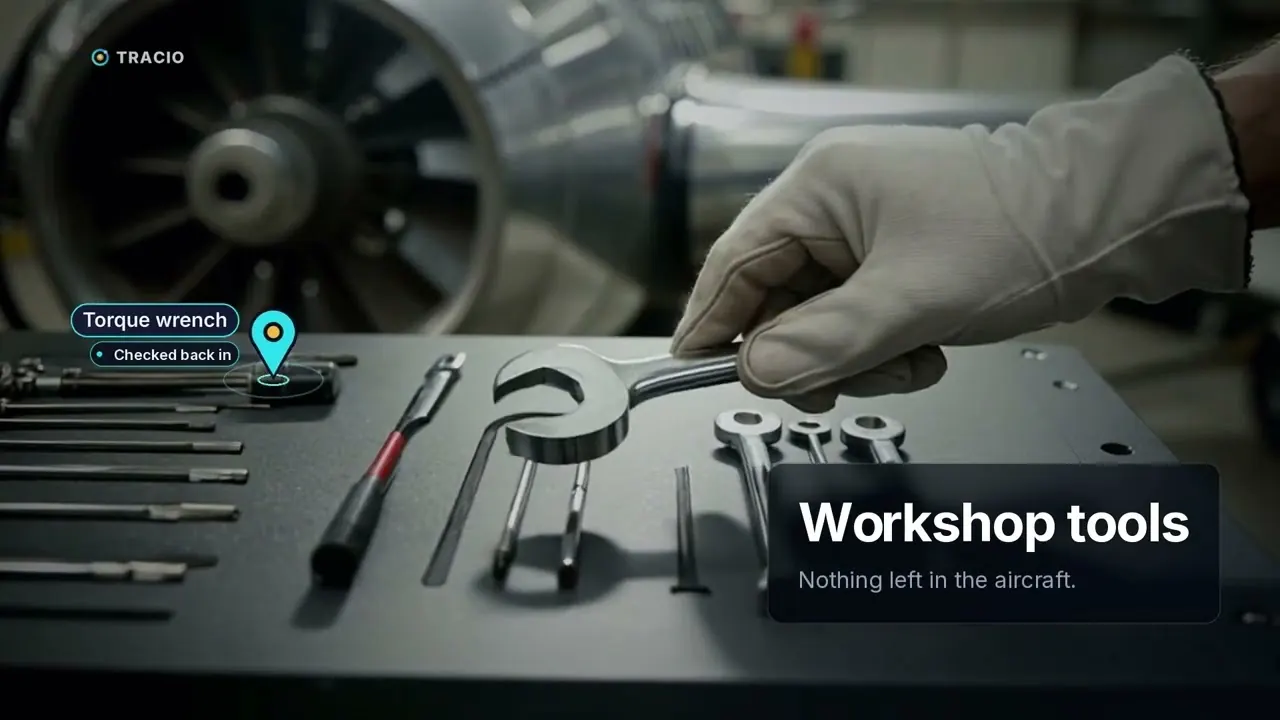
Play the video (1:30). It loads from YouTube when you click.
Frequently asked questions
What does defence asset accountability and personnel mustering RTLS cover?
Defence asset accountability tracks serialised and controlled items through issue, use and return. Personnel mustering RTLS gives commanders a live or near-live headcount in base, harbour or GPS-denied settings. Both stay integration-led so your command and logistics systems remain authoritative.
What does RTLS/RFID provide for defence operations?
Accountability of people and assets, including in GPS-denied environments, for readiness, logistics, serialised custody, and instrumented live training.
Does it work off the grid and in GPS-denied areas?
Yes, UWB, inertial and mesh systems give precise tracking indoors, underground and where GNSS is jammed or unavailable, which is often exactly where it matters.
How does it support serialised chain of custody?
Each item gets a unique identity and a time-stamped custody record aligned with serialisation standards. Whether it meets your evidential rules is for your legal team to confirm.
Can it instrument live training?
Yes, position, movement and engagement data enable objective force-on-force scoring and after-action review, indoors and in CQB facilities.
How do you handle security and integration?
We design to your security and data-handling requirements and integrate with your logistics and command systems, independent, so the architecture fits the mission.
What does a defence or public-sector engagement cost?
It depends on scope and the number of sites. Our project range and day rate are on how we work, and you get a written priced in writing after scoping before any work starts. Extra sites, on-site RF survey, air-gapped or access-restricted estates and integration into more than one system of record add to the scope. Hardware and licences are extra: you buy them direct from the supplier, and we don't resell them.
How long does a defence or public-sector engagement take?
Discovery usually takes 1 to 5 days on site, supplier selection typically 3 to 6 weeks and a pilot with timings agreed per site, with a gate after each. Rollout is scoped per project. Security and access arrangements can add lead time before on-site work starts.
What if the pilot fails?
It stops at the gate. The pilot is judged against written pass/fail criteria agreed before any equipment goes in, so a fail is a clear result, not an argument. You pay no rollout costs and keep the artefacts from each stage: requirements, scored shortlist, TCO, RFP pack, pilot criteria and the measured results. Pilot equipment can be rented, so there is no capex to write off.
Who owns the data, and can we avoid supplier lock-in?
You own it. Your data and IP stay yours, with full export. We don't sell hardware, so our advice stays independent. During supplier selection we put data export, open APIs and exit terms into the RFP and contract, so you can change supplier later without starting again. Where the data must stay on your estate, the design runs on-prem or air-gapped.