
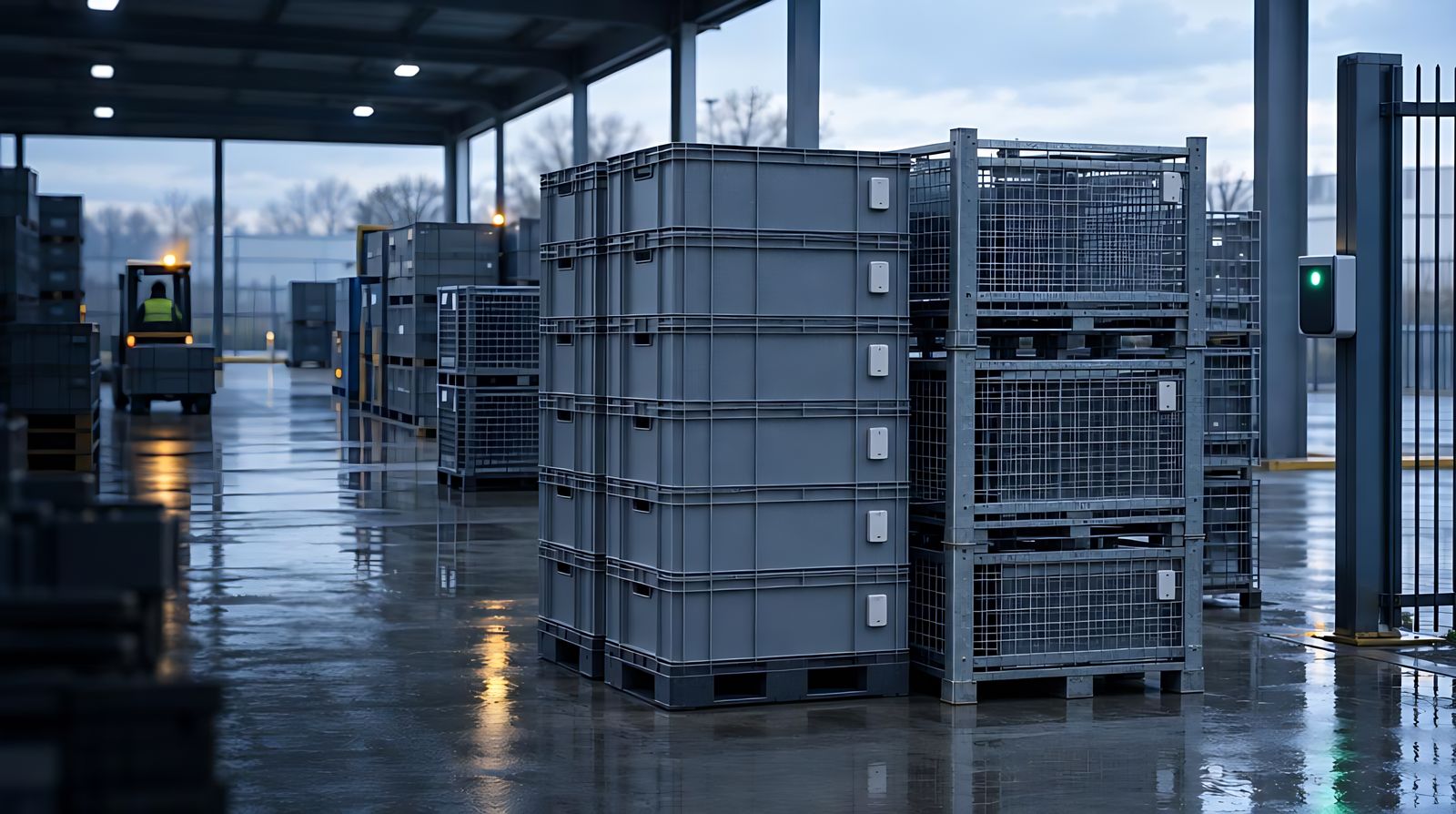
Returnable asset tracking: crates, pallets and roll cages should come home.Crates, pallets and roll cages that never come back?
Returnable asset tracking that closes the loop with the pool owner, so RTIs actually come home, and the next shipment is not buying replacements.
Free 30-minute call with an adviser · written proposal with the price after · fixed-scope engagements from £3k.
RTI programmes stall when loss is accepted as a cost of doing business.
Pool economics
If finance cannot see cost-per-trip and shrinkage by lane, buyers will not fund tags. Start with the five highest-loss loops.
Partner gates
Assets leave forever at the partner dock you do not instrument. Gate reads and deposit logic matter more than fancy indoor maps.
Dirty assets
Wash cycles and metal cages kill naive tags. Spec packaging and tag placement with the wash and nest reality in mind.
Returnable assets & reusable packaging: how it works, and what it pays back.
The right radio for the job, mapped to your use case.
1 · Tag the pool
Each tote, pallet, keg or cage gets a durable Passive RFID or BLE tag.
2 · Track the loop
Reads at dispatch, customer and return capture the full out-and-back cycle, per partner.
3 · Recover & right-size
Loss hot-spots and ageing assets surface, so you chase the right ones and buy fewer.
Passive RFID → network scale · BLE → high-value reusables
Which technology fits.
We work for you, not for the technology providers.
Passive RFID
Low-cost per asset at scale.
BLE
Battery tags for longer-life assets.
Network reads
Gate & site checkpoints.
Industries this solution suits
Stop buying the same totes twice.
An FMCG business tags its tote, cage and keg pool and reads it at dispatch, customer and return. Loss hot-spots surface by partner, the ever-growing pool stabilises, and capital tied up in replacements comes back.
Typically bought by: Logistics, packaging / pooling managers, finance, 3PL partners.
Suppliers we evaluate for this use case
Where this solution wins: examples by sector.
Automotive supplier-OEM dunnage (automotive)
Lower RTI loss, working capital freed, supplier-OEM reconciliation automated.
Pharma cold-chain shippers (pharma)
Reusable cold-chain shippers cycle between manufacturer-distributor-pharmacy.
Retail wheeled cages and dollies (retail)
DC-to-store-to-DC cycle visibility reduces to near-zero loss.
3PL pallet pool management (logistics)
Pool accounting between shipper, carrier, customer.
Aerospace tooling and fixtures (aerospace)
Hangar and tooling-fixture rotation tracked through inspection and maintenance.
Who needs this kind of programme.
Automotive, grocery and beverage loops bleeding working capital as RTIs disappear into the network.
Pool operators and 3PLs billing loss and dwell fairly across partners.
Sustainability teams proving reuse rates instead of buying replacements.
What buyers compare in this market.
RAIN RFID (Impinj/Zebra/Avery/NXP) dominates closed-loop RTI because tag cost and portal reads fit high volume. GPS/IoT trackers appear for high-value cages on open legs. Pure deposit schemes without physical reads still lose assets; pure trackers on every tote rarely pencil. TRACIO scopes which nodes need definitive reads (plant gate, wash, customer dock) versus statistical sampling.
Why RTI programmes stall.
Tag without partner contracts. Visibility that partners are not obligated to honour does not cut loss.
Pool maths ignored. If finance still budgets for shrinkage, ops never gets the ritual change.
Wash and repair blind spots. Assets “lost” in refurbishment wreck the inventory.
Independent.
We don't sell hardware, so our advice stays independent. We design the read architecture and partner process so the RTI pool stops silently shrinking.
Frequently asked questions
Why do returnable containers and packaging go missing?
Without tracking, totes, pallets, kegs, racks and RTIs leak out of the loop, so you over-buy to compensate. RFID gate reads and GPS or LoRaWAN trackers keep a count and last-known location across the pool.
How do we track assets that leave our site?
A mix of RFID read points at gates and partner sites, plus GPS or cellular tags on high-value items, maintains visibility through the external loop, not just inside the four walls.
What accuracy and technology fit?
Gate and dock RFID portals for bulk presence; active or GPS tags for high-value or long-cycle assets. We size the tag to the asset's value and journey.
How does it integrate with our systems?
Pool data feeds your ERP or WMS and partner systems via API so dwell, loss and replenishment are managed as a shared asset, with chargebacks where relevant.
What is the payback?
Fewer replacement purchases, less rental and shrink, better pool utilisation, and the data to hold partners accountable, often a quick win.
Last updated: 5 October 2026