
Government and public sector: asset tracking bought through a fair tender.Public tenders that end in supplier lock-in?
Independent advice for councils, state and federal agencies, transport departments, police and fire services: which assets are worth tracking, which technology fits each one, and how to buy it through an open, fair tender. We don't sell hardware, so our advice stays independent.
Free 30-minute call with an adviser · written proposal with the price after · fixed-scope engagements from £3k.
Written for operations, fleet and procurement leads
Public bodies look after large, spread-out asset bases: vehicles and plant at depots, tools and kit in stores, equipment on response vehicles, and IT and furniture across many buildings. The asset register is often right on paper and wrong on the shelf. Locating technology can close that gap, but only if it is chosen for the decision each team has to make, and bought in a way that stands up to audit.
- Operations leads who need to know where plant, kit and equipment are before a shift or a call-out.
- Fleet managers who already have telematics on vehicles and want the same visibility for trailers, attachments and smaller plant.
- Procurement leads who must run an open, fair process and be able to defend the award.
- Finance and audit teams who need the asset register to match what is physically there.
Where tracking earns its place in public services
Fleet and plant at depots
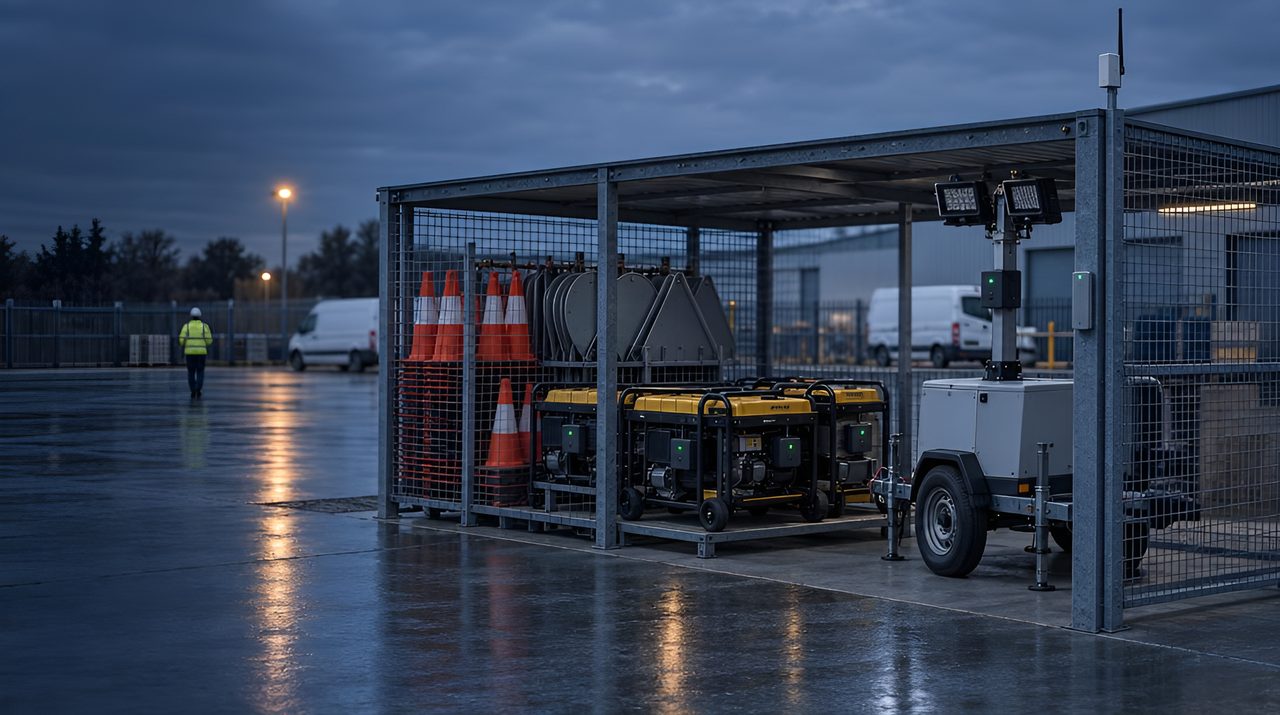
Trailers, attachments, generators and small plant that move between depots and sites. Gate reads and yard location show what is in, what is out and what has not come back. Where vehicles already carry telematics, we use that data rather than adding a second device.
Tools and kit in stores
Issue and return of tools, test equipment and safety kit, with a record of who has what. Passive RFID at the store counter or in a cabinet often does the job; it does not need live location.
Equipment on response vehicles
Police, fire and ambulance vehicles carry kit that must be on board and in date before the vehicle goes out. A read at the station door or in the bay can check the load against the vehicle’s list, so crews are not checking it by hand.
Asset registers that match the shelf
IT equipment, furniture and lab kit across many buildings. Periodic handheld RFID counts reconcile the register with what is there, and flag items that have moved or gone.
Five use cases in public services
Evidence and seized property custody
Each item identified at booking in, with every move recorded: who took it, when and where it went. Counts reconcile the system with the shelf. Serialisation and custody
Office space use by area
Use counted by building, floor, zone and room, as counts, not named people, with a privacy policy agreed first. Space occupancy
Asset registers that match what is there
Handheld counts reconcile the register with what is on site, and list items to check. Cycle counting
IT equipment back from leavers
Devices linked to the person they are issued to, listed when a leaving date is set, and returns recorded at the service desk. Asset tracking
Response vehicle equipment checked
A read at the bay or station door checks the load against the vehicle's list. Your daily vehicle check stays. Asset tracking
How independent advice fits public buying
- We don't sell hardware or take commissions from vendors. We work for you, not for the technology providers. The specification is not written around one supplier’s product. See how the independence holds.
- A fair and open tender. We help write requirements as outcomes and test scenarios, not product names, so several suppliers can bid and the award can be defended.
- Every bid scored against the same scenario. Suppliers demonstrate on the same site, assets and conditions, and are scored against criteria published in the tender.
- Your procurement rules apply. We work inside your framework, approvals and evaluation process, and document the reasoning behind each recommendation.
The systems it has to connect to
Location data is only useful when it updates the records your teams already use. We specify the interfaces before any equipment is bought:
- Asset and maintenance systems (CMMS or EAM), so a located asset updates its record and inspections are scheduled against the real item. See CMMS integration.
- Fleet telematics, so vehicle data and tag data sit on one map instead of two.
- The finance asset register, so counts and disposals reconcile with the fixed-asset ledger.
We survey the site and do the cabling and fit your hardware ourselves. Your IT team provisions the network connections and keeps control of them; we do not configure your networks or run your production systems.
Data protection and security, planned from the start
- Data protection impact assessment. Where tracking touches staff, a DPIA comes first, and we help you scope it: what is tracked, when, who can see it and how long it is kept.
- Staff and union consultation. Track assets, not people, wherever that is enough. Where people are involved, consultation happens before the pilot, not after it.
- Hosting in the right country. We specify where data is stored and processed, and design for on-premise or in-country hosting where your policy requires it.
- Security reviewed like any other operational system. Devices, gateways and software go through your security assessment; we provide the architecture and documents it needs.
For defence and secure sites, see defence and public sector.
A pilot that a tender can build on
We run a gated pilot at one depot, store or station, with pass and fail criteria agreed in writing before any equipment goes in. The result feeds the tender: requirements, test scenarios and acceptance criteria come from what was measured on your site, not from a supplier’s brochure.
Rail and condition-monitoring IoT
Rail and transport bodies put sensors on track, structures and rolling stock to spot faults before they cause delays: vibration, temperature, water levels, and door or point status. The hard choices are the network (LoRaWAN, LTE-M or NB-IoT), the power supply and how alerts reach the maintenance system. We help choose devices and networks, survey the sites and test a pilot. See rail.
LoRaWAN for city and utility platforms
Councils and utilities use LoRaWAN for meters, bins, parking, air quality, street lighting and flood sensors. The decisions that matter come early: a public network or your own gateways, who owns the data, and how devices from several suppliers join one platform. We help write the requirement, test coverage where devices will sit and keep the platform open to more than one supplier. See LoRaWAN consulting and public or private LoRaWAN.
Buying or bidding for public work? See independent advice for public buyers and bidders.
Frequently asked questions
Do you sell tracking hardware or software to public bodies?
No. We advise, specify, help run the tender and accept the system on your side. You buy hardware and licences direct from the supplier; we don't resell them.
Can you help us write a tender for RTLS or RFID?
Yes. We write requirements as outcomes and test scenarios, set the evaluation criteria with your procurement team, and score every bid against the same scenario so the award can be defended. See supplier selection and RFP support.
Do we need a data protection impact assessment?
If tracking can identify or follow staff, almost certainly. We help you scope it early: what is tracked, when, who can see it, how long it is kept and where it is hosted. Tracking assets rather than people avoids much of this where it is enough.
Who installs the system?
We carry out the RF site survey and install the cabling and hardware ourselves. Occasionally a delivery partner may help, but only with your written agreement and under a written contract. Your IT team provisions the network connections; we do not configure your networks or run your production systems.
Do you work on defence or secure sites?
Yes, on unclassified work, and we work within your export-control process. See defence and public sector.
Also covered in public services
Last updated: 5 October 2026