
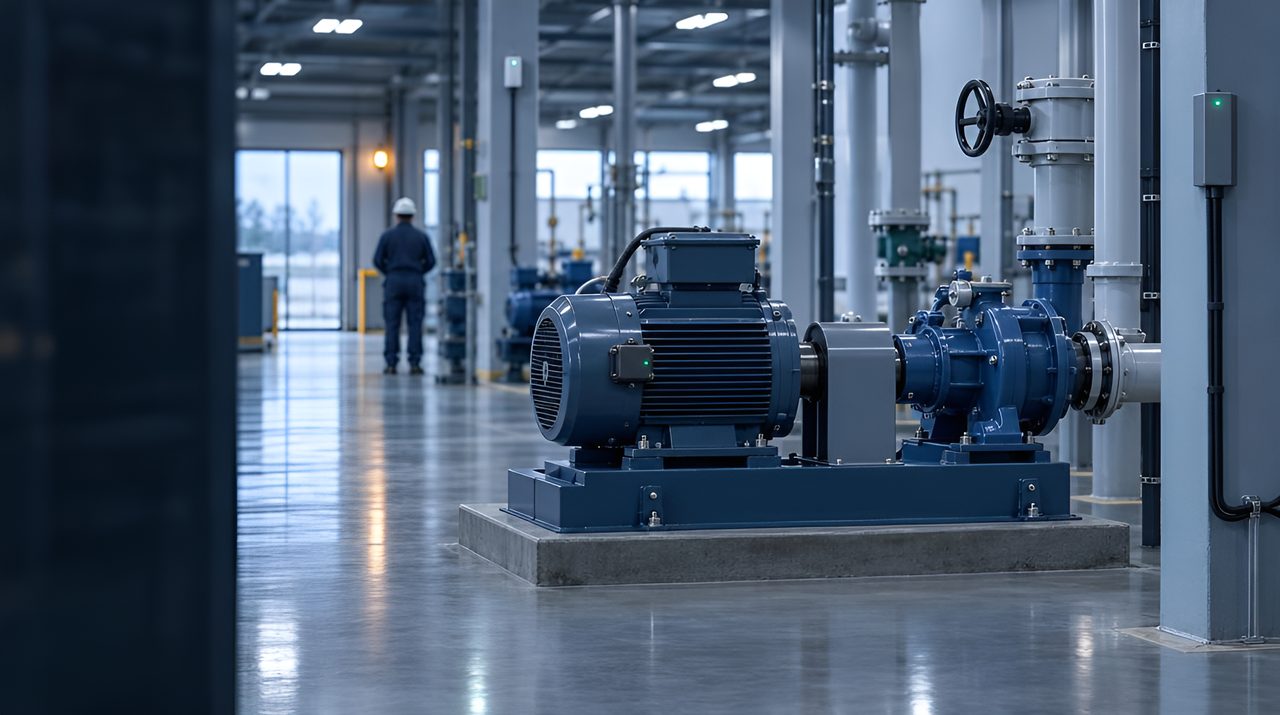
CMMS integration with RTLS / IoT.
Computerised Maintenance Management Systems (CMMS) and Enterprise Asset Management (EAM) platforms hold the canonical asset register and maintenance history.
Integrating RTLS and IoT condition data turns reactive maintenance into condition-based and predictive. This is the operator-level summary.
CMMS / EAM platforms and integration surfaces
The dominant platforms each expose RTLS-friendly interfaces. IBM Maximo (now part of IBM Maximo Application Suite) exposes REST APIs and supports event-driven workflows via Maximo Workflows.
SAP Plant Maintenance (PM, evolving into Asset Performance Management in S/4HANA) uses OData and BAPIs.
Infor EAM exposes REST and supports asset-event integration. Hexagon EAM (formerly Infor) uses similar patterns. Newer cloud-native platforms (UpKeep, Limble) expose modern REST and webhook surfaces.
Where RTLS adds the most value
Three use cases dominate. First: location-aware asset tracking, knowing where each tagged asset is, surfaced in the CMMS asset record alongside its maintenance history.
Second: condition-based work order triggering, when sensor data indicates predicted failure, automatic CMMS work order creation.
Third: calibration management, RTLS feeds the CMMS calibration module with location and custody data, enabling out-of-cal tools to be locked out automatically. See tool-control.
Condition-based and predictive maintenance integration
The integration architecture for predictive maintenance is more involved than for asset tracking.
Condition data (vibration, temperature, current, run-hours) flows from sensors through an analytics layer (often part of the RTLS platform or a separate predictive-maintenance platform) into the CMMS as either alerts or work-order auto-creation.
The analytics layer is the integration's most important design decision. See predictive maintenance.
Pitfalls: master data and asset hierarchy
The single most common pitfall is asset-hierarchy mismatch. CMMS hierarchies are detailed and specific (site / area / system / equipment / component). RTLS tagging is often at a different granularity.
Reconciling the two is one-time work that must happen before integration goes live. Skipping it produces ongoing operational pain. We do this carefully at gate 1.
Frequently asked questions
Can RTLS automatically create work orders in our CMMS?
Yes, with appropriate triggering logic. Sensor-driven thresholds, run-hour limits or pattern-detected anomalies can auto-create work orders in Maximo, SAP PM, Infor EAM. The triggering logic and approval workflow are designed jointly with your maintenance team.
How does this work with mobile maintenance apps?
RTLS-aware mobile work orders show technicians exactly where the asset is, reducing search time. Integration usually flows through the CMMS mobile interface (Maximo Anywhere, SAP Asset Manager mobile, Infor EAM mobile).
Is this enough to deliver true predictive maintenance?
RTLS plus condition sensors plus an analytics layer (often the RTLS platform or a dedicated predictive-maintenance platform) plus the CMMS: that's the stack. Each piece is required. The integration is where it becomes operational. See predictive-maintenance.
Who builds the integration?
TRACIO designs the architecture and event flow; the CMMS partner (typically your existing EAM SI) builds the platform-side configuration; the RTLS supplier provides their interface. We coordinate.
Last updated: