
Athlete and player tracking: load and position as sports science.Tracking data your sports scientists don't trust?
Athlete tracking RTLS and GNSS so the club owns the data: wearables that feed the performance system you already run, without locking you into a supplier dashboard.
Free 30-minute call with an adviser · written proposal with the price after · fixed-scope engagements from £3k.
Athlete tracking fails when sports science cannot trust the join to load metrics.
Metric join
Position without load (IMU/GPS session dose) will not change training design. Specify the join keys on day one.
Kit compliance
If units are optional in training, the dataset is biased toward the compliant athletes. Make wear part of the session SOP.
Rights and publish
Competition and image rights limit what can leave the club. Keep training-ground analytics on infrastructure you control.
Athlete tracking: how it works, and what it pays back.
The right radio for the job, mapped to your use case.
1 · Tag
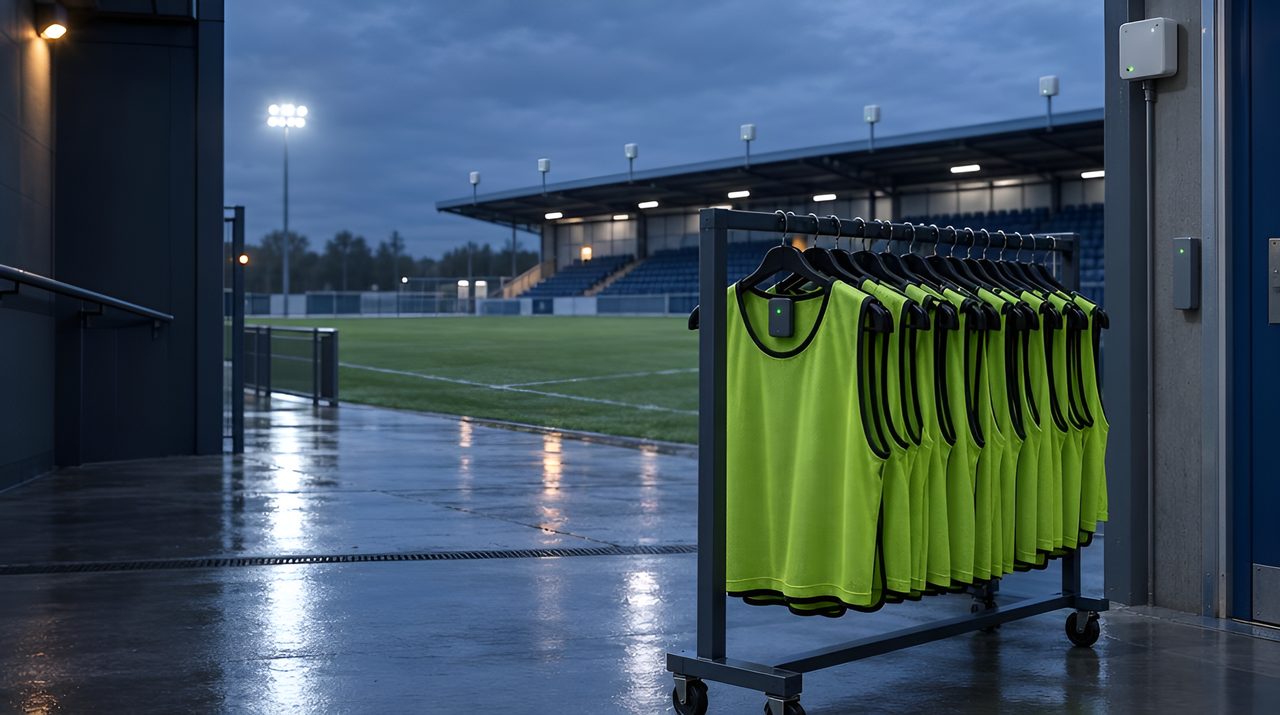
Players wear a lightweight tag in the vest or kit.
2 · Track
UWB is usually the most precise of these options. The accuracy you get depends on your site, and we confirm it in the survey.
3 · Analyse
Speed, distance, accelerations, load and heatmaps, per player, live and post-session.
UWB → indoor halls & courts · GNSS-RTK → outdoor pitches
Which technology fits.
We work for you, not for the technology providers.
UWB
Accurate zone boundaries.
BLE
Broad presence detection.
Permits
Live permit-to-work link.
Industries this solution suits
Every metre, sprint and load.
A club tags its players: UWB indoors, GNSS-RTK outdoors. Coaches see speed, distance and workload live, manage load to cut soft-tissue injuries, and base return-to-play decisions on data.
Typically bought by: Sports science, S&C coaches, medical / physio, performance directors.
Relevant case studies
Where this solution wins: examples by sector.
Elite football and team sports (sports)
Sub-metre position for performance analytics.
Olympic and individual sports (sports)
Speed, distance, position data for elite athletes.
Combat sports training (sports)
Movement and impact analysis for combat-sports athletes.
Sports science and physiotherapy (sports)
Movement analysis for injury prevention and return-to-play.
College and youth-development programmes (sports)
Athletic-development analytics at sub-elite level.
What buyers care about.
Load metrics sports science can trust. Distance, speed, acceleration, high-speed running and mechanical load only matter if sessions join cleanly to athlete ID, drill type and medical status. A pretty GPS track that will not join the AMS is shelfware.
Indoor and outdoor continuity. Stadiums, indoor halls and practice barns break GNSS. Local positioning (UWB / LPS) or hybrid GNSS+LPS is why elite programmes pay for pitch-and-hall coverage, not because they want another dashboard brand.
Return-to-play and injury context. Physiotherapy and medical staff need comparable session loads before and after injury, with clear consent and data minimisation. Player unions and academies watch this closely.
Operational reliability on match day. Battery, kit assignment, RF interference from broadcast and rapid turnaround between sessions decide whether coaches keep using the system.
Where athlete programmes fail.
Hardware without the data model. Tags and vest pods are easy to buy; the hard part is athlete roster sync, drill coding, and export into the sports-science stack the club already runs.
GNSS-only indoors. Hall sports and covered pitches need local positioning. Buying outdoor GPS and hoping for indoor accuracy wastes a season.
One-size metrics. Youth, women’s and elite men’s programmes need different thresholds and reporting. Forcing a single “player load” cut-off creates false red flags.
Privacy afterthoughts. Continuous biometric and location data on athletes (especially minors in academies) needs explicit governance. Do not treat it like warehouse badge tracking.
Competitors (advisory view).
Performance suppliers such as Catapult (Vector and LPS/GNSS athlete monitoring) dominate elite outdoor and hybrid programmes. Local-positioning specialists in the Quuppa and UWB ecosystems appear in indoor arenas and specialised halls. Generic industrial RTLS can capture x/y paths but usually lacks sports-science metrics, vest ergonomics and AMS integrations coaches expect.
How suppliers pitch vs what to buy. Suppliers pitch centimetre tracks and proprietary load scores. Buyers should purchase: validated metrics for their sport; indoor/outdoor coverage where they actually train; open or well-documented export to the AMS; kit logistics that survive match day; and governance for athlete data. We don't sell hardware, so our advice stays independent. We advise on locating architecture and integration when clubs or federations need independent help beyond a single product’s roadmap.
What “good” looks like for sports science.
Session integrity. Every exported file carries athlete ID, session type, pitch/hall ID, start/stop and known sensor gaps. Missing metadata is treated as a failed capture, not as “close enough” for load decisions.
Comparable indoor and outdoor loads. Where athletes train across surfaces, the programme documents how LPS and GNSS metrics are calibrated or caveated so return-to-play decisions are not comparing apples to oranges.
Coach workflow over supplier UI. If the performance staff live in an existing AMS, the locating feed must land there reliably. A second portal that only the supplier’s CSM uses is not a solution.
Frequently asked questions
How accurate is athlete tracking, and at what update rate?
Team-sport analytics typically needs decimetre-level accuracy at 10-25 Hz so sprints, accelerations and positioning are captured cleanly. UWB delivers that indoors and out; GNSS-RTK suits large open pitches. We match the technology to the sport and the metrics that matter.
Will it work indoors, outdoors and in mixed venues?
Yes. UWB anchors cover indoor courts and arenas where GPS fails; GNSS and GNSS-RTK cover open pitches; a hybrid handles venues with both. The tag stays on the athlete; the positioning method changes with the environment.
What metrics can we actually get?
Distance, speed, acceleration and deceleration, load and high-intensity efforts, heatmaps, time-in-zone, and team shape and spacing, exportable to the performance and medical platforms your analysts already use.
Is it approved for competition or just training?
Governing-body and EPTS rules vary by sport and competition. Many systems are used freely in training and increasingly in-match where permitted. We choose hardware that fits your league's wearable rules.
How does it integrate with our analysis tools?
Position and event data export via API or CSV into the strength-and-conditioning, video and medical systems your analysts already use, so it adds to your workflow rather than replacing it.
Last updated: 5 October 2026