
Ports and container terminals: positioning the terminal operating system can trustContainer positions your TOS can't trust?
Independent advice for terminal operators, port authorities and port-centric logistics: how to locate boxes, chassis and machines at port scale, identify trucks at the gate, monitor reefers and keep people safe around moving plant. We don't sell hardware, so our advice stays independent.
Free 30-minute call with an adviser · written proposal with the price after · fixed-scope engagements from £3k.
The yard problem at port scale
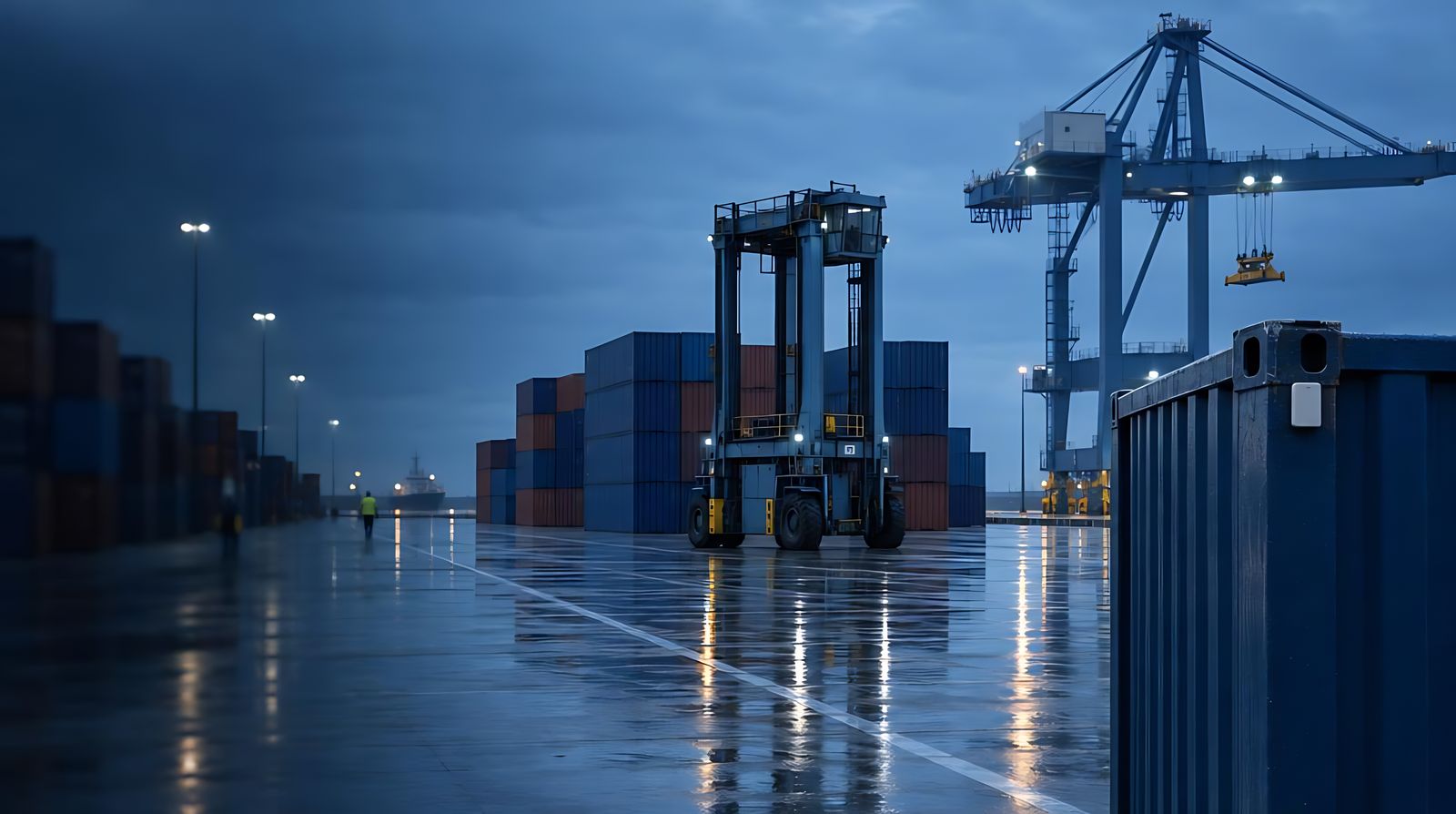
A terminal yard holds containers, chassis and trailers in constant motion, moved by straddle carriers, reach stackers, terminal tractors and trucks, with people working among them. The terminal operating system (TOS) knows where a box should be. Locating technology is worth having when it shows where the box, chassis or machine actually is, and feeds that back to the TOS before the next move is planned.
- Misplaced boxes mean re-handles and delays to vessel and truck work.
- Chassis and trailers are often found by memory and radio calls.
- Machines and people share the same space, so safety rules must work at speed and in all weather.
- Terminal OT is critical infrastructure, so every new device is a security question.
Where locating technology helps a terminal
Box and chassis positioning from the machines
Most terminals do not tag containers. Instead, GNSS and equipment telematics on straddle carriers, reach stackers and tractors record where each pick and drop happens, and the position is matched to the TOS move. We specify the accuracy each move needs and how a mismatch is flagged.
Gate and lane identification
Truck, trailer and container identification at the gate and in the lanes, with the technology that fits each flow: RFID tags on trucks or trailers, optical character recognition on container numbers, or both, matched to appointments in the TOS or the port community system.
Reefer monitoring
Power and temperature status for refrigerated containers, so alarms reach the right team and a reefer is not left unplugged after a move. We check what the reefer units and any existing monitoring already provide before adding anything.
People safety around moving plant
Proximity warnings between machines and people on foot, and a record of who is in which zone of the yard. Steel stacks, rain and long distances shape the radio choice, so this is tested on the yard, not in a demo. See collision avoidance.
Ports use cases we design for.
Box position from the machine
Pick and drop positions from the machines matched to the TOS move, with mismatches flagged before the next move. GNSS and telematics, confirmed in the survey.
Box number checked at the crane
Cameras read box numbers at the crane and check them against the TOS, with a manual check kept for poor reads.
Truck time on terminal
Reads at gate in and gate out record each visit against its appointment, so long visits show by time of day.
Reefers plugged in and in range
Power and temperature status reach the right team, so plug in after a move is confirmed. What the units already send is checked first.
DG boxes in the right area
The drop position is checked against the DG areas in the TOS, and a wrong drop is flagged for a check. Your DG procedures stay.
More ports use cases.
- Yard and gate: chassis, trailers and trucks identified at the gate and found in the yard.
- Collision avoidance: machine and pedestrian proximity alerts that support existing safety measures and don't replace them.
- Yard zones: a record of who is in which zone of the yard, alongside your yard access rules.
- Terminal machines: where straddle carriers, reach stackers and tractors are and how much they are used.
- Tools and spares: terminal owned tools and spares found without a search.
- Machine servicing: service planned on engine hours and faults as well as the date.
Cyber security and network zoning on terminal OT
Gate systems, machine telematics and the TOS sit on operational networks that must stay separated from the office network and the internet. We design the locating system to your zoning model: which zone each device and server sits in, which flows cross a boundary, and how remote supplier access is controlled. We install the cabling and hardware; your IT and OT teams provision the connections and keep control of the networks.
Test any single-supplier “port twin” pitch before buying. A digital twin is only as good as its interfaces to the TOS, gate and maintenance systems, and its fit with your security zoning. Ask for those interfaces to be shown on your data, not on a sample yard. See OT cyber security.
A gated pilot on a live terminal
- One area, one flow. Start with a block, a gate lane or a group of machines, chosen with operations so vessel and truck work carry on as normal.
- Criteria agreed first. Positioning accuracy per move type, match with the TOS, false alarms and operator acceptance, agreed in writing before any equipment goes in.
- Installed around operations. Our advisers surveys and installs in planned windows agreed with the terminal, under your site safety rules.
- A clear decision at the end. Go, change or stop, with a specification you can take to tender.
AGVs and AMRs in ports and terminals
Automated vehicles in a terminal have to work with cranes, manual vehicles and the terminal operating system (TOS), in all weather. We help you choose the right automated vehicles for each move, then check what it takes to run them together.
- Container moves between quay, yard and gate areas.
- Horizontal transport alongside manual vehicles and people.
- Moves in warehouses and freight stations on the terminal.
- Charging, maintenance areas and uptime planned around vessel peaks.
- Robot fleet management: traffic and priority between automated and manual vehicles, and one fleet manager where fleets from different manufacturers share a yard. We check what it takes and help you make it work.
- Integration with your TOS, so vehicle moves follow the yard plan.
See AMR and AGV consulting, including AMR/AGV fleet management, or book a free scoping call to talk it through. Free briefs: AMR and AGV fleets, and AMR/AGV fleet management.
Frequently asked questions
Do you tag every container?
Usually not. Containers belong to shipping lines and move between terminals, so most terminals locate them through the machines that move them. Tags make more sense on assets the terminal owns, such as chassis, trailers, tools and spares.
Can this work with our terminal operating system?
That is the first thing we check. Location data has to arrive as events the TOS understands, for example a confirmed pick or drop at a slot. We specify the interface with the TOS supplier and your team before any hardware is chosen.
How do you avoid disrupting operations during a pilot?
The pilot is limited to one area or flow, installation happens in planned windows agreed with operations, and the existing process keeps running until the new one passes its criteria.
Who installs the system?
We carry out the RF site survey and install the cabling and hardware ourselves. Occasionally a delivery partner may help, but only with your written agreement and under a written contract. Your IT team provisions the network connections; we do not configure your networks or run your production systems.
Do you sell telematics, RFID or a digital twin?
No. We advise, specify, help run the tender and accept the system on your side. You buy hardware and licences direct from the supplier; we don't resell them.
Last updated: 5 October 2026