
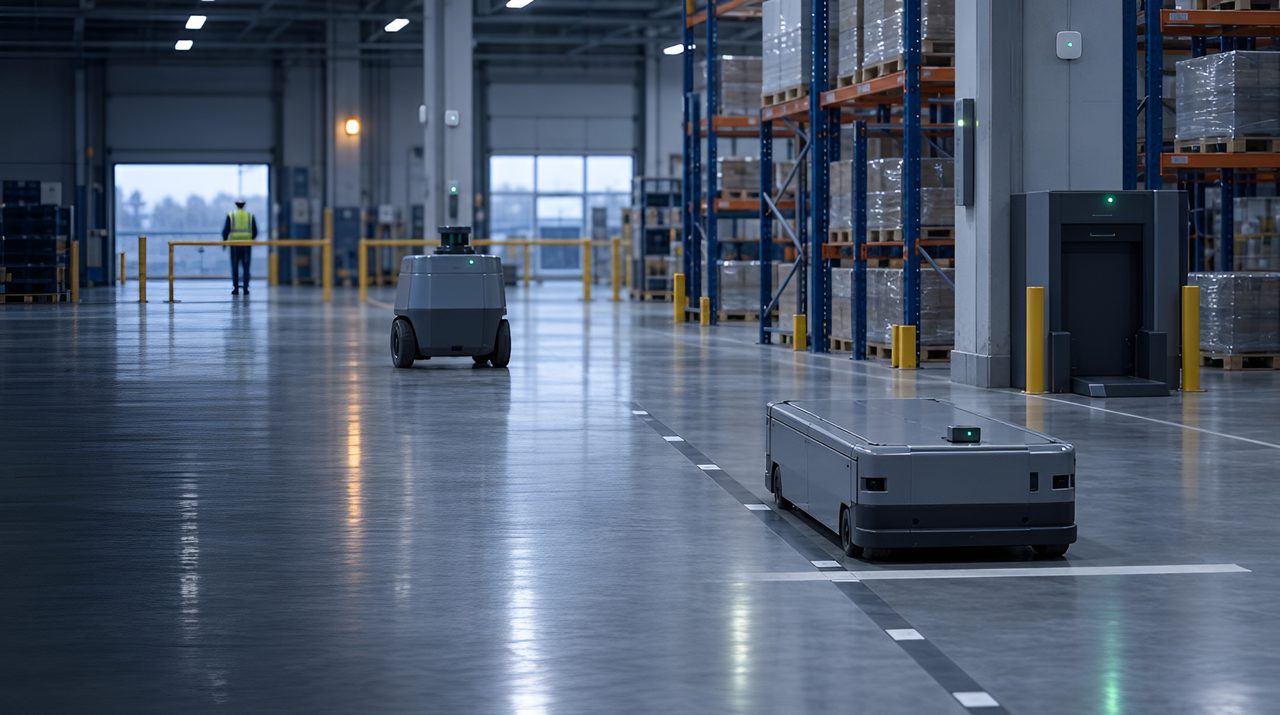
AGV gegen AMR: wann welches System gewinnt.
AGV und AMR sind verschiedene Generationen von Lager- und Fabrikrobotik mit unterschiedlichen Annahmen zu Navigation, Infrastruktur, Flexibilität und TCO.
AGVs folgen festen Wegen, die durch Magnetband, Drahtführung oder Barcodemarker definiert sind; AMR navigiert dynamisch mit LiDAR oder visuellem SLAM.
Dies ist der Vergleich auf Betreiberebene für Beschaffungsteams, die zwischen ihnen wählen und der Fall für Hybridflotten, die von VDA 5050 gesteuert werden.
Der Kategorieunterschied
AGV s (Automatisierte Lenkfahrzeuge) sind Roboter mit festem Weg, die Markern folgen: Magnetband, eingebetteten Drähten, optischen Leitungen oder festen QR-Codes. Sie sind deterministisch, zuverlässig und bewährt im großen Maßstab bei hochvolumigen, wiederholbaren Aufgaben.
AMR s (Autonome Mobile Roboter) nutzen Bordsensoren (LiDAR, Tiefenkameras, IMU), um eine Karte der Umgebung zu erstellen und dynamisch zu navigieren. Sie planen um Hindernisse herum,
teilen dynamische Wege mit Kollegen und passen sich an Layoutänderungen an, ohne das Band neu zu verlegen.
AGV gewinnt durch deterministischen Durchsatz in stabilen Layouts; AMR gewinnt durch Flexibilität und schnellere Bereitstellung in wechselnden Umgebungen.
Navigation und Infrastruktur
AGV: Bedarf an Bodenvorbereitung (Klebeband, Drähte, QR-Codes). Layoutänderungen erfordern die Neuverlegung der Weginfrastruktur. Stark in Umgebungen, in denen das Layout fest und der Durchsatz vorhersehbar ist.
AMR: benötigt einen Clean-Floor-Scan während der Inbetriebnahme sowie Ladestationen. Layoutänderungen werden durch Neuzuordnung (Minuten zu Stunden, nicht Wochen) gehandhabt. Stark in Umgebungen, in denen sich Arbeitsabläufe oder Layouts im Laufe der Zeit verändern.
Durchsatz, Kosten und TCO
AGV: Die Investitionskosten pro Einheit können für Schlepper-/Hebefahrzeuge höher sein, aber die Lebensdauer der TCO ist gut verstanden und vorhersehbar; Hochdurchsatzanwendungen (Kitting, Linienauffüllung, Fertigwarenpuffer) sind die traditionelle Stärke von AGV.
AMR: schnellere Einsatzbereitschaft, geringere Kapazitäten pro Einheit bei leichteren Fahrzeugen, aber Software, Integration, Flottenmanagement und Verkehrssteuerung erhöhen die Kosten.
Payback ist bei AMR für variable Workflows in der Regel schneller; AGV gewinnt auf stetigen, hochvolumigen Routen.
Händlerlandschaft
AGV: Dematic, Daifuku, KION (Linde / Dematic / STILL), Toyota Materialhandhabung, Egemin. Gabelstapler-förmige AGVs von Gabelstaplerherstellern sind weit verbreitet.
AMR: Mobile Industrial Robots (MiR, im Besitz von Teradyne), Geek+, OTTO Motors (Rockwell), Locus Robotics, Fetch (Zebra), Vecna Robotics, 6 River Systems (Ocado). Der Markt konsolidierte sich nach 2020 rasch, wobei große Industriegruppen AMR-Anbieter übernahmen.
VDA 5050: der Interoperabilitätsstandard
VDA 5050 ist der Schnittstellenstandard zwischen gemischten Flotten AGV s/AMR und einem Hauptsteuerungssystem, herausgegeben vom Deutschen Automobilverband. Es wird inzwischen breit in europäischen und wachsenden nordamerikanischen Einsätzen eingesetzt.
Mit VDA 5050 kann man eine heterogene Flotte (AGV von einem Anbieter, AMR von einem anderen) unter einer einzigen Orchestrierungsschicht betreiben.
Dies reduziert das Risiko der Lieferantenbindung erheblich und ermöglicht eine schrittweise Ausrollung. Siehe AGV & AMR Flotten-Orchestrierung.
Version 3.0, veröffentlicht im März 2026 (angekündigt im April 2026), ergänzt Zonen und Pfadfreigabe, damit frei navigierende AMRs ihre Routen selbst planen können, während ein zentrales Leitsystem die Verkehrssteuerung behält. Unabhängige Leitsysteme wie SYNAOS, idealworks, NAiSE und Meili FMS konkurrieren inzwischen mit den eigenen Flottenmanagern der Roboterhersteller; siehe Flottenorchestrierung.
Hybridflotten und wann jede passt
Ausgereifte Deployments überlagern oft beides. AGV für hochvolumige, wiederholbare Stammrouten (streckenseitige Versorgung, Fertiggüterpuffer zur Verteilung).
AMR Für variable Goods-to-Person-Kommissionierung, Ad-hoc-Moves und Routen, die sich mit Saisonalität oder Produktmischung ändern.
VDA 5050 bindet die Flotte unter eine einzige Hauptkontrolle. Wir wählen das richtige Fahrzeug für die richtige Route in Stufe 1, siehe AGV & AMR Flotten-Orchestrierung.
Entscheidungskriterien
AGVs folgen festen physischen oder virtuellen Leitspuren; AMRs orten sich mit Bordsensorik (oft SLAM) und planen um Hindernisse herum neu. VDA 5050 (einschließlich der Arbeiten an v3.x) standardisiert die Kommunikation zwischen Flottenmanager und Roboter (typischerweise MQTT/JSON), sodass gemischte Flotten eine gemeinsame Leitsteuerung nutzen können. Sicherheitsnachweise, Verkehrslogik, Cybersicherheit und WMS-Integration ersetzt es nicht.
TRACIO berät zu Ortung und übergeordneter Flottensteuerung. Wir verkaufen keine Hardware, deshalb bleibt unsere Beratung unabhängig. Bewerten Sie die Stabilität der Routen, wie oft sich das Layout ändert, Bestandsanlage oder Neubau, die Planbarkeit des Durchsatzes und wie vollständig jeder Anbieter VDA 5050 umsetzt.
Wann AGVs die bessere Wahl sind
- Stabile Routen mit hohem Volumen, die jahrelang bestehen sollen und bei denen Einfachheit mehr zählt als Autonomie.
- Neubaustandorte, an denen die Leitspur-Infrastruktur kostengünstig eingeplant werden kann.
- Niedrigere Kosten pro Fahrzeug und deterministisches Verhalten wiegen schwerer als Flexibilität.
- Fahrwege sind so weit getrennt, dass ein Anhalten bei Blockaden betrieblich akzeptabel ist.
Wann AMRs die bessere Wahl sind
- Bestandslager mit häufigen Layoutänderungen: neue Karten per Software schlagen das Entfernen von Bodenmarkierungen oder Reflektoren.
- Gemeinsam mit Menschen genutzte Gänge und dynamische Hindernisse erfordern lokale Neuplanung der Route.
- Ein herstellerübergreifender Wachstumspfad über VDA-5050-fähige Flottenmanager ist strategisch wichtig.
- Der erste Nutzen muss ohne lange Stillstände für die Installation von Infrastruktur erreicht werden.
TCO-Fallen
Falle: nur den Listenpreis der Roboter vergleichen (AMR kosten mehr für Sensorik und Rechenleistung, bei AGV stecken die Kosten in Installation und Umplanung der Routen). Falle: den Aufwand für die Kartenpflege der AMR in dynamischen Werken ignorieren. Falle: annehmen, dass „unterstützt“ bei VDA 5050 den vollen Funktionsumfang bei allen Anbietern bedeutet. Falle: Flotten kaufen ohne Ortungs- und Verkehrskonzept für gemischte Zonen mit Menschen und Robotern. Falle: die Auftragsschnittstellen zu WMS/MES zu klein planen. Falle: Ladestrategie und gleichzeitigen Betrieb in der Spitzenschicht vergessen.
Ortung und Flottensteuerung
Ob AGV oder AMR: Große Flotten brauchen Verkehrsmanagement, Auftragsvergabe aus WMS/MES, eine Ladestrategie und oft eine zusätzliche Ortungsebene für Bereiche, die Menschen und Roboter teilen. VDA 5050 hilft gemischten Flotten verschiedener Hersteller, mit einem Flottenmanager zu kommunizieren. Sicherheits-SPS, Zonenregeln und Cybersicherheit bleiben aber Ihre Aufgabe. TRACIO berät zu Ortung und Orchestrierungsschnittstellen. Wir verkaufen keine Hardware, deshalb bleibt unsere Beratung unabhängig.
Lassen Sie sich von Anbietern das Verhalten bei Hindernissen, die Wiederaufnahme nach blockierten Wegen, Abläufe zur Kartenaktualisierung (AMR), die Kosten einer Leitspuränderung (AGV) und den Fluss von Ortungsereignissen in Ihren digitalen Zwilling oder Ihr YMS vorführen. Hybride Flotten (AGVs auf festen Hauptrouten, AMRs in wechselnden Kommissionierbereichen) sind 2026 ein legitimes Muster, wenn Wirtschaftlichkeit und Flexibilität beide zählen.
Einkaufsfragen, die Demos von echten Einsätzen unterscheiden
- Welche VDA-5050-Version und welcher Funktionsumfang sind im Produktivbetrieb zertifiziert?
- Wem gehören die Lizenz für den übergeordneten Flottenleitrechner und die Rechte zur Erweiterung auf weitere Standorte?
- Wie hoch ist der gemessene Durchsatz auf einer Strecke, die Ihrer Gangbreite und Verweildauer entspricht?
- Wie sind Not-Halt, Sperrzonen für Personen und Sammelplatzerfassung mit der Ortung verknüpft?
- Wie hoch sind die Gesamtbetriebskosten über fünf Jahre, einschließlich Kartenpflege oder Leitspur-Umbau?
Entscheidungsübersicht
Wählen Sie AGVs für feste Routen mit hohem Volumen und geringerer Fahrzeugkomplexität, AMRs für Flexibilität in Bestandsgebäuden und dynamische Gänge und hybride Flotten, wenn beides am selben Standort vorkommt. Bestehen Sie auf Klarheit bei VDA 5050, Auftragsvergabe aus dem WMS und einem Ortungs- und Verkehrskonzept. TRACIO berät nur zu Orchestrierung und Ortung. Die Investition in Roboter geht an den Hersteller und Integrator, den Sie nach Leistung auswählen.
Häufig gestellte Fragen
Welcher ist günstiger: AGV oder AMR?
Kommt auf den Arbeitsablauf an. AMR ist in der Regel günstiger in der Anfangsaufstellung (keine Bodenvorbereitung, schnellere Inbetriebnahme); AGV hat eine TCO mit niedrigerer Lebensdauer auf stabilen Hochdurchsatzrouten.
Der richtige Vergleich ist die Gesamtkosten pro abgeschlossener Umzug über die Einsatzdauer.
Können AGV s und AMRS ein Master-Control-System teilen?
Ja, VDA 5050 ist genau dafür konzipiert. Wir entwerfen VDA 5050-konforme Master-Control als Teil von AGV & AMR Flotten-Orchestrierung.
Brauchen AMRs eine WMS-Integration, um nützlich zu sein?
Ja, für jede produktive Implementierung über den Proof-of-Concept hinaus. Die Flottenmanagementsoftware AMR integriert sich über Standard-APIs mit WMS (SAP EWM, Manhattan, Blue Yonder, Körber). Wir entwerfen Integrationsmuster in Stufe 1.
Wird AMR mit der Zeit die AGVs ersetzen?
Teilweise. Der Marktanteil von AMR wächst schnell in der Goods-to-Person-Auswahl und variablen Arbeitsabläufen.
AGVs behalten Vorteile bei deterministischen Hochaufladungs-Trunkrouten und schwerlastigen Schlepperanwendungen. Wir erwarten, dass eine gemischte Flotte, VDA 5050-orchestriert die langfristige Lösung sein wird.
Wie genau ist die AMR-Navigation in der Praxis?
Die Genauigkeit hängt von Ihrem Standort ab, und wir bestätigen sie in der Standortbegehung. Andock- und Ladeabfertigungsgenauigkeit ist höher (mm-Niveau) mit Fiduzialmarkern an Abholpunkten. Die Genauigkeit ist durch Sensorqualität und Kartierungsdisziplin begrenzt.
Zuletzt aktualisiert: