
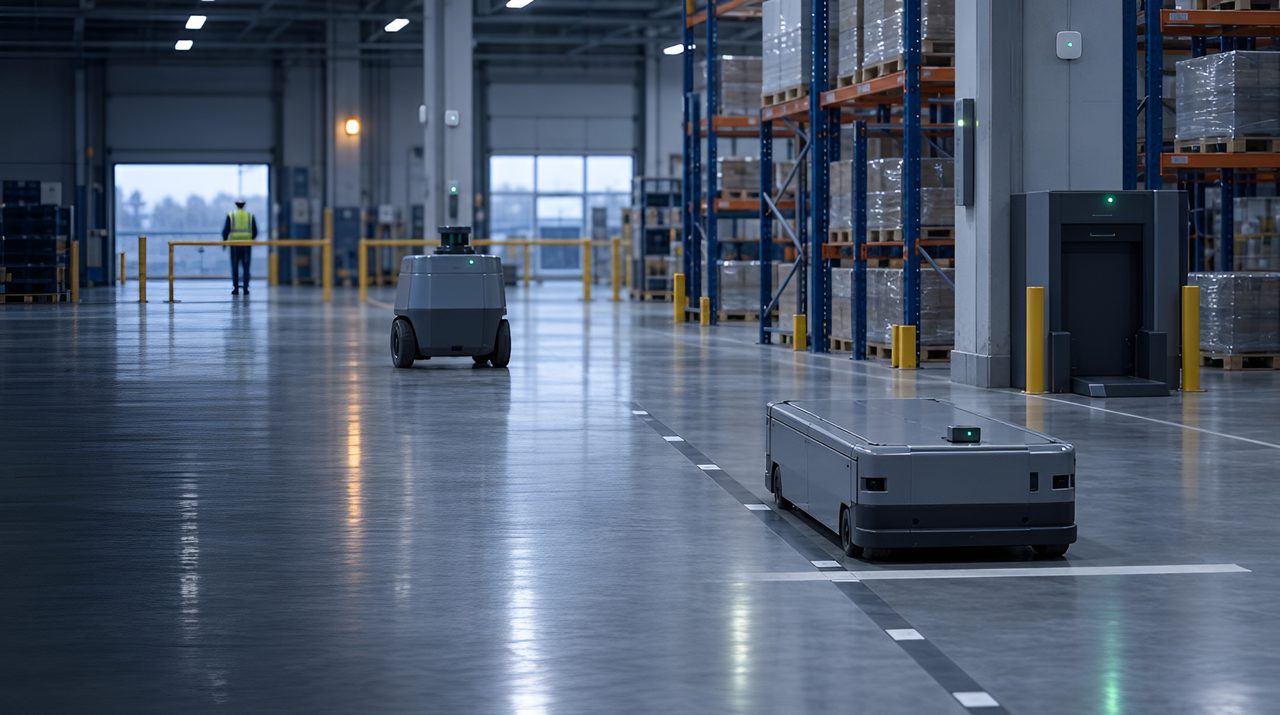
AGV kontra AMR: kiedy każdy wygrywa.
AGV i AMR to różne generacje mobilnej robotyki magazynowej i fabrycznej, z różnymi założeniami dotyczącymi nawigacji, infrastruktury, elastyczności i TCO.
AGV podążają za stałymi ścieżkami wyznaczonymi za pomocą taśmy magnetycznej, przewodu przewodowego lub znaczników kodów kreskowych; AMR nawiguj dynamicznie za pomocą LiDAR lub wizualnej SLAM.
To jest porównanie na poziomie operatora dla zespołów zakupowych wybierających między nimi i dotyczy to flot hybrydowych regulowanych przez VDA 5050.
Różnica w kategoriach
AGV (Pojazdy Zautomatyzowane Kierowane) to roboty o stałej ścieżce, które podążają za znacznikami: taśmą magnetyczną, wbudowanymi przewodami, liniami optycznymi lub stałymi kodami QR.
Są deterministyczne, niezawodne i sprawdzone na dużą skalę w zadaniach o dużej liczbie powtarzalności.
AMR s (Autonomiczne roboty mobilne) używają czujników pokładowych (LiDAR, kamery głębinowych, IMU) do tworzenia mapy środowiska i dynamicznej nawigacji, przeplanowują przeszkody,
dzielą się dynamicznymi ścieżkami z innymi i dostosowują się do zmian układu bez konieczności ponownego nakładania taśm.
AGV w deterministycznej przepustowości w stabilnych układach; AMR dzięki elastyczności i szybszemu wdrożeniu w zmieniających się środowiskach.
Nawigacja i infrastruktura
AGV: wymaga przygotowania podłogi (taśma, przewody, kody QR). Zmiany układu wymagają ponownego układania infrastruktury ścieżek. Mocne w środowiskach, gdzie układ jest stały, a przepustowość przewidywalna.
AMR: wymaga czystej podłogi podczas uruchomienia oraz stacji ładowania. Zmiany układu obsługiwane przez ponowne mapowanie (minuty na godziny, nie tygodnie). Silny w środowiskach, gdzie workflow lub układy zmieniają się z czasem.
Przepustowość, koszt i TCO
AGV: koszt kapitałowy na jednostkę może być wyższy dla pojazdów holowniczych / podnośników, ale całkowity TCO jest dobrze znany i przewidywalny; Aplikacje o wysokiej przepustowości (kitting, uzupełnianie linii, bufor gotowych produktów) to tradycyjna mocna strona AGV.
AMR: szybsze wdrożenie, niższe nakłady inwestycyjne na jednostki pojazdów lżejszego, ale oprogramowanie, integracja, zarządzanie flotą i inżynieria kontroli ruchu zwiększają koszty.
Zwrot z inwestycji jest zazwyczaj szybszy na AMR dla zmiennych przepływów pracy; AGV wygrywa na stałych trasach o dużym natężeniu ruchu.
Dostawcy
AGV: Dematic, Daifuku, KION (Linde / Dematic / STILL), Toyota Material Handling, Egemin. Modele AGV w kształcie wózków widłowych od producentów wózków widłowych są powszechnie popularne.
AMR: Mobilne roboty przemysłowe (własność MIR, KION), Geek+, OTTO Motors (Rockwell), Locus Robotics, Fetch (Zebra), Vecna Robotics, 6 River Systems (Ocado). Rynek szybko się ustabilizował po 2020 roku, gdy główne grupy przemysłowe przejęły dostawców AMR.
VDA 5050: standard interoperacyjności
VDA 5050 jest standardem interfejsu pomiędzy mieszanymi flotami AGV s/ AMR a głównym systemem sterowania, opublikowanym przez Niemieckie Stowarzyszenie Przemysłu Motoryzacyjnego. Obecnie jest szeroko przyjęta w Europie i rosnących rozmowach w Ameryce Północnej.
Dzięki VDA 5050 możesz prowadzić różnorodną flotę (AGV od jednego dostawcy, AMR od innego) pod jedną warstwą orkiestracji. To znacząco zmniejsza ryzyko zaangażowania dostawców i umożliwia stopniowe wdrażanie. Zobacz Orkiestracja flot AGV i AMR.
Wersja 3.0, opublikowana w marcu 2026 roku (ogłoszona w kwietniu 2026 roku), dodaje strefy i współdzielenie ścieżek, aby swobodnie nawigujące AMR mogły planować własne trasy, podczas gdy centralny sterownik nadrzędny zachowuje kontrolę nad ruchem. Niezależne sterowniki, takie jak SYNAOS, idealworks, NAiSE i Meili FMS, konkurują dziś z własnymi menedżerami floty producentów robotów; zobacz orkiestracja floty.
Hybrydowe floty i kiedy każda pasuje
Dojrzałe wdrożenia często nakładają oba te elementy. AGV dla dużych ruchów, powtarzalnych tras głównych (uzupełnianie po stronie linii, bufor towarów gotowych do dyspozycji).
AMR dla zmiennego odbioru towarów do osoby, doraźnych ruchów i tras zmieniających się w zależności od sezonowości lub miksów produktów.
VDA 5050 wiąże flotę pod jednym głównym nadzorem. Wybieramy odpowiedni pojazd na właściwą trasę w etapie 1, zobacz Orkiestracja flot AGV i AMR.
Najczęściej zadawane pytania
Co jest tańsze: AGV czy AMR?
To zależy od pracy pracy. AMR jest zazwyczaj tańszy w początkowym wdrożeniu (brak przygotowania na sali, szybsze uruchomienie); AGV ma niższy okres eksploatacji TCO na stabilnych trasach o wysokiej przepustowości.
Właściwe porównanie to całkowity koszt przeprowadzki w trakcie wdrożenia.
Czy AGV i AMR mogą dzielić główny system sterowania?
Tak, VDA 5050 jest zaprojektowany dokładnie do tego. Projektujemy master control zgodny z normą VDA 5050 jako część orkiestracji Orkiestracja flot AGV i AMR.
Czy AMR potrzebują integracji z WMS, aby były użyteczne?
Tak, dla każdego wdrożenia produkcyjnego poza proof-of-concept. Oprogramowanie do zarządzania flotą AMR integruje się z WMS (SAP EWM, Manhattan, Blue Yonder, Körber) za pomocą standardowych API. Wzorce integracji projektujemy na etapie 1.
Czy AMR S zastąpią AGV z czasem?
Częściowo. Udział w rynku AMR szybko rośnie w zakresie odbioru towarów do osoby oraz zmiennych przepływów pracy.
AGV zachowują zalety w deterministycznych trasach magistralnych o dużej wolumie oraz zastosowaniach z dużym obciążeniem typu "tugger". Oczekujemy, że mieszana flota VDA 5050, orkiestralna będzie długoterminowym rozwiązaniem.
Jak dokładna jest nawigacja AMR w praktyce?
Dokładność zależy od Twojego obiektu, a potwierdzamy ją podczas audytu na miejscu. Dokładność dokowania i obsługi ładunku jest wyższa (poziom mm) przy użyciu znaczników fiducial w punktach odbioru. Dokładność zależy od jakości czujników i dyscypliny mapowania.
Ostatnia aktualizacja: