
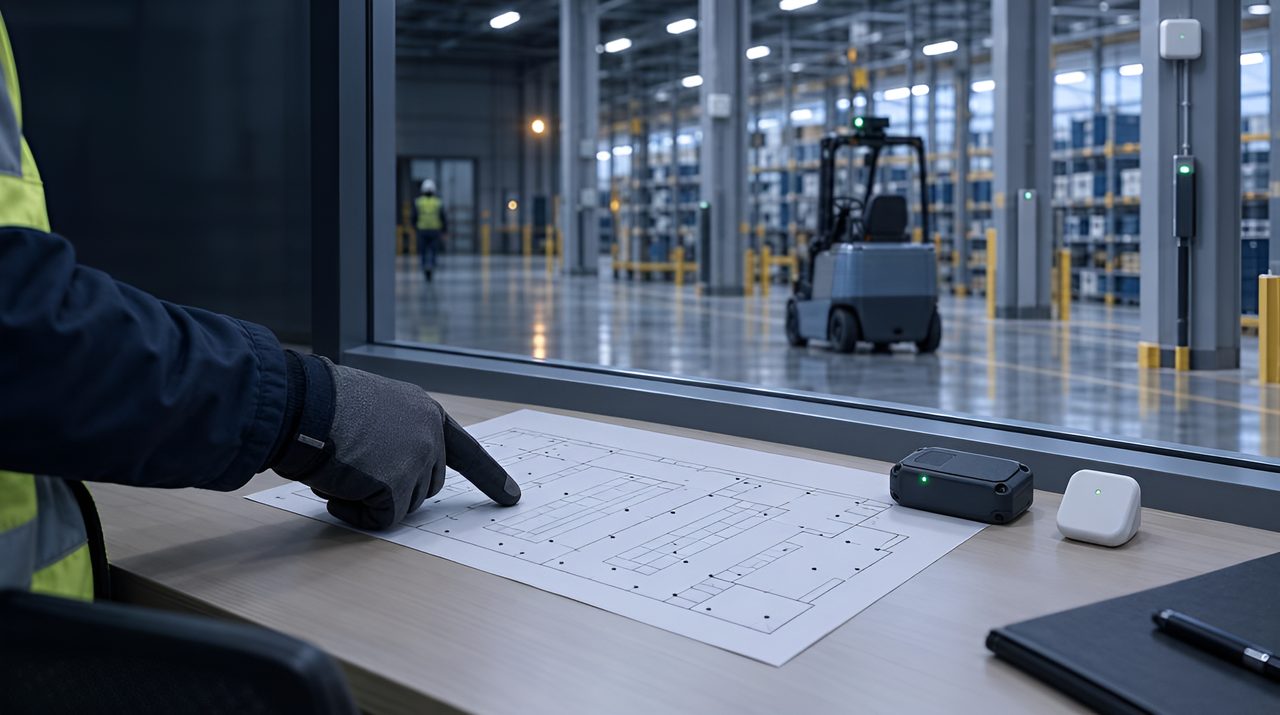
RTLS-RFP-Gliederung: kostenlos, unabhängig.
Diese Gliederung zeigt den Aufbau einer starken Ausschreibung für Ortungstechnik.
Im Rahmen der Lieferantenauswahl machen wir daraus eine vollständige Ausschreibung für Ihren Standort. Wenn Sie das möchten, buchen Sie einen kostenlosen 30-minütigen Anruf.
Was die Gliederung enthält
Eine kurze Gliederung (PDF) mit den sieben Abschnitten und den Fragen, die jeder Bieter beantworten sollte.
- Geschäftlicher Kontext: warum es das Projekt gibt: das Problem im Betrieb und die Ergebnisse, die Sie brauchen.
- Umfang: wo das System laufen soll, was es erfassen muss und die Bedingungen vor Ort.
- Technische Anforderungen: was das System leisten muss und welche Nachweise jeder Bieter liefern muss.
- Kommerzielles: die vollen Kosten über fünf Jahre, mit allen Annahmen.
- Service und Support: wie das System nach dem Go-live am Laufen bleibt, als vertragliche Zusage.
- Bewertung: wie Angebote beurteilt werden, damit jeder Bieter weiß, worauf es ankommt.
- Abgabeanforderungen: Format, Frist und die Nachweise, die jedes Angebot enthalten muss.
Woran Ausschreibungen scheitern
Viele Ausschreibungen scheitern aus denselben drei Gründen. Achten Sie darauf, bevor Sie Ihre versenden.
- Anforderungen aus der Broschüre eines Anbieters kopiert, was den Wettbewerb ausschließt.
- Keine messbaren Erfolgskriterien: „gute Genauigkeit“ ist keine Anforderung.
- Kommerzielle Angaben nur für Jahr 1, ohne die echten Kosten in den Jahren 2 bis 5.
Wie Angebote bewertet werden
Angebote werden in sechs Bereichen bewertet: technische Eignung, wirtschaftlicher Wert, Referenzen, Integration, Sicherheit und Compliance sowie Service und Support. Die Gewichtung legen wir mit Ihnen für Ihren Anwendungsfall fest.
Häufig gestellte Fragen
Ist die Gliederung unabhängig?
Ja. Wir arbeiten für Sie, nicht für die Technologieanbieter. Die Gliederung ist technologieneutral und stellt jedem Bieter dieselben Fragen.
Können wir sie für eine RFID- oder IoT-Ausschreibung nutzen?
Ja. Die sieben Abschnitte gelten für RFID-, RTLS-, IoT- und AGV- oder AMR-Projekte. Die technischen Anforderungen ändern sich mit der Technologie.
Führen Sie die Bewertung für uns durch?
Ja, wenn Sie das möchten. Wir erstellen die Ausschreibung, briefen die Anbieter, bewerten die Angebote mit Ihnen und geben eine schriftliche Empfehlung. Wir arbeiten für Sie, nicht für die Technologieanbieter.
Wo bekommen wir eine vollständige Ausschreibung?
Im Rahmen der Lieferantenauswahl schreiben wir die vollständige Ausschreibung für Ihren Standort, mit Anforderungen, Bewertung und Abnahmetests. Kostenloses Erstgespräch buchen.
Zuletzt aktualisiert: