
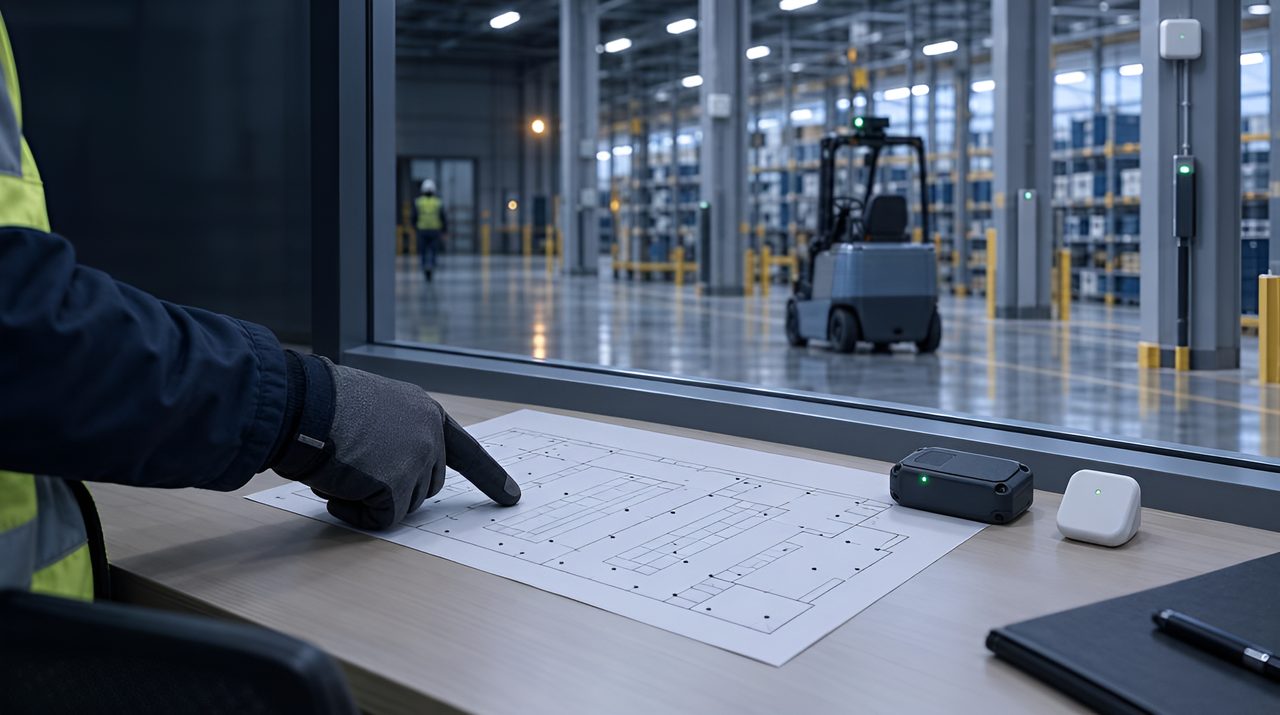
RTLS RFP outline: free, independent.
This outline shows the structure of a strong request for proposal for tracking technology.
We turn it into a full request for proposal for your site as part of supplier selection. If you want that, book a free scoping call.
What's in the outline
A short outline (PDF) with the seven sections and the questions every bidder should answer.
- Business context: why the project exists: the problem in operational terms and the outcomes you need.
- Scope: where the system will run, what it must track and the conditions on site.
- Technical requirements: what the system must do, and the evidence every bidder must give.
- Commercials: the full five-year cost, with every assumption stated.
- Service and support: how the system is kept working after go-live, as contract commitments.
- Evaluation: how responses will be judged, so every bidder knows what matters.
- Submission requirements: the format, the deadline and the evidence each response must include.
Where requests for proposal go wrong
Many requests for proposal fail for the same three reasons. Watch for them before you issue yours.
- Requirements copied from one supplier's brochure, which locks out the competition.
- No measurable success criteria: "good accuracy" is not a requirement.
- Commercials that cover year 1 only and miss the real cost in years 2 to 5.
How responses are scored
Responses are scored across six areas: technical fit, commercial value, references, integration, security and compliance, and service and support. We set the weights with you for your use case.
Frequently asked questions
Is the outline independent?
Yes. We work for you, not for the technology providers. The outline is technology neutral and asks every bidder the same questions.
Can we use it for an RFID or IoT request for proposal?
Yes. The seven sections apply to RFID, RTLS, IoT and AGV or AMR projects. The technical requirements change with the technology.
Do you run the evaluation for us?
Yes, if you want us to. We draft the request for proposal, brief the suppliers, score the responses with you and give a written recommendation. We work for you, not for the technology providers.
Where can we get a full request for proposal?
We write the full request for proposal for your site, with requirements, scoring and acceptance tests, as part of supplier selection. Book a free scoping call to talk it through.
Last updated: